
Linker Nutrients

Feed Solutions · Digestion and performance

The right acid for each feed.

Illustration: Feed acidifiers
Linkacid
  • Lowers the pH

    The acids bring down the pH of the feed and of the young stomach.

  • Acts inside bacteria

    The undissociated acid enters bacteria that prefer neutral pH and slows their growth.

  • Set on your feed

    Several grades; the rate is set with you, feed by feed.

Linkacid: feed acidifiers and organic acid blends

A feed acidifier is a blend of organic acids, often combined with a mineral acid, used free or as salts, that lowers the pH and the buffering capacity of feed. Linkacid comes in powder grades for poultry, pig and aquaculture feed, from multi-acid blends to buffered grades, dosed on your formula rather than on a label.

Form
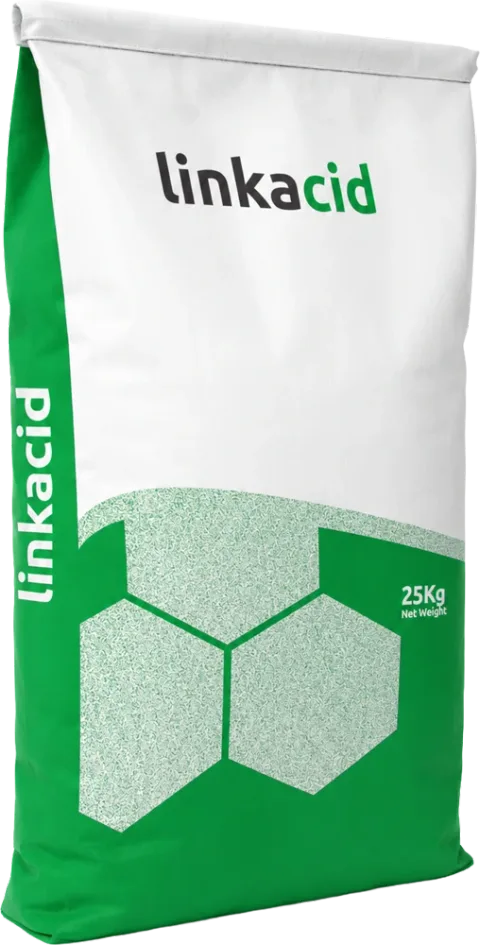
Powder, in 25 kg bags
Species
Poultry, pigs; aquaculture, rate set with you
Status
Premix of feed additives: acids and salts authorised in feed
Use
At the feed mill or in a premix
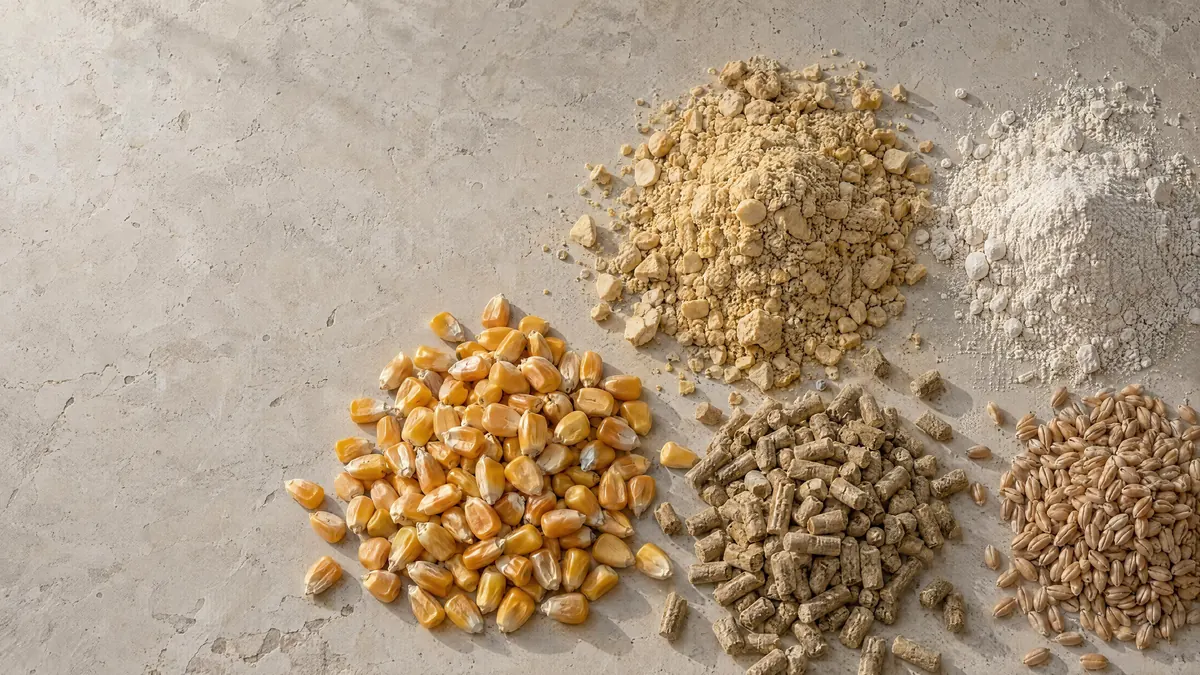
Feed raw materials seen from above: maize, meal, minerals and pellets

The problem

Two feeds at the same pH do not need the same acid rate

At weaning, a piglet moves from milk to solid feed within days, while its stomach cannot yet produce enough acid for it. Gastric pH stays high, pepsin, which needs an acid environment to activate, works poorly, and part of the protein reaches the intestine undigested. This is the period with the most digestive upsets, post-weaning diarrhoea included.

It is also when feed is hardest to acidify. Dairy and soya proteins, limestone and phosphates resist a drop in pH: this is the feed’s buffering capacity, or acid-binding capacity. Measured pH tells you where the feed stands; buffering capacity tells you how much acid it will take to move it.

The piglet weaning transition also depends on water, formulation and farm management.

The principle

Two actions in parallel: pH and the bacterial cell

This is the mode of action of organic acids in poultry and pig feed. They do more than acidify: in their undissociated form, they also act inside the bacteria that prefer a neutral environment.

  1. It lowers the pH.The acid lowers the pH of the feed and, in the stomach, helps reach the pH at which pepsin activates and protein digestion starts.
  2. It crosses.In its undissociated, neutral form, the acid passes through the membrane of bacteria present in the feed.
  3. It dissociates.Inside the cell, close to neutral, it releases its proton: the bacterium spends energy pumping it out and its growth slows down.
  4. It takes over.Each acid has its own pKa. Phosphoric acid drops the pH; organic acids stay active further along. Hence the case for a blend.

The rate follows the formula, not the label

Buffering capacity
The amount of acid needed to bring the feed to a reference pH: this is what sets the rate.
Minerals
Limestone and phosphates are the main contributors.
Proteins
Soya, fishmeal, dairy proteins: the richer the formula, the more it resists.
Age
The young animal, whose stomach produces little acid, is the one for which acidification matters most.

Linkacid at a glance

1 min 3 s, subtitled in English

By species

Which organic acids for poultry, pig or aquaculture feed?

Pigs. The weaned piglet is the textbook case for an acidifier in pig feed: its stomach cannot yet acidify a diet rich in protein and minerals. The grades with a mineral acid, Premium LP and HCP, target the pH drop; the organic acid grades, such as Prime and Select, combine the pH drop with action in the feed. In grower and finisher diets, the rate comes down.

Poultry. The role of an acidifier in poultry feed is twofold: feed hygiene, and a digestive environment less favourable to bacteria that like neutral conditions, above all in the starter phase. Starter rates are higher than finisher rates.

Aquaculture. Formulas rich in plant proteins raise the question of phosphorus and mineral availability; organic acids are among the formulation levers studied on these diets. Raw materials handled warm and humid also call for hygiene. The rate is set with you.

In every case, two rules: dose on the feed’s buffering capacity rather than on an average, and count the mineral contribution of the grade in a tight diet, especially the sodium from sodium formate.

Feed or water

In the feed or in the water: which acidifier to choose?

Linkacid goes into the feed, at the mill: it works at every meal, as long as the animal eats. Its sister route is Linkacid Prime L, a liquid acidifier for drinking water: it is dosed through a dosing pump, acts within hours and also reaches the animal that eats little, at weaning, during transport or at a feed change.

The two are not rivals. A programme often combines the feed, for duration, with the water, for the moments when intake drops.

People sometimes ask for a “natural” acidifier for poultry. Organic acids do occur in nature, but those in an acidifier are produced for animal feed, at consistent quality. The right criterion is not the origin: it is the pKa of each acid, its form, free or as a salt, and the buffering capacity of the feed. The composition of each grade is on its technical data sheet.

The grades

Choosing a grade

The grades differ in their acids and in their balance between free acids, for a fast pH drop, and salts, easier to handle and less corrosive.

GradeUseIndicative rate
linkacid Premium LPFine white particles of even size, like fine sugar · 25 kg bagA mineral and organic acid profile: pH and palatability.Piglets weaning to 30 kg: 3–6 kg/t; pigs 30–100 kg: 1–2 kg/t; broiler starter: 1.5–3 kg/t; finisher: 1–2 kg/t. A starting point, to be set on the measured buffering capacity.
linkacid HCPFine white particles of even size, like fine sugar · 25 kg bagThe simplest grade in the range: two acids only.Piglets weaning to 30 kg: 3–6 kg/t; pigs 30–100 kg: 1–2 kg/t; broiler starter: 1.5–3 kg/t; finisher: 1–2 kg/t. A starting point, to be set on the measured buffering capacity.
linkacid SelectFine white particles of even size, like fine sugar · 25 kg bagA blend of organic acids on a salt base, for demanding situations.Piglets weaning to 30 kg: 3–6 kg/t; pigs 30–100 kg: 1–2 kg/t; broiler starter: 1.5–3 kg/t; finisher: 1–2 kg/t. A starting point, to be set on the measured buffering capacity.
linkacid PrimeFine white particles of even size, like fine sugar · 25 kg bagBuffered formic acid: easier to handle than the free acid.Piglets weaning to 30 kg: 3–6 kg/t; pigs 30–100 kg: 1–2 kg/t; broiler starter: 1.5–3 kg/t; finisher: 1–2 kg/t. A starting point, to be set on the measured buffering capacity.
linkacid ExtraFine white particles of even size, like fine sugar · 25 kg bagSeveral acids combined, for demanding post-weaning feeds.Piglets weaning to 30 kg: 3–6 kg/t; pigs 30–100 kg: 1–2 kg/t; broiler starter: 1.5–3 kg/t; finisher: 1–2 kg/t. A starting point, to be set on the measured buffering capacity.
linkacid CAFOFine white particles of even size, like fine sugar · 25 kg bagA source of formate and calcium.Piglets weaning to 30 kg: 3–6 kg/t; pigs 30–100 kg: 1–2 kg/t; broiler starter: 1.5–3 kg/t; finisher: 1–2 kg/t. A starting point, to be set on the measured buffering capacity.
linkacid FOFine white particles of even size, like fine sugar · 25 kg bagHigh-load formic acid, on a formate carrier.Piglets weaning to 30 kg: 3–6 kg/t; pigs 30–100 kg: 1–2 kg/t; broiler starter: 1.5–3 kg/t; finisher: 1–2 kg/t. A starting point, to be set on the measured buffering capacity.
linkacid SOFOFine white particles of even size, like fine sugar · 25 kg bagSodium formate for the electrolyte balance of the diet: not an acidifier.Piglets weaning to 30 kg: 1.5–3 kg/t; pigs 30–100 kg: 1–2 kg/t; broiler starter: 1.5–3 kg/t; finisher: 1–2 kg/t; layers: 1–2 kg/t. A starting point, to be set on the measured buffering capacity.

Indicative rates taken from the current technical data sheets: the same grid is a starting point across the range, to be adjusted on the measured buffering capacity of your feed. We set it with you.

What has been measured

Each result comes with its conditions; the full details are available on request.

  • Laboratory testLinkacid Premium LP

    Laboratory measurement: 100 g of Linkacid Premium LP deliver 380 mmol of acidifying capacity at pH 4, a figure used to set the rate against the feed’s buffering capacity.

    Conditions
    100 g of product in 200 mL of water at 37 °C, titration with sodium hydroxide; measured in 2022.
    On request
    Results by grade
    Ask for the details, result 1 →
  • Laboratory test

    In a laboratory test, a grade of the Linkacid range lowered the pH of a feed-water mix from about 6.5 to 6.0 at 6 kg/t, with an effect that increases with the rate.

    Conditions
    Mash feed stirred into distilled water; three rates compared with a control without acidifier.
    On request
    Details of the measurement
    Ask for the details, result 2 →

Trial results available on request.Ask for the trial results →

In practice

What Linkacid is

Premix of feed additives: organic and mineral acids and their salts, authorised in feed. Technical data sheet, safety data sheet and status in your country: on request.

Simplified technical data sheet

linkacid

What it is
Acidifier
Range
Feed Solutions · Digestion and performance
Species
Poultry, pigs; aquaculture, rate set with you
Form and appearance
Fine white particles of even size, like fine sugar
Packaging
25 kg bag
Shelf life and storage
Premium LP, CAFO, FO, SOFO: 12 monthsHCP: 24 months
By grade
Form, key ingredients and rate: see the table Choosing a grade
GradeShelf life and storageKey ingredientsIndicative rate
Premium LP12 monthsA mineral acid and organic acids.Piglets weaning to 30 kg: 3–6 kg/t; pigs 30–100 kg: 1–2 kg/t; broiler starter: 1.5–3 kg/t; finisher: 1–2 kg/t. A starting point, to be set on the measured buffering capacity.
HCP24 monthsA mineral acid and an organic acid.Piglets weaning to 30 kg: 3–6 kg/t; pigs 30–100 kg: 1–2 kg/t; broiler starter: 1.5–3 kg/t; finisher: 1–2 kg/t. A starting point, to be set on the measured buffering capacity.
SelectOn requestOrganic acids, led by formic acid.Piglets weaning to 30 kg: 3–6 kg/t; pigs 30–100 kg: 1–2 kg/t; broiler starter: 1.5–3 kg/t; finisher: 1–2 kg/t. A starting point, to be set on the measured buffering capacity.
PrimeOn requestOrganic acids and their salts, led by formic acid.Piglets weaning to 30 kg: 3–6 kg/t; pigs 30–100 kg: 1–2 kg/t; broiler starter: 1.5–3 kg/t; finisher: 1–2 kg/t. A starting point, to be set on the measured buffering capacity.
ExtraOn requestOrganic acids and a mineral acid.Piglets weaning to 30 kg: 3–6 kg/t; pigs 30–100 kg: 1–2 kg/t; broiler starter: 1.5–3 kg/t; finisher: 1–2 kg/t. A starting point, to be set on the measured buffering capacity.
CAFO12 monthsCalcium formate.Piglets weaning to 30 kg: 3–6 kg/t; pigs 30–100 kg: 1–2 kg/t; broiler starter: 1.5–3 kg/t; finisher: 1–2 kg/t. A starting point, to be set on the measured buffering capacity.
FO12 monthsOrganic acids, formic acid in the lead.Piglets weaning to 30 kg: 3–6 kg/t; pigs 30–100 kg: 1–2 kg/t; broiler starter: 1.5–3 kg/t; finisher: 1–2 kg/t. A starting point, to be set on the measured buffering capacity.
SOFO12 monthsSodium formate.Piglets weaning to 30 kg: 1.5–3 kg/t; pigs 30–100 kg: 1–2 kg/t; broiler starter: 1.5–3 kg/t; finisher: 1–2 kg/t; layers: 1–2 kg/t. A starting point, to be set on the measured buffering capacity.

Simplified sheet, for information only: the full technical data sheet of the grade and the label prevail.

Get the full technical data sheet →

Made on sites certified to GMP+ FSA, FAMI-QS, FCA or an equivalent feed safety scheme.
Linker Nutrients SAS · Centre d’Affaires Lorient Mer, 1 rue Honoré d’Estienne d’Orves, 56100 Lorient, France · +33 2 30 91 59 15 · contact@linkernutrients.com
www.linkernutrients.com/en/products/linkacid · Updated 4 November 2026

The data sheet, and someone to read it with you

The documents you need

Send us your formula

Species, stage, formula or a sample of the finished feed: with these, a technician will suggest a grade and a starting rate, set on the buffering capacity of your feed.

Ask about Linkacid →

Frequently asked questions

What is a feed acidifier?

A blend of organic acids, often combined with a mineral acid, used free or as salts, and added to feed to lower its pH and buffering capacity. In the feed, it acts on bacteria that prefer a neutral environment; in the young animal, it helps the stomach reach the pH at which pepsin activates.

How much acidifier should go into the feed?

It depends on species and stage, but above all on the buffering capacity of the formula: a starter diet rich in protein, limestone and phosphates needs far more than a grower diet at the same pH. The technical data sheets give a starting point; we adjust it to your formula.

Where does Linkacid fit in a farm’s programme?

Linkacid is a premix of feed additives: it acts on the feed and on the digestive environment. Linker products are additives and supplements for feed and drinking water, used within a farm’s programme.

Should I acidify the feed or the drinking water?

The two complement each other. The feed carries acidification over time, at every meal; the water acts within hours and reaches the animal that eats little. For water, the liquid grade is Linkacid Prime L.