
Feed Solutions
Feed flavours and sweeteners: palatability for feed mills
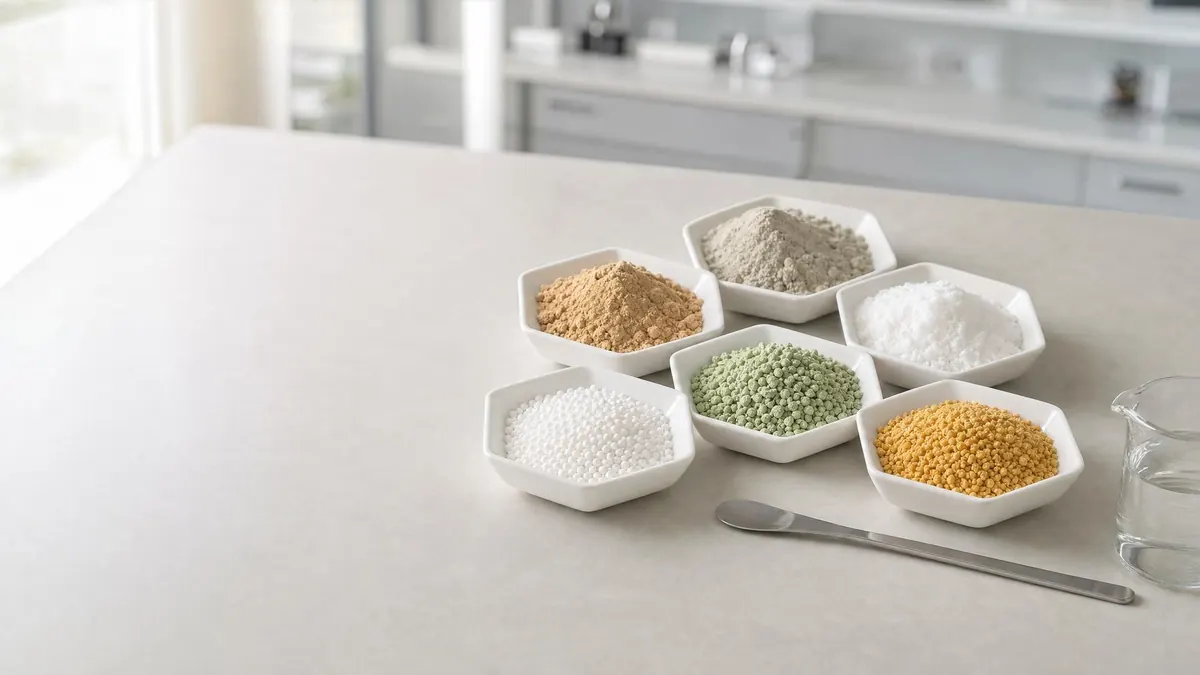
A formula that is right on paper is only worth something if it gets eaten. A flavour and a sweetener do not feed the animal: they act on the smell and taste of the feed, and so on the animal’s decision to come to it, then to keep eating. That is what feed palatability means.
What we are talking about
Palatability enhancer, palatant, flavour: what are we talking about?
Palatability is how attractive a feed is to the animal: what makes it come closer, taste, and come back. It is defined by behaviour, not by composition: a palatable feed is one that is chosen and eaten without hesitation. Palatability in feed is therefore measured at the feeder, not in the laboratory.
A palatability enhancer, or palatant, is an ingredient added to improve that palatability. In livestock feed, feed palatability enhancers mostly belong to two families of sensory additives: flavours, the livestock feed flavoring that acts on smell, and sweeteners, which act on taste. How to use a palatability enhancer is mostly a matter of form and rate: most are powders, added in the mixer or through a premix, some are liquid; the form matters less than the profile and the rate, whether it goes into poultry feed, pig feed or cattle feed.
A feed flavour (feed flavor, or animal feed flavoring, in American usage) is built in layers: top notes that attract, heart notes that cover the smell of raw materials and minerals, and base notes, such as vanillin or lactones, that withstand heat and persist. That construction, more than the list of its ingredients, is what lets a flavour survive pelleting and last until the feeder.
The platforms
Two platforms, two senses
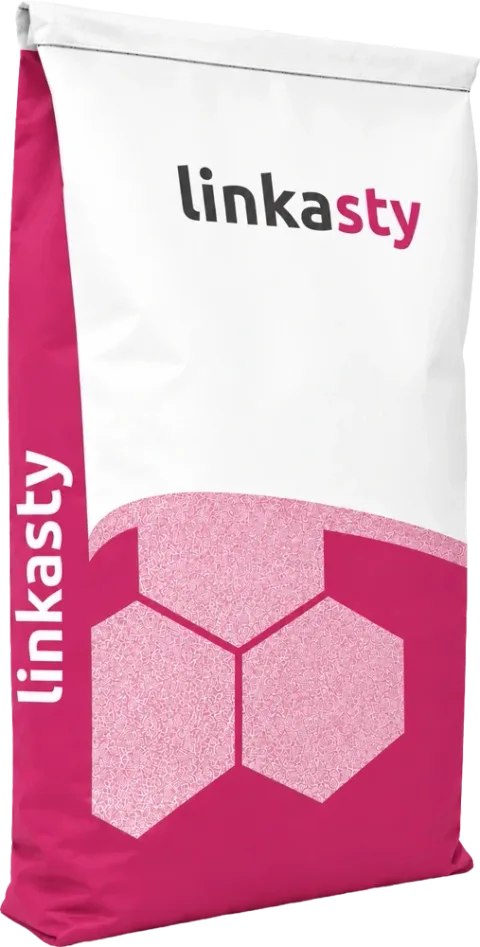
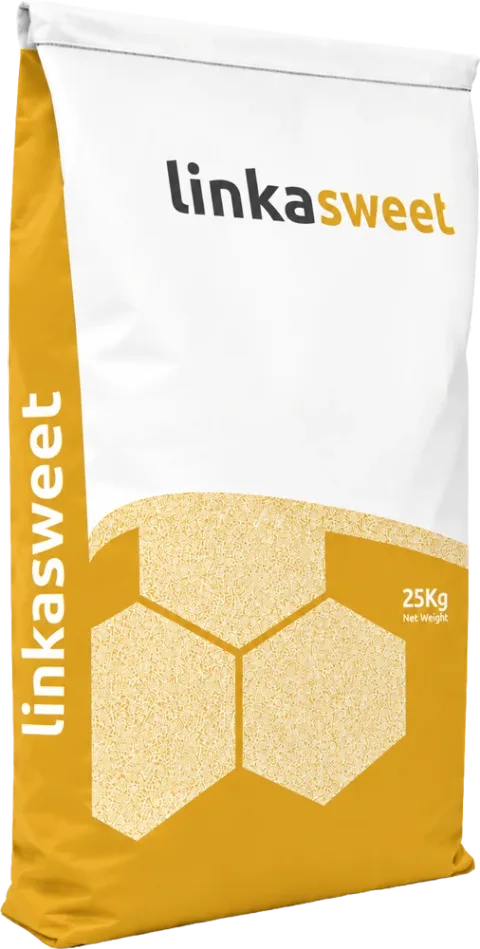
Each cell opens its product page: profiles, grades, use, documents.
What a flavour masks
What a flavour really masks
A flavour is rarely bought for its scent. It is bought for what it covers: the bitterness of a mineral oxide, the sharpness of an acidifier at a high rate, the note of a cheaper meal or by-product, the smell of a fat starting to turn rancid. Each time the formula changes to hold a cost, something in the feed changes smell or taste, and the animal notices before the formulator does.
A well-chosen flavour keeps the same sensory profile on the same feed while everything behind it changes: the raw material, the phase, the season. That is the promise of Linkasty, our range of animal feed flavours.
Masking is not repairing. A fat going rancid has already lost part of its value: the flavour covers the note, an antioxidant such as Linkatiox protects the fat, upstream.
Flavour memory
One note, from the sow’s milk to the grower feed
Animals recognise what they know. When the next feed carries the same note as the one before, the change is less noticeable: that is the case for a sequence, not for a single product.
- In the farrowing room.The piglet first meets flavours through its mother’s milk. Linkasty Pure Milk is the profile closest to sow’s milk.
- On creep feed.The same dairy profile goes with its first mouthfuls of solid feed.
- At weaning.Everything changes at once: the milk, the pen, the pen-mates. The note of the feed stays the same.
- In the grower phase.The note moves on in steps, with no break, through to the grower feed.
What makes a sequence hold
- One profile
- Chosen once for the whole sequence, not feed by feed.
- A rate for each presentation
- Higher in pellets than in mash, to make up for what conditioning and handling take.
- Other species
- In calves, the move from milk to solid feed follows the same logic.
How to choose
Flavour or sweetener: which one, for which feed?
| Criterion | Flavour: Linkasty | Sweetener: Linkasweet |
|---|---|---|
| The sense it targets | Smell: the decision to come to the feed | Taste: the decision to keep eating |
| What it does | Attracts, covers the smell of raw materials and minerals, keeps the profile constant | Gives a clean sweet taste with no bitterness, and covers the bitterness of minerals and acids |
| When to choose it | Formula changes, by-products, acidifiers or minerals at high rates, a sequence from creep feed to grower | Creep feed and piglet feed, where a sweet taste carries on from milk |
| Grades | Nine profiles: milky, fruity, aniseed | Two grades, MX and ST |
| Species | Pigs, poultry, ruminants, aquaculture, pets, profile by profile | Pigs first; other species depending on the market |
| How it goes in | In the mixer or through a premix | Always through a premix, never straight into the main mixer |
| Platform | Linkasty | Linkasweet |
Flavours and sweeteners often work together: one brings the animal to the feeder, the other keeps it there.
Sweeteners
Which sweeteners for feed, and which depending on the market?
A feed sweetener is not sugar. A high-intensity sweetener is several hundred times sweeter than sucrose: it is used at a very low rate and adds no energy worth counting in the formula. That is the real difference in the feed sweetener vs sugar question. Combining two of them reproduces the fast onset and the lingering finish of sugar, and covers the bitterness of minerals and acids.
Not every species tastes sweetness the same way. Pigs are very sensitive to it, and in piglets a sweet taste carries on from milk: this is where an animal feed sweetener earns its place most. Poultry are not very sensitive to sweetness; in chickens, palatability works mostly through smell, texture and the presentation of the feed, so a sweetener in poultry feed does much less. In cattle, a sweetener for cattle feed is used mostly for young animals, at the move from milk to solid feed.
The list of sweeteners allowed in feed is not the same from one country to the next, and it changes: in Asia, each country keeps its own, and the European Union revised its own in 2026. Linkasweet combines two high-intensity sweeteners: before any offer, we check with you the sweeteners allowed in feed in your destination country.
Regulatory
A sensory additive: what it does, and how to use it
Flavours and sweeteners are sensory additives under Regulation (EC) No 1831/2003: they act on the feed and on the animal’s decision to eat it. That is the only effect they claim.
Each molecule has to be allowed in the destination country: that is the first question we ask, before the profile. The feed additive categories of Regulation 1831/2003 show where each family belongs.
When palatability matters most
A palatable feed always matters; it matters more at certain moments, when the animal has a reason to eat less or the feed has a reason to appeal less.
- At weaning and at the start: solid feed has to be accepted fast; it is one of the levers of piglet weaning.
- When the formula changes: a new raw material, a by-product, a different fat.
- When an additive has a taste: acidifiers or minerals at high rates.
- When it is hot: intake falls, and every mouthful counts.
- In aquaculture and pet food: aquaculture feeds and dog and cat food have their own expectations of smell and texture.
Let’s talk about your feed
A feed they leave
Tell us the species, the stage, the formula and what changed: we work out with you what the animal is refusing, and the profile that covers it.
Let’s talk about your feed →A sequence to build
From creep feed to grower: one profile, a rate for each feed, and the data sheet for each grade.
Request the Linkasty data sheet →Or directly: +33 2 30 91 59 15 · contact@linkernutrients.com
Further reading
- Feed Solutions →
The four categories of additives for the feed mill.
- Digestion and performance →
The gut health levers in feed, from weaning to finishing.
- All products →
Feed Solutions and Farm Solutions, by species.
Frequently asked questions
Does a flavour survive pelleting?
Yes, if it is built for it: its base notes, such as vanillin or lactones, withstand heat. It is dosed a little higher in pellets than in mash, to make up for what conditioning and handling take.
Flavour or sweetener for piglets?
Often both: the flavour brings the piglet to the feeder, the sweetener keeps it there. Pigs are very sensitive to sweetness, and in piglets a sweet taste carries on from milk.
Are poultry sensitive to sweetness?
Not very. In poultry, palatability works mostly through smell, texture and the presentation of the feed; a sweetener does much less there than in pigs.
Can a flavour hide a poor-quality feed?
It can cover the note, not give back the value. An oxidised fat or a mouldy raw material stay what they are: fix the cause first, then choose the flavour.
How do you test a feed flavour?
With a choice test: two identical feeds, one flavoured and one not, offered at the same time. It measures a preference, not a gain in intake; for intake, you need a longer trial with a control.
Which species?
Linkasty comes in profiles for pigs, poultry, ruminants, aquaculture and pets, profile by profile: anise, for example, is meant for pigs and ruminants. Linkasweet serves pigs first.