

Linker Nutrients

Feed Solutions · Digestion and performance

Fuel for the gut lining, in the form your feed needs.

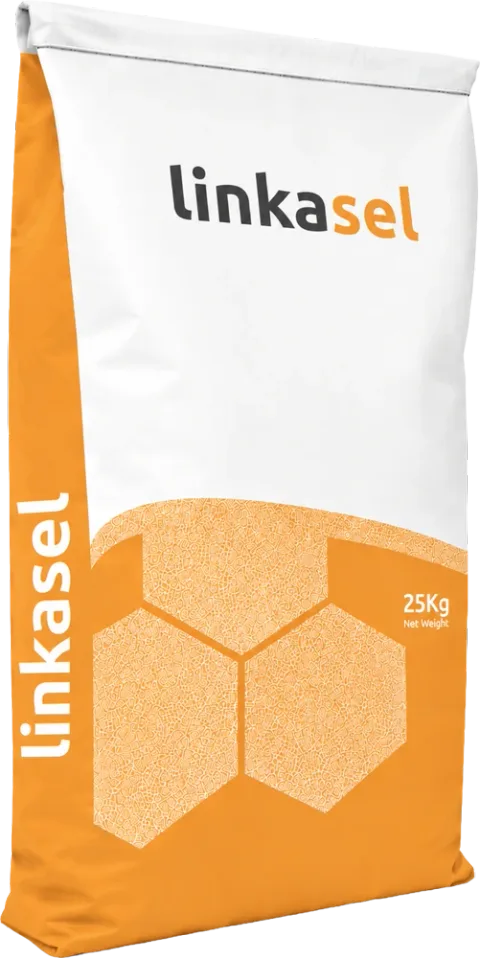
Illustration: Sodium and calcium butyrate
Linkasel
  • Energy for the gut lining

    A direct fuel for the intestinal cells, at a low rate per tonne.

  • The release you need

    Light-filmed powders act early; fat-coated grades release along the intestine.

  • Clean at the mill

    Coated grades: low odour and little dust.

Linkasel: sodium and calcium butyrate for feed, plain or coated

Sodium butyrate is the sodium salt of butyric acid, a short-chain fatty acid that the cells of the intestinal lining use as an energy source. Linkasel offers it alongside calcium butyrate, plain or coated, alone or combined: the form is chosen according to the feed and to where the butyrate needs to arrive.

Forms
Powders and coated granule
Salts
Sodium, calcium, or both
Species
Poultry, pigs, aquaculture
Use
At the feed mill or in a premix
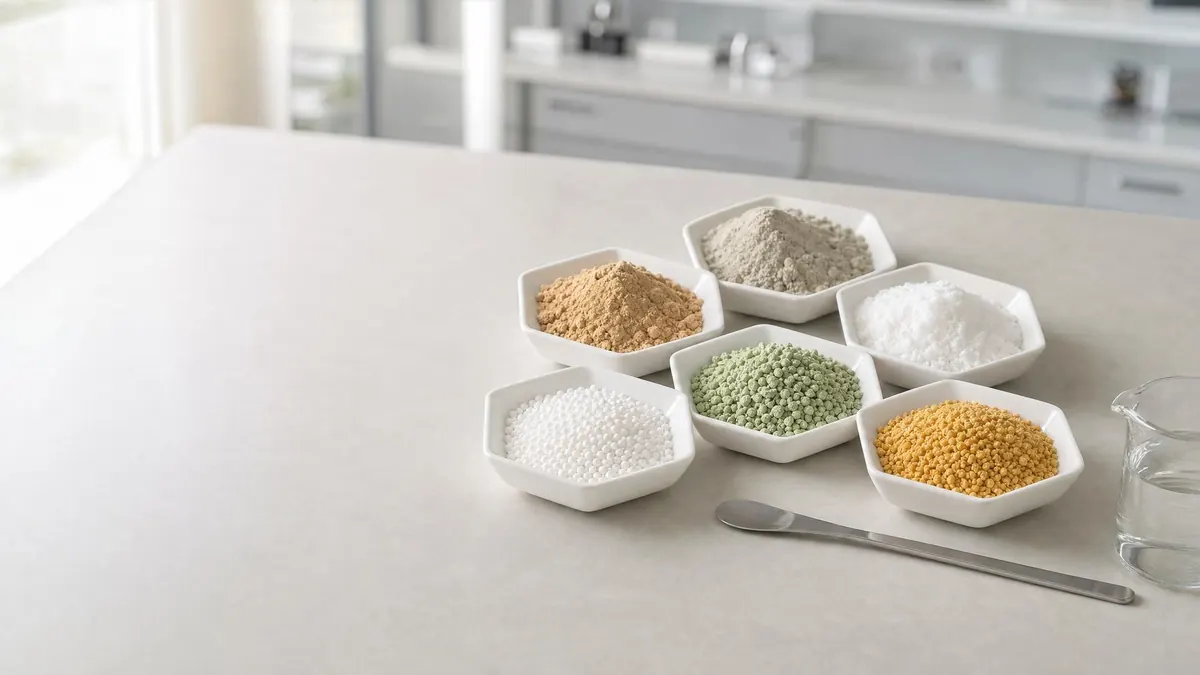
Hexagonal dishes of additive powders and granules on a lab bench

The problem

A good molecule that is hard to deliver

Butyric acid is the main energy source of the intestinal epithelial cells, which renew constantly and form the barrier between the gut content and the animal. Much of what the market calls gut health depends on them, which is why sodium butyrate is so often discussed as a gut health feed additive.

But the molecule smells and is volatile, and a plain salt dissolves in the stomach: part of the butyrate is absorbed before it reaches the intestine. Yet it is around weaning and the starter phase, when digestive upsets and diarrhoea weigh on the batch, that the young animal’s gut is under most pressure. Butyrate is one of the feed levers for this period, alongside acids, formulation and the management of the piglet weaning transition.

Tributyrin or sodium butyrate: see butyrate and tributyrin, how to choose. Tributyrin has its own page, Linkatrib.

The principle

From the feed to the intestinal wall

Butyrate works where it arrives: the whole point of the form is to choose that place.

  1. It is released.A plain salt dissolves in the stomach and the upper intestine; a coated form delays that release.
  2. It is taken up.The cells of the intestinal epithelium absorb it and use it as an energy source.
  3. It maintains the barrier.The literature describes it as supporting epithelial renewal and the integrity of the intestinal barrier, the tight junctions between cells.

What decides the form

Target segment
The stomach and upper intestine, or further along.
Odour and dust
A coating reduces both: a real advantage at the mixing station.
Minerals
The sodium or calcium supplied counts in the formula.
Storage
Butyrate salts dislike heat and humidity.

Linkasel at a glance

1 min 4 s, subtitled in English

Plain or coated

Plain or coated butyrate: when is a coating justified?

A plain butyrate is simple and concentrated. It is released early, in the stomach and the upper intestine, and its smell is noticeable at the mixing station. A coated or protected sodium butyrate, or a coated calcium butyrate, limits odour and dust and delays release towards the intestine.

A coating has a trade-off: it dilutes the butyrate. Weight for weight, a coated form supplies less butyrate than a plain salt. It is justified when you want butyrate to go beyond the stomach, or when odour and dust are a problem; a plain salt is enough when the target is the upper gut.

To go further without a coating, chemistry offers another route: tributyrin, whose bond is cleaved by the animal’s own lipases, mostly from the small intestine on. That is Linkatrib.

Calcium or sodium

Calcium or sodium butyrate: what difference in the feed?

Calcium butyrate vs sodium butyrate: both supply the same butyric acid; they differ in their ion. Sodium butyrate is very soluble and attracts moisture: it has to be stored dry, and it adds sodium, to be counted in the electrolyte balance of the formula.

Calcium butyrate is less sensitive to moisture and adds calcium, to be counted in the calcium and phosphorus balance. The choice depends on your formula, your climate and your mixing station more than on the species: calcium butyrate is used in poultry feed as well as in pig feed, and so is sodium butyrate.

Linkasel also combines the two salts, and offers a form built on sodium butyrate with a complementary organic acid salt.

The grades

Choosing a grade

The grades are named after their salt and their form.

GradeUseIndicative rate
Coated calciumCream-white coated microbeads · 25 kg bagCoated calcium butyrate: low odour, low dust, easy to blend, delayed release, to support a balanced gut flora.0.3–3 kg/t of finished feed, all species
Plain calciumFine cream-white powder, lightly filmed, released early · 25 kg bagCalcium butyrate with a light film, released in the stomach and upper intestine.0.3–3 kg/t of finished feed, all species
Plain sodiumFine cream-white powder, lightly filmed, released early · 25 kg bagSodium butyrate with a light film, released in the stomach and upper intestine.0.3–3 kg/t of finished feed, all species
Coated sodiumCoated powder · 25 kg bagCoated sodium butyrate: less odour, delayed release towards the intestine.1–3 kg/t of finished feed, all species
Calcium and sodiumCream-white coated microbeads · 25 kg bagBoth salts combined in a single powder.0.3–3 kg/t of finished feed, all species
Butyrate blendPowder · 25 kg bagSodium butyrate in the lead, combined with a complementary organic acid salt.0.3–3 kg/t of finished feed, all species

The plain salts and the calcium and sodium blend come in several concentrations: they are given on the technical data sheet, on request.

Indicative rate taken from the current technical data sheet. The right rate depends on species, stage and the form chosen: we set it with you.

What has been measured

Each result comes with its conditions; the full details are available on request.

  • Trial on the productLinkasel Coated calcium

    In a broiler trial (42 days), Linkasel’s coated calcium butyrate improved feed conversion from 1.83 to 1.76.

    feed conversion ratio (lower is better)
    Control1.83
    With Linkasel1.76
    Conditions
    2 groups of 6 replicates, 150 birds per group; 1.2 then 0.6 then 0.3 kg/t depending on the phase.
    On request
    Detailed results
    Ask for the details, result 1 →
  • Trial on the productLinkasel Coated calcium

    On farm, across 26,000 broilers, feed conversion moved from 1.66 to 1.55 with the coated calcium butyrate of Linkasel.

    feed conversion ratio (lower is better)
    Before1.66
    With Linkasel1.55
    Conditions
    Male broilers, 13,000 per group, slaughter at 38 days; 0.6 then 0.4 kg/t.
    On request
    Detailed results
    Ask for the details, result 2 →

Trial results available on request.Ask for the trial results →

In practice

What Linkasel is

Sodium and calcium butyrates for animal feed. Their status varies by country: technical data sheet, safety data sheet and status in your country on request.

Simplified technical data sheet

linkasel

What it is
Butyrate
Range
Feed Solutions · Digestion and performance
Species
Poultry, pigs, aquaculture
Packaging
25 kg bag
Shelf life and storage
Coated calcium: 2 years; sensitive to heat and humidity
By grade
Form, key ingredients and rate: see the table Choosing a grade
GradeForm and appearanceShelf life and storageKey ingredientsIndicative rate
Coated calciumCream-white coated microbeads2 years; sensitive to heat and humidityCalcium butyrate, in coated form.0.3–3 kg/t of finished feed, all species
Plain calciumFine cream-white powder, lightly filmed, released earlyOn requestCalcium butyrate.0.3–3 kg/t of finished feed, all species
Plain sodiumFine cream-white powder, lightly filmed, released earlyOn requestSodium butyrate.0.3–3 kg/t of finished feed, all species
Coated sodiumCoated powderOn requestSodium butyrate, in coated form.1–3 kg/t of finished feed, all species
Calcium and sodiumCream-white coated microbeadsOn requestCalcium and sodium butyrates.0.3–3 kg/t of finished feed, all species
Butyrate blendPowderOn requestButyrates, sodium butyrate in the lead.0.3–3 kg/t of finished feed, all species

Simplified sheet, for information only: the full technical data sheet of the grade and the label prevail.

Get the full technical data sheet →

Made on sites certified to GMP+ FSA, FAMI-QS, FCA or an equivalent feed safety scheme.
Linker Nutrients SAS · Centre d’Affaires Lorient Mer, 1 rue Honoré d’Estienne d’Orves, 56100 Lorient, France · +33 2 30 91 59 15 · contact@linkernutrients.com
www.linkernutrients.com/en/products/linkasel · Updated 4 November 2026

The data sheet, and someone to read it with you

The documents you need

Tell us about your feed

Species, stage, mash or pellets, target segment: with these, a technician will suggest a salt, a form and a rate.

Ask about Linkasel →

Frequently asked questions

What is sodium butyrate?

The sodium salt of butyric acid, a short-chain fatty acid. In feed, it is a source of butyrate for the cells of the intestinal lining; it comes plain, as a powder, or coated, for delayed release. Its main use in feed is for poultry, pigs and aquaculture.

Sodium or calcium butyrate: which one to choose?

They supply the same butyric acid. Sodium butyrate is very soluble, attracts moisture and adds sodium; calcium butyrate is less sensitive to moisture and adds calcium. The choice depends on your formula, your climate and your mixing station.

Is sodium butyrate used for gut health?

Butyrate is the main energy source of the intestinal epithelial cells, and the literature describes it as supporting their renewal and the intestinal barrier: that is why the market files it under gut health. It remains a feed ingredient, whose value is judged on your formula and your farm; it does not heal.