
Linker Nutrients

Feed Solutions · Digestion and performance

Acids depend on pH. Monoglycerides do not.

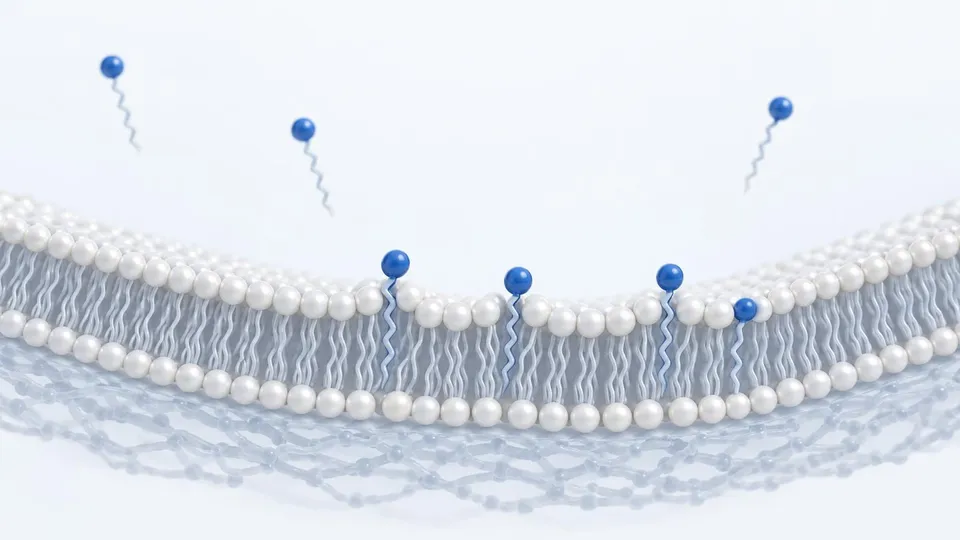
Illustration: Coated alpha-monolaurin
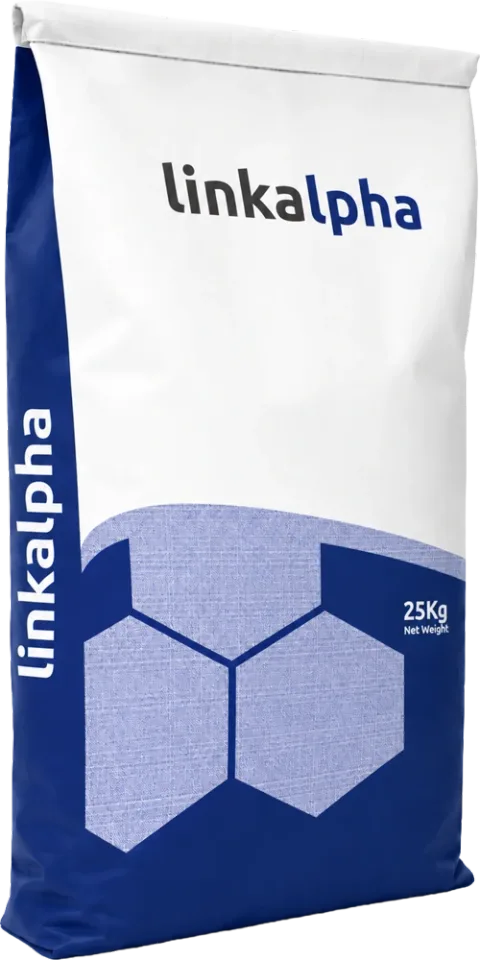
Linkalpha
  • Not weakened by pH

    Not weakened by pH like an acid: it stays whole at every gut pH.

  • Works on membranes

    In vitro, it slips into the membrane of Gram-positive bacteria and disturbs it.

  • Next to your acidifier

    It carries on where a rising pH weakens the acid, in the same feed programme.

Linkalpha: monoglycerides and medium-chain fatty acids for feed

A monoglyceride is a fatty acid attached to a single position of glycerol. Those of short- and medium-chain fatty acids (MCFA), including monolaurin, have a rare property: their action does not depend on pH. Linkalpha supplies alpha-monolaurin as an MCFA feed additive, in a coated granule, for poultry, pig and aquaculture feed.

Form
Coated granule
Nature
Alpha-monolaurin (glycerol monolaurate), coated
Species
Poultry, pigs, aquaculture
Use
At the feed mill, 25 kg bag
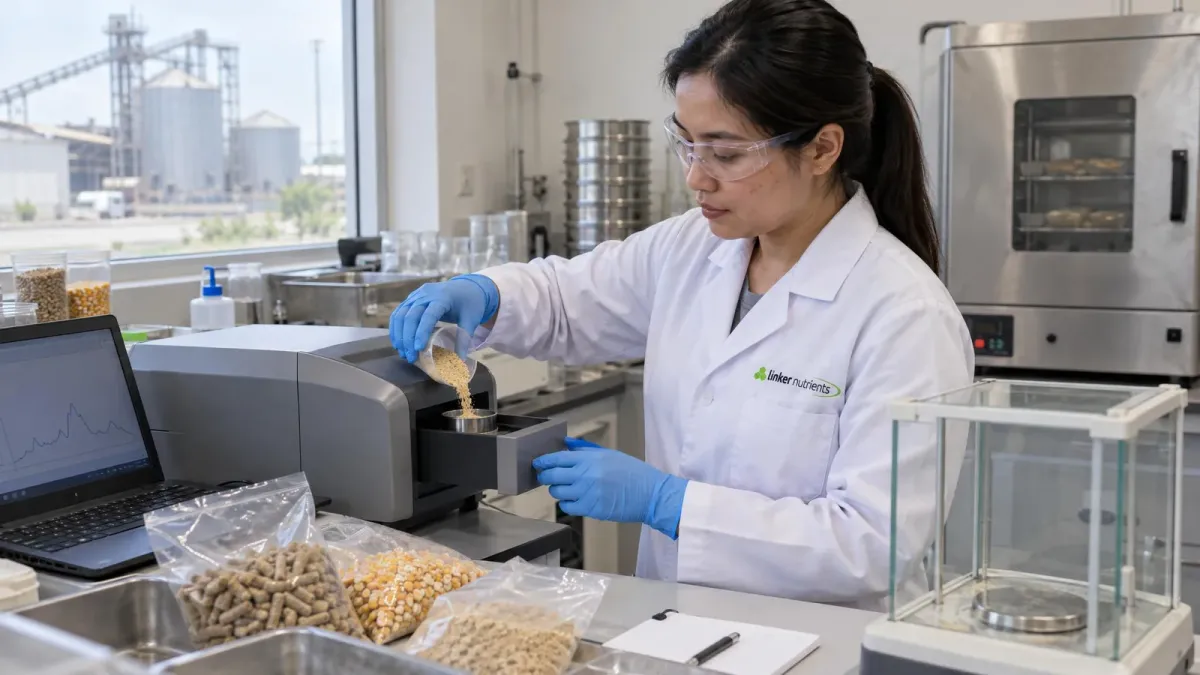
Laboratory technician preparing a feed sample for analysis, next to a precision balance and bags of pellets

The problem

An acid depends on pH; a monoglyceride does not

Free organic acids act in their undissociated form: the higher the pH rises along the intestine, the less of them remains in active form. That is the limit of every acidifier, however well chosen.

Medium-chain fatty acid monoglycerides do not follow this rule. Their action does not go through pH but through their structure: a head that likes water, a tail that likes fat. This is why monoglycerides sit next to acidifiers in poultry and pig feed programmes: they complement an action that pH limits.

For acidifying the feed itself: Linkacid.

The principle

An amphiphilic molecule

Monoglycerides have the structure of a surfactant: that structure, not pH, decides how they behave.

  1. A head, a tail.The glycerol attracts water, the fatty acid chain attracts lipids: the molecule settles at interfaces.
  2. It inserts itself.In vitro, it inserts into the lipid membrane of some Gram-positive bacteria and disturbs its permeability.
  3. pH makes no difference.Unlike free acids, this behaviour does not depend on dissociation: it holds at acid pH as well as at neutral pH.

What decides the use

Presentation
Coated granule, easy to incorporate.
Species
Poultry, pigs, fish and shrimp: the rate varies from one to another.

Linkalpha at a glance

1 min 5 s, subtitled in English

Monolaurin

Monolaurin, glycerol monolaurate, alpha-monolaurin: what are we talking about?

These are three names for closely related molecules. Monolaurin is the monoglyceride of lauric acid, a twelve-carbon fatty acid classed as medium-chain. Glycerol monolaurate, or GML, is its chemical name: glycerol monolaurate vs monolaurin is a question of vocabulary, not of substance.

The alpha prefix gives the position: the lauric acid is attached at one end of the glycerol, the alpha position, not in the middle, the beta position. Alpha-monolaurin vs monolaurin: the alpha form is the more stable of the two, and it is the form in Linkalpha GML.

Lauric acid is also used in feed as a free fatty acid; its monoglyceride form does not behave the same way. Linkalpha GML supplies alpha-monolaurin in coated form, for poultry and swine.

The grades

The grade

Alpha-monolaurin, as a coated granule.

Simplified technical data sheet

linkalpha

What it is
Monoglycerides
Range
Feed Solutions · Digestion and performance
Species
Poultry, pigs, aquaculture
Use
Coated alpha-monolaurin, as an easy-to-incorporate granule.
Form and appearance
Bright white microbeads
Packaging
25 kg bag
Shelf life and storage
1 year
Key ingredients
Glycerol monolaurate (alpha-monolaurin), in coated form.
Indicative rate
0.5–1.0 kg/t, all species

Simplified sheet, for information only: the full technical data sheet of the grade and the label prevail.

Get the full technical data sheet →

Made on sites certified to GMP+ FSA, FAMI-QS, FCA or an equivalent feed safety scheme.
Linker Nutrients SAS · Centre d’Affaires Lorient Mer, 1 rue Honoré d’Estienne d’Orves, 56100 Lorient, France · +33 2 30 91 59 15 · contact@linkernutrients.com
www.linkernutrients.com/en/products/linkalpha · Updated 4 November 2026

Indicative rate taken from the current technical data sheet. The right rate depends on species, stage and your programme: we set it with you.

What has been measured

Each result comes with its conditions; the full details are available on request.

  • Publication on the ingredientLinkalpha GML

    In vitro, monolaurin is markedly more active than free lauric acid on Gram-positive bacteria (2009 publication).

    Conditions
    Inhibitory concentrations measured in culture, on pure monolaurin and lauric acid.
    On request
    Publication reference
    Ask for the details, result 1 →

Trial results available on request.Ask for the trial results →

Gut health

Monolaurin and gut health: what can be said

The market files medium-chain fatty acid monoglycerides under gut health additives, for their role in the balance of the digestive flora. What is established is a behaviour measured in vitro on bacterial membranes, and an action that does not depend on pH.

We do not attribute any effect on a disease to them. Their value on your farm is judged on your feed, through a trial, alongside acids and the management of the piglet weaning transition.

Linker products are additives and supplements for feed and drinking water, used within a farm’s programme.

In practice

What Linkalpha is

Fatty acid monoglycerides for animal feed. Their status varies by country: technical data sheet, safety data sheet and status in your country on request.

The data sheet, and someone to read it with you

The documents you need

Tell us about your programme

Species, stage, additives already in place and feed form: with these, a technician will suggest a grade and a rate.

Ask about Linkalpha →

Frequently asked questions

What is monolaurin?

The monoglyceride of lauric acid: a twelve-carbon fatty acid attached to one position of glycerol. It is also called glycerol monolaurate (GML); the alpha form, the more stable one, is the form in Linkalpha GML.

Do monoglycerides replace an acidifier?

No, they complement it. An acidifier works through pH; monoglycerides work through their structure, independently of pH. The two combine in the same feed programme.

Does Linkalpha withstand pelleting?

Linkalpha GML comes as a coated granule, which protects the monolaurin. Its conditions of use, including how it withstands pelleting, are given in its technical data sheet, on request.