
Linker Nutrients

Feed Solutions · Flavours and sweeteners

Feed they recognise, whatever changes behind it.

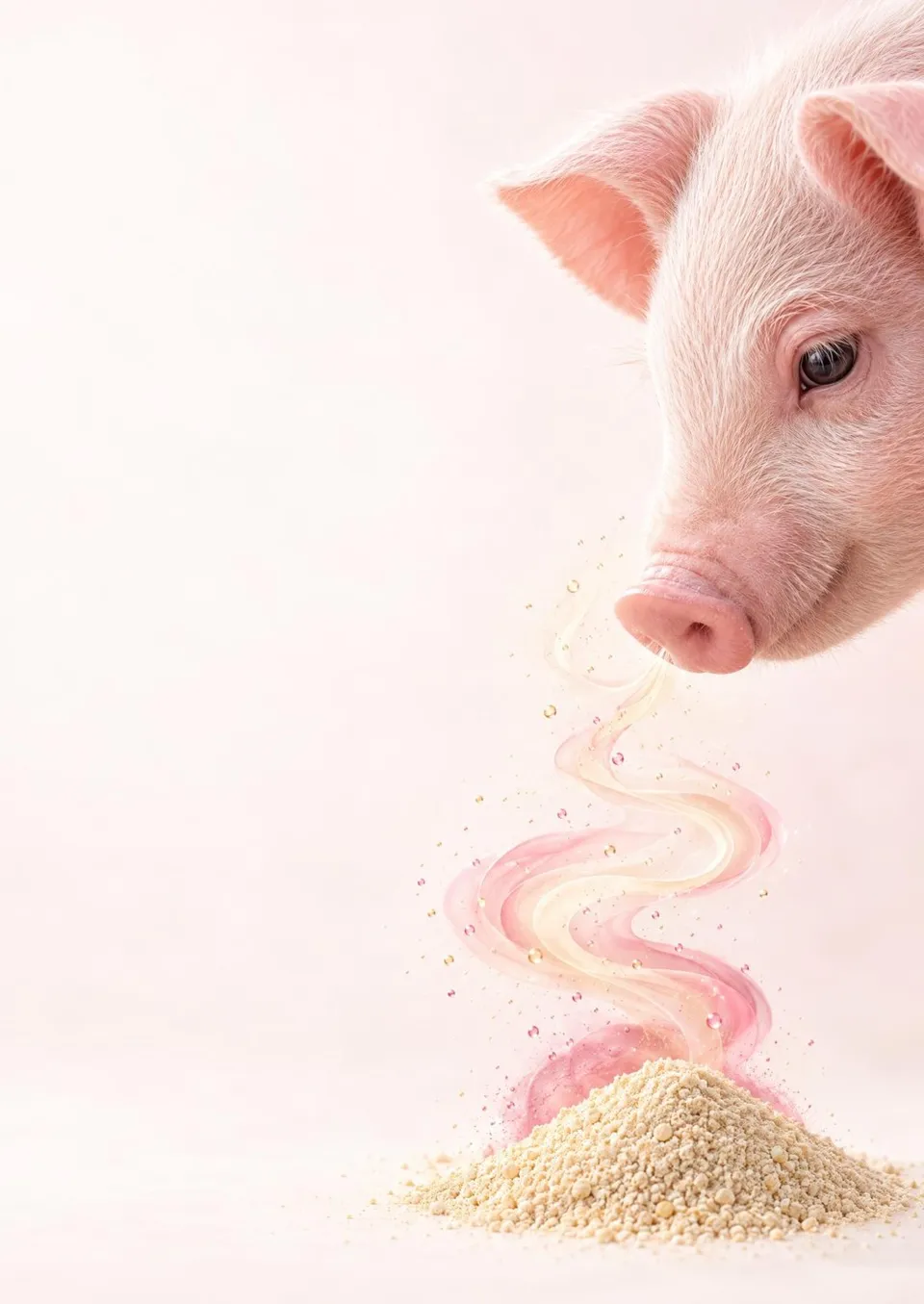
Illustration: Feed flavours
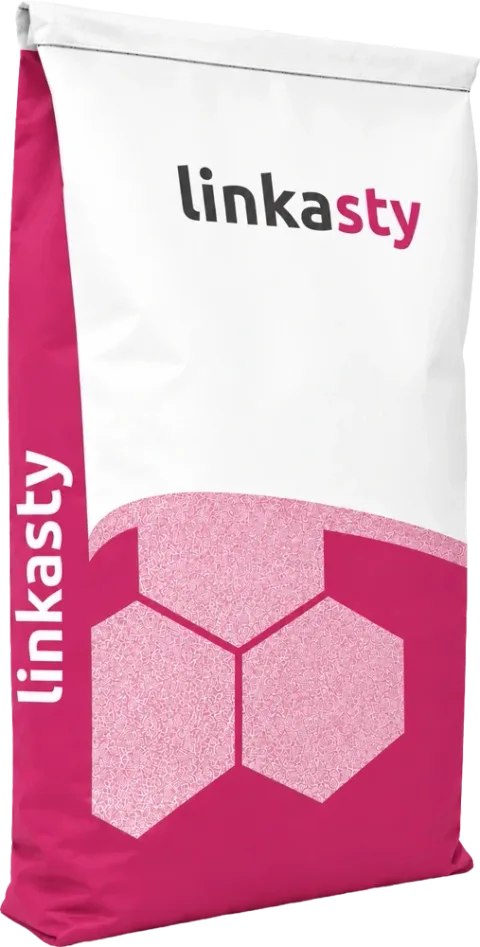
Linkasty
  • Recognised at the trough

    One smell on the feed, while raw materials, phases and seasons change.

  • Built for pelleting

    Built for pelleted feed: the rate makes up for what the press takes.

  • From sow to piglet

    The same profile under the sow, at weaning and after.

Linkasty: feed flavours for piglets, calves and other livestock

A feed flavour is a blend of aromatic substances added to feed so that animals recognise it and come to eat it. Linkasty is a range of nine flavours, milky, fruity or aniseed, built in three layers to keep the same sensory profile while raw materials, feed phases and seasons change behind it.

Role
Feed flavour
Profiles
Milky, fruity, aniseed
Species
Piglets and pigs, calves and cattle, poultry
Use
At the feed mill, in pelleted feed or mash
Shelf life
18 months under the stated storage conditions
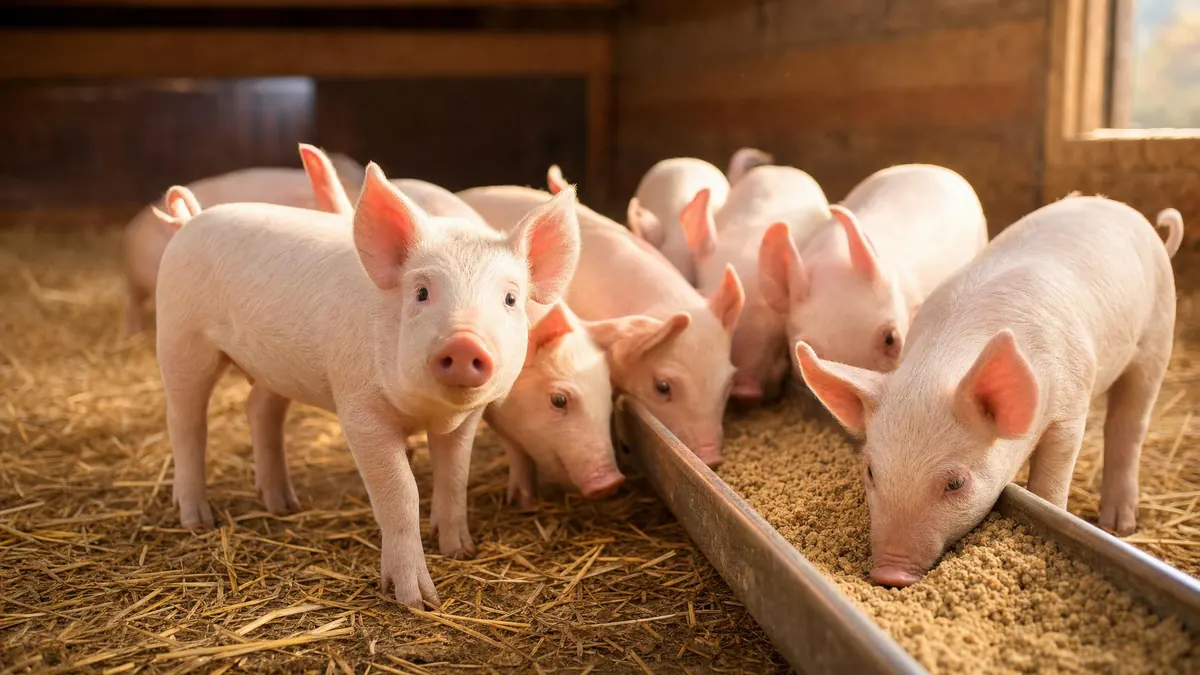
Piglets around a feed trough in a straw-bedded pen

The problem

Good feed can still be left in the trough

At weaning, the piglet moves from its mother’s milk to a dry feed it has never met, and it is wary of it. Later, every change of formula, raw material or phase changes the smell of the feed, and intake hesitates.

Some raw materials smell strong or bitter: mineral oxides, acids, fish meal, a fat that is starting to go rancid. The animal notices before we do. A flavour does not make the feed better: it makes it recognisable, and it covers what gives it away.

A sweet taste, which keeps the animal eating, is the job of a sweetener: Linkasweet. The whole subject of palatability is on the feed flavours and sweeteners page.

The principle

A flavour works on the nose before the mouth

Smell decides whether the animal approaches the feed. Each Linkasty flavour is built in three layers, each with its own job.

  1. The top attracts.The most volatile notes are smelt first and draw the animal in.
  2. The heart covers.Heart notes cover the smell of raw materials, minerals and acids.
  3. The base lasts.Base notes, such as vanillin, are among the most heat-tolerant and persist longest in the feed.
  4. The signature stays.From one formula to the next, the same profile: the animal does not notice the change.

The choice follows the feed and the stage

Species and age
Milky notes are the usual choice for piglets and calves; aniseed remains a traditional signature in pigs.
Presentation
Pelleting takes part of the flavour: pelleted feed needs a higher rate than mash.
What to cover
Mineral oxides, acids, fish meal, fats: the heart note is chosen on the smell to mask.
The sequence
The same profile from creep feed to the second-stage feed, so the transition goes unnoticed.

Linkasty at a glance

1 min 5 s, subtitled in English

Piglet feed flavours (flavors): which one to choose?

For creep feed and pre-starters, milky profiles take over from the sow’s milk. Pure Milk is the closest to it; Milk adds a vanilla base and a creamy top; Milk Vanilla pushes the vanilla further, when a stronger signature is wanted.

Fruity profiles serve another strategy: a house signature, bright and recognisable from one feed to the next. Strawberry and Raspberry for a sharp top note, Red Fruit to mask off-notes, Fruit as the all-round profile. Anise is the traditional pig signature.

Flavour memory is the argument for sequences: keep the same note from creep feed to grower, so the animal finds its feed again after each change. Published results on this strategy are inconsistent; we offer it as a choice of continuity and check it with you on your own feeds. Piglet weaning also turns on water, formulation and management.

Calves, cows and poultry: which notes?

For calf starter feed, Butter brings a strong, long-lasting butter note, Milk Vanilla a more marked milky signature, Strawberry an immediate fruity note. Butter is also used for dairy cows.

In poultry, taste sensitivity is different: palatability depends mostly on the smell and texture of the feed. Red Fruit is the profile we offer for poultry feed, to be checked on your feeds.

The flavours

Nine profiles, three families

Milky, fruity and aniseed. All in powder form, packed in bags with an aluminised inner liner that protects the volatile notes.

GradeUseIndicative rate
linkasty Pure MilkLight-brown powderThe profile closest to sow milk, for creep feed and pre-starters.Pelleted feed: 500–800 g/tMash feed: 300–500 g/t
linkasty MilkPowderFresh milk on a vanilla base with a creamy top: pre-starter, starter, piglets and fattening pigs.Pelleted feed: 500–800 g/tMash feed: 300–500 g/t
linkasty Milk VanillaPowderMilk with a pronounced vanilla lift, for piglet and calf feeds that need a stronger signature.Pelleted feed: 500–800 g/tMash feed: 300–500 g/t
linkasty ButterPowderA strong, long-lasting butter note: calves and dairy cows, also piglets and growing pigs.Pelleted feed: 500–800 g/tMash feed: 300–500 g/t
linkasty StrawberryPowderBright, sweet, immediately recognisable: piglet feed and milk replacers.Pelleted feed: 500–800 g/tMash feed: 300–500 g/t
linkasty Red FruitPowderRounder and deeper than strawberry, it masks off-notes well: piglet and poultry feed.Pelleted feed: 500–800 g/tMash feed: 300–500 g/t
linkasty RaspberryPowderA sharp, fresh, high-impact top note, for a distinct house signature in piglet feed.Pelleted feed: 500–800 g/tMash feed: 300–500 g/t
linkasty FruitPowderA versatile sweet-fruit profile, the volume reference of the range.Pelleted feed: 500–800 g/tMash feed: 300–500 g/t
linkasty AnisePowderLiquorice and anise, penetrating and persistent: the traditional appetite signature in pigs and ruminants.Pelleted feed: 500–800 g/tMash feed: 300–500 g/t

Indicative rates, valid for every profile. Pelleted feed needs more than mash: the difference makes up for what conditioning and the die take.

Trial results available on request.Ask for the trial results →

In practice

What Linkasty is

Sensory additives, flavouring compounds, within the meaning of Regulation (EC) No 1831/2003. Each molecule’s compliance is checked for the destination market: data sheet, safety data sheet and status in your country, on request.

Simplified technical data sheet

linkasty

What it is
Flavours
Range
Feed Solutions · Flavours and sweeteners
Species
Piglets and pigs, calves and cattle, poultry
Packaging
25 kg bag with aluminised inner bag
Shelf life and storage
18 months under the stated storage conditions
Indicative rate
Pelleted feed: 500–800 g/tMash feed: 300–500 g/t
By grade
Form, key ingredients and rate: see the table Nine profiles, three families
GradeForm and appearanceKey ingredients
Pure MilkLight-brown powderFlavouring substances, milky profile.
MilkPowderFlavouring substances, milk and vanilla profile.
Milk VanillaPowderFlavouring substances, milk and vanilla profile.
ButterPowderFlavouring substances, butter profile.
StrawberryPowderFlavouring substances, strawberry profile.
Red FruitPowderFlavouring substances, red fruit profile.
RaspberryPowderFlavouring substances, raspberry profile.
FruitPowderFlavouring substances, fruity profile.
AnisePowderFlavouring substances, aniseed profile.

Simplified sheet, for information only: the full technical data sheet of the grade and the label prevail.

Get the full technical data sheet →

Made on sites certified to GMP+ FSA, FAMI-QS, FCA or an equivalent feed safety scheme.
Linker Nutrients SAS · Centre d’Affaires Lorient Mer, 1 rue Honoré d’Estienne d’Orves, 56100 Lorient, France · +33 2 30 91 59 15 · contact@linkernutrients.com
www.linkernutrients.com/en/products/linkasty · Updated 4 November 2026

One feed, one profile, one sample

The documents you need

Send us the feed that is not being eaten

Tell us the species, the stage, the presentation and what is wrong with your feed: we propose a profile and a rate, and a sample to try it.

Send us the feed that is not being eaten →Ask about Linkasty →

Frequently asked questions

Does the flavour survive pelleting?

In part: heat and pressure take some of it. Base notes are chosen to withstand heat, and the rate for pelleted feed is higher than for mash to make up for what the die takes.

Should the same flavour run from creep feed to grower?

That is the idea of flavour memory: keep the same note so the animal finds its feed again after each change. Published results are mixed; we help you check it on your own feeds.

Flavour or sweetener?

A flavour works on smell, and so on the decision to approach the feed; a sweetener works on taste, and so on the decision to keep eating. In piglets the two are often combined: see Linkasweet.