
Company
Our expertise: from technologies to animal performance
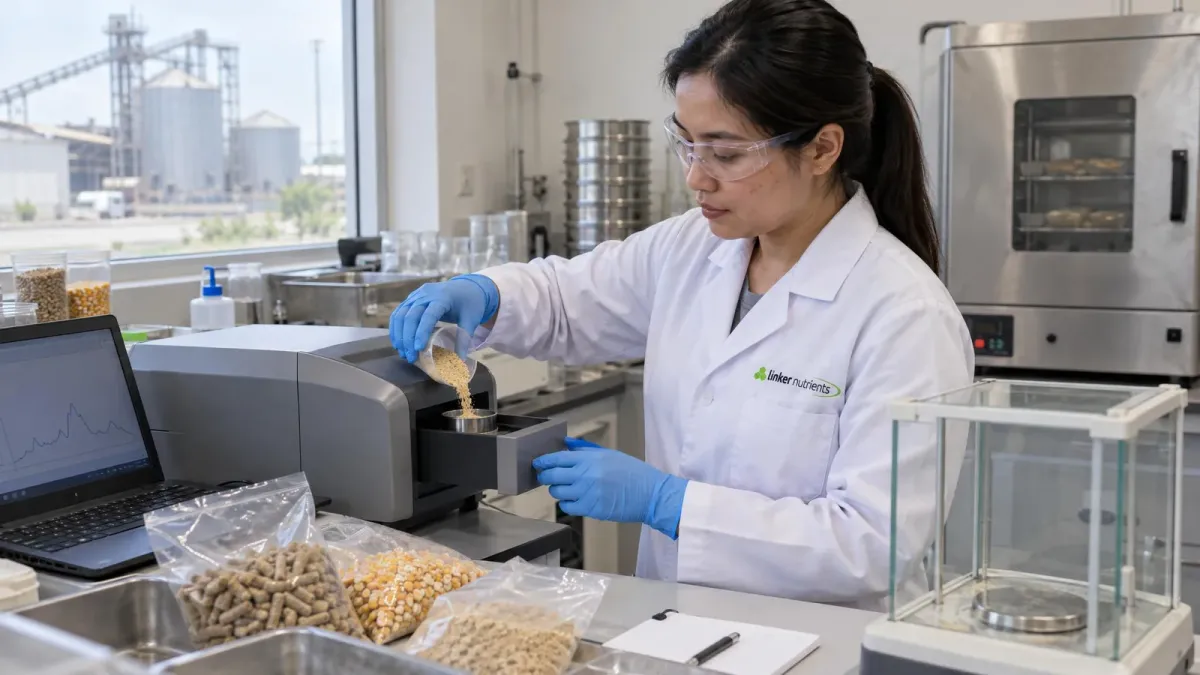
An additive is only as good as what surrounds it: the chemistry of the active, the form that carries it to where it works, the rate set on your feed and the follow-up on your site. Here is what our team masters, on which platforms, and how we check it.
Ingredients and technologies
Fourteen families of actives, each linked to its products
Independent of any active-ingredient supplier, we know each family from the molecule to the rate, and we choose the form that carries it intact to where it works.
Acidifiers
Mould inhibitors
Feed hygiene
Antioxidants
Butyrate and butyrate glycerides
Monoglycerides
Tannins and plant extracts
Essential oils and flavouring substances
Clays
Lysophospholipids
Ferments
Palatability
Nutritionals
Inactivated yeast and acids
Five ways to carry an active to where it works
How an active performs also depends on how it is delivered: the form decides whether it withstands the process and reaches its site of action intact.
- Carrier loading
Acids, salts and glycerides loaded on a carrier, as a free-flowing powder that mixes into the formula.
- Coating
A lipid, or lipid and carbohydrate, matrix that delays release and reduces odour and dust; progressive release along the gut for Linkazoic Ultra.
- Micronisation
A clay with an ultrafine particle size.
- Micro-beads and spray-drying
Free-flowing, heat-stable micro-beads; a spray-dried powder, uniform from one particle to the next.
- Liquid forms
Sprayed at the mixer or after the press, or dosed in drinking water; the equipment with Linker Flow.
Formulation
Formulation support, and custom feed additive formulation when no grade fits
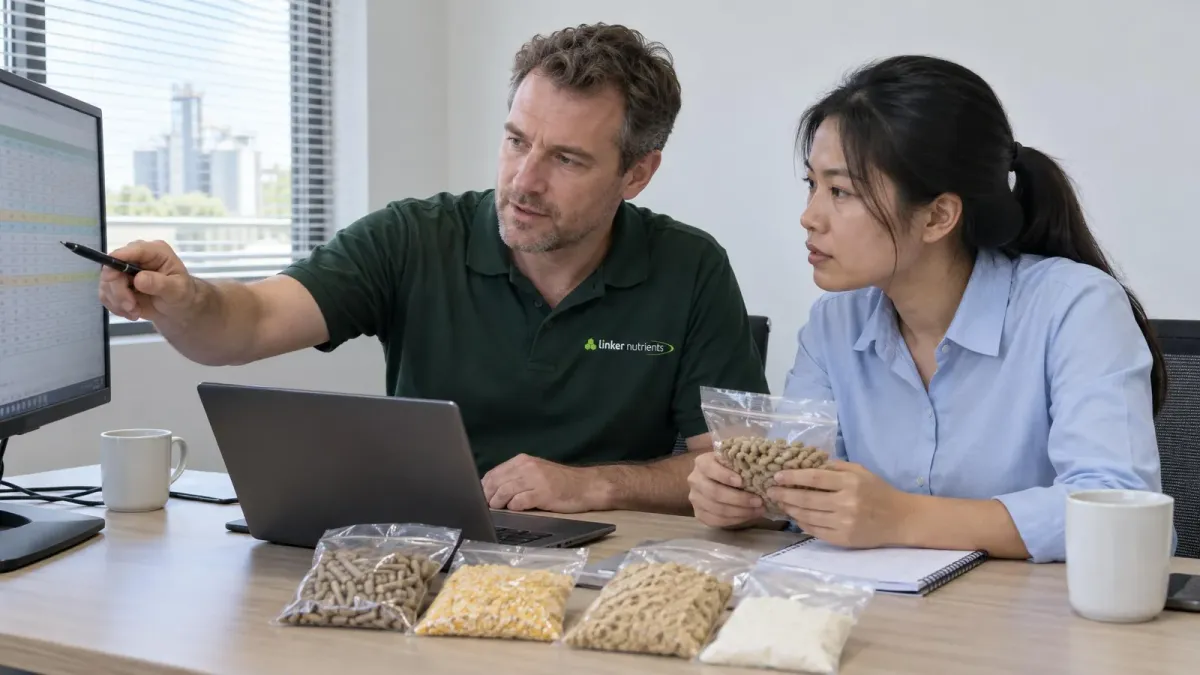
We work with formulators on their formula: the buffering capacity of the feed for an acidifier, fat quality for an antioxidant, water activity for a mould inhibitor, the inclusion point for a liquid. A network of consultants supports this formulation work.
When no grade fits, we develop formulas and forms tailored to the need, in Feed Solutions and Farm Solutions alike. The starting point is the constraint: a preservative that has to survive pelleting, an acidifier that has to run through a dosing pump, an additive that has to be applied as a liquid after the press, a form that has to be handled without dust.
Technical support
Technical support, at the mill and on the farm
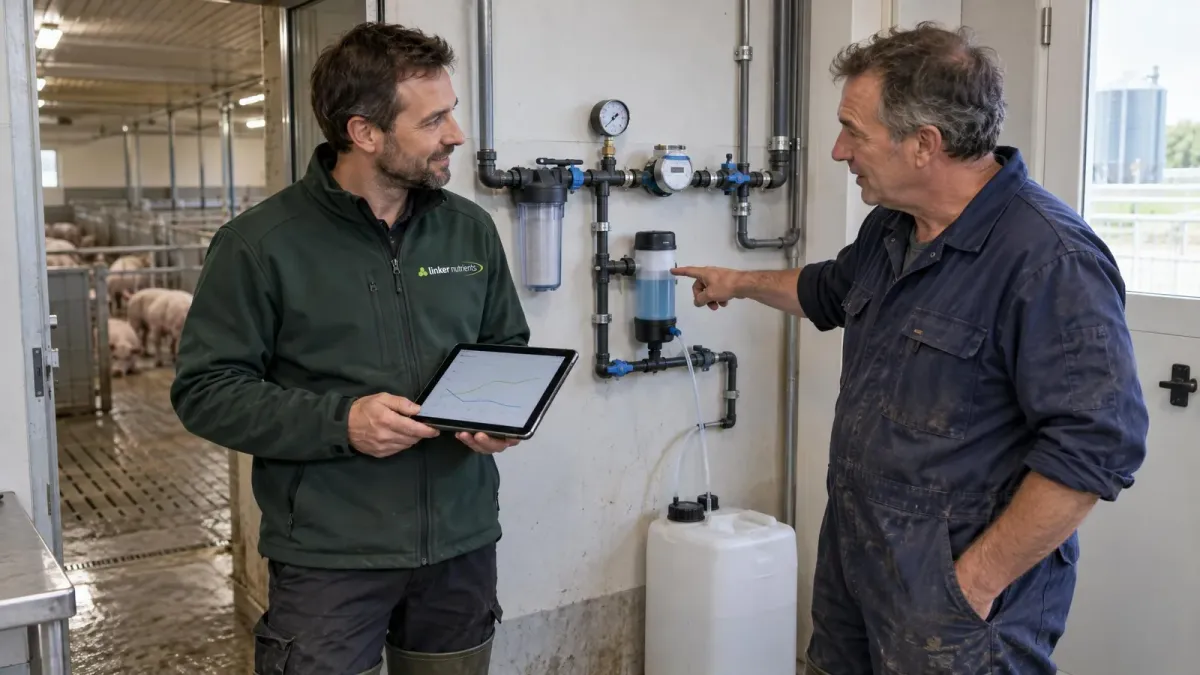
Support is for feed mills, premix manufacturers, distributors, nutritionists and farms. It covers the choice of platform and grade, the application point, setting the rate by species, stage and process, and team training, with product presentations.
On the farm, support starts from what you see: intake dropping after weaning, a heat wave, wet litter, eggshells getting weaker. We look at management first (temperature, water flow and quality, feeder space, litter), then at what feed and drinking water can add, and at what belongs to your veterinarian.
A network of consultants supports this farm management work. Our guides follow the same order, management first: litter and ammonia, heat stress, weaning, brooding, laying.
From science to the field
How we work: five steps, from scouting to use
Innovation means finding the right technology, turning it into a product people can use and checking its value in real conditions.
- 1IdentifyScouting ingredients, technologies and innovations, wherever they come from.
- 2SelectScientific relevance, performance and ease of use: keeping only what stands up to scrutiny.
- 3SpecifyTurning a technology into a Feed Solutions or Farm Solutions product: form, grade, technical data sheet: a written specification for each grade.
- 4ValidateScientific review, technical assessment, then validation in the field.
- 5SupportApplication point, rate, follow-up: a product is only delivered when it is used well.
Science and quality
Proof before promise
Our team works with universities, research institutes, analytical laboratories and trial stations in Europe, Asia and the United States, chosen for the question at hand.
- 160+
- trials on our formulas, on farm, at trial stations and in the laboratory
- 20+
- independent laboratories, 16 of them ISO/IEC 17025 accredited
- 110+
- independent analysis reports on our products
- 30
- countries where our solutions were tested or analysed
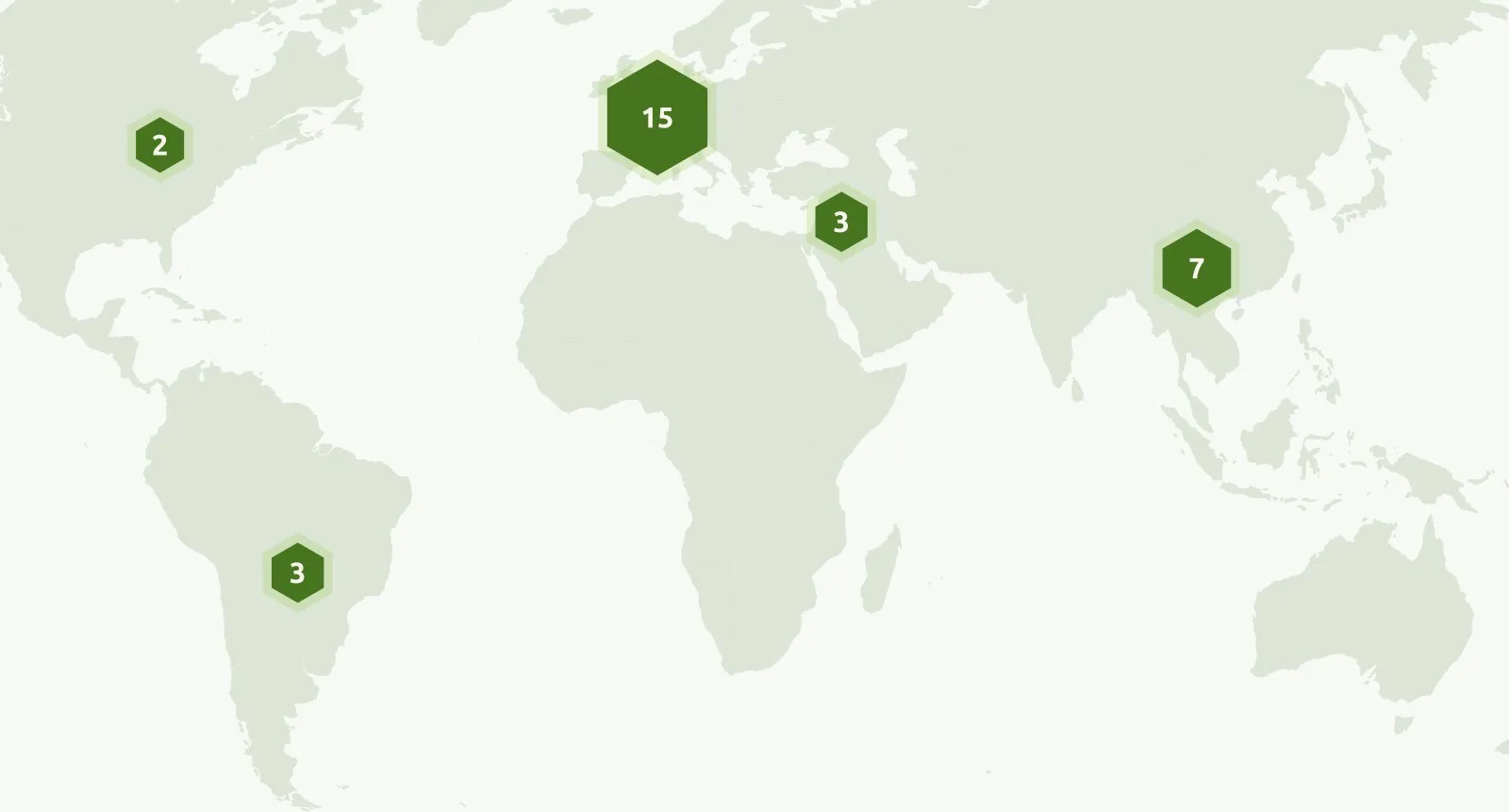
Universities and public research institutes · independent accredited laboratories · commercial farms and trial stations.
A trial run with you has its question, its readings and its decision rule written before day one; its result is read against that rule, including when it says no.
Each product is reviewed before it joins the range, then specified under the Linker brand, with its technical data sheet, specification checks and batch traceability. Everything that goes out under our name is reviewed in detail. The documents for each product: quality and documents.
Scientific assessment
Literature, technical data and documented mechanisms, checked before a solution goes to market.
Trials designed with you
A protocol and its decision rule, written before day one, at the mill or on the farm.
Field follow-up
Technical support for mills, nutritionists, distributors and farms, from the first batch onwards.
Why Linker
What changes with an independent, agile team
Linker Nutrients is tied to no single technology: it starts from your problem, compares several routes and tells you which one holds up. A solution only creates value when it delivers a measurable result on your site; decisions are made on evidence, not on assumptions.
Independent of any active-ingredient supplier, we choose each technology on what it brings: see About Linker Nutrients. Five differences follow from it.
- Independence: no technology and no active-ingredient supplier to defend, the route is chosen on your problem.
- Technical evidence: a result is read with its conditions, its limit and its level of evidence.
- Knowing how to apply: the rate, the form, the inclusion point and the follow-up.
- Agility: flexibility, responsiveness and solutions adapted to local conditions.
- The long run: technical support that stays with the product well after the first delivery.
The detail, family by family and process by process
The actives: what we know about each family
For each family: what makes it active in feed or in water, what breaks it down, and the rate that follows.
- Acidifiers
Organic and inorganic acids and their salts, chosen on their pKa and on the buffering capacity of the feed.
- Mould inhibitors
High-pKa acids and their salts, dosed on water activity, moisture and storage time.
- Feed hygiene
A feed hygiene liquid and its buffer system.
- Antioxidants
Phenolic antioxidants and chelators, in two lines: with and without ethoxyquin.
- Butyrate and butyrate glycerides
The salt, plain or coated, or the ester bond cleaved by lipase in the small intestine: tributyrin or sodium butyrate.
- Monoglycerides
Glycerol monolaurate, as a coated granule.
- Tannins and plant extracts
Hydrolysable and condensed tannins; Yucca schidigera extract; artichoke extract in drinking water.
- Essential oils and flavouring substances
Encapsulated essential oils for litter; flavouring substances dispersed in drinking water.
- Clays
Bentonite, an activated and micronised fibrous clay.
- Lysophospholipids
Nutritional emulsifiers that increase the surface offered to lipase.
- Ferments
A postbiotic of inactivated lactobacilli; a fermented-milk probiotic.
- Palatability
Three-layer flavours; combined high-intensity sweeteners.
- Nutritionals
Betaine; minerals, vitamins, amino acids, trace elements and electrolytes through drinking water.
- Inactivated yeast and acids
An inactivated yeast combined with acids, for drinking water.
The processes: the form that carries the active
How an active performs also depends on how it is delivered: the form decides whether it withstands the process and reaches its site of action intact.
- Carrier loading
Acids, salts and glycerides loaded on a carrier, as a free-flowing powder that mixes into the formula.
- Coating
A lipid, or lipid and carbohydrate, matrix that delays release and reduces odour and dust; progressive release along the gut for Linkazoic Ultra.
- Encapsulation
Encapsulated essential oils, released gradually.
- Emulsification
Aromatic oils kept dispersed in the water line; a liquid spread evenly at the mixer.
- Micronisation
A clay with an ultrafine particle size.
- Micro-beads and spray-drying
Free-flowing, heat-stable micro-beads; a spray-dried powder, uniform from one particle to the next.
- Process stability
The salt route, stable at pelleting; the ester bond, with no barrier to damage; inactivated cells, whose effect does not depend on surviving pelleting.
- Liquid forms
Sprayed at the mixer or after the press, or dosed in drinking water; the equipment with Linker Flow.
Where to start
You have a problem to solve
Describe the species, the stage, the process and what you are seeing: you will get a technical answer, or an honest no.
Talk about your project →You want to test
Tell us the question the trial has to settle: we write the protocol and the decision rule with you.
Propose a trial →Or directly: +33 2 30 91 59 15 · contact@linkernutrients.com
Frequently asked questions
Can Linker develop a custom feed additive?
Yes. We develop formulas and forms tailored to a specific need, in Feed Solutions and Farm Solutions alike: a form, a grade and instructions for use that fit your process, climate or application constraint.
Who sets the decision rule of a trial?
You and us, together, before the start. It is written into the protocol with the question, the arms, the schedule and the records, and the result is read against it, whether it is favourable or not.
How are the analyses done?
We arrange them with laboratories, wherever you are in the world, when a question calls for one. We help define what to sample and how to read the result.
Why work with an independent company rather than a large group?
Because it has no technology and no active-ingredient supplier to defend: it can start from your problem, compare several routes and tell you when the answer is not a product. And because it stays agile: flexible, responsive and close to the field.
Which form should I choose: powder, coated granule or liquid?
It depends on the point of application and the process. A powder on a carrier goes into the formula; a coated granule delays release; a liquid is sprayed at the mixer or after the press, or dosed in drinking water.