

Linker Nutrients

Farm Solutions · Drinking water

Stronger shells, steadier lay.

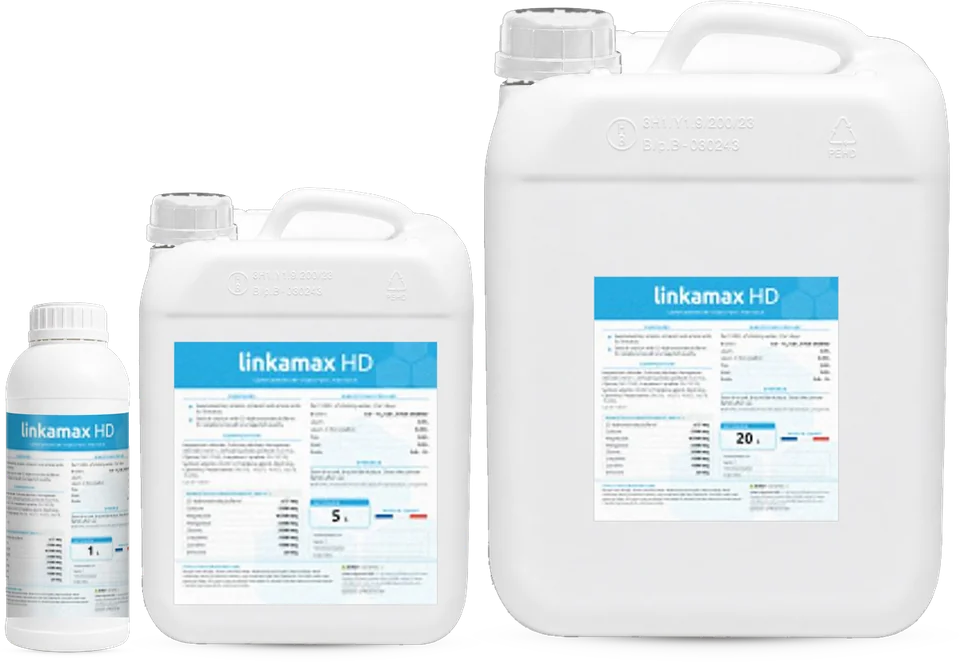
Illustration: liquid calcium for drinking water
Linkamax HD
  • Calcium she can absorb

    A soluble form, by the route that stays open when she eats less.

  • Vitamin D, one step ahead

    Vitamin D arrives in the form the kidney takes up to drive calcium absorption.

  • At the moments that count

    Onset, peak, heat and late lay: 3 to 5 days, the feed formula unchanged.

Linkamax HD: liquid calcium for laying hens, through the water

A liquid calcium supplement for laying hens, given in the drinking water. It supplies calcium in a soluble form and vitamin D in a form that has already passed the liver step, with minerals and amino acids of the shell matrix. For the times when the hen spends calcium faster than she eats it: peak and late lay. Stronger shells, steadier lay.

Form
Orange-brown liquid
Species
Layers and breeders; broilers
Use
In drinking water, in courses of a few days
Packs
1 L bottle, 5 L and 20 L cans

The problem

Every night, the hen builds a shell

The shell is calcified mostly at night, when the hen is no longer eating. The calcium then comes from what she ate late in the day and from her medullary bone, a reserve she rebuilds during the day. At peak production, demand is at its highest; in late lay, eggs get bigger and the hen mobilises her calcium less well.

The result shows at the packing station: cracked, broken and downgraded eggs. The first answer lies in the feed: calcium content and particle size, the late-afternoon supply. Drinking water adds a targeted supply over a few days, without changing the formula.

The principle

Calcium, vitamin D, matrix: three parts of one shell

A shell and a bone are not made of calcium alone: they also need the vitamin that gets it absorbed and the organic framework that holds it.

  1. Vitamin D takes a shortcut.In the ration, vitamin D3 has to be converted by the liver before it can be used. Linkamax HD supplies vitamin D in the form that comes out of that step; it relies less on fat and bile to be absorbed.
  2. Calcium comes through the water.In a soluble form, it reaches the hen by the route that stays open even when she eats less.
  3. The matrix follows.Minerals and amino acids support the organic framework of shell and bone.

Peak and late lay

Eggshell quality: when to give calcium and vitamin D through the water

Thin egg shells, fragile shells, soft-shelled eggs: the causes are many and are best checked in order. The age of the hen, heat, the calcium content and particle size of the ration, the calcium to phosphorus balance, vitamin D, the health status of the flock. One soft egg does not mean the same as a run of them: in the second case, your veterinarian and your nutritionist are the first people to call.

Linkamax HD fits where the water route makes sense. At peak lay, when calcium demand is highest. In late lay, when the older hen mobilises her reserves less well and the shell gets thinner. A supply of a few days, repeated according to the laying curve and the downgrade rate you track.

The ration remains the basis: Linkamax HD adds to a calcium programme, it does not replace it. For the calcium to phosphorus ratio and trace minerals, see Linkaphos; for vitamins and amino acids at peak, Linkastim. For managing the whole period, see peak and late lay.

The product

Linkamax HD in practice

One liquid grade for poultry drinking water.

Simplified technical data sheet

linkamax HD

What it is
Calcium for the eggshell
Range
Farm Solutions · Drinking water
Species
Layers and breeders; broilers
Use
Through the water, around peak and in late lay, contributing to eggshell quality.
Form and appearance
Translucent liquid, off-white to pale yellow
Packaging
1 L bottle, 5 L and 20 L cans
Shelf life and storage
24 months from manufacture. Cool, dry and dark; close tightly after use
Key ingredients
Calcium and vitamin D, with minerals and amino acids of the shell matrix.
Indicative rate
Layers: 0.5 L per 1,000 L of water, 3 to 5 days; in hot weather: 0.25 LBroilers: 0.5–1 L per 1,000 L, 3 to 5 days; in hot weather: 0.5 LDucks: 0.5–1 L per 1,000 LPigs: 0.3 L per 1,000 LSows: 0.2 L per 1,000 L

Simplified sheet, for information only: the full technical data sheet of the grade and the label prevail.

Get the full technical data sheet →

Made on sites certified FCA, FAMI-QS or GMP+ FSA.
Linker Nutrients SAS · Centre d’Affaires Lorient Mer, 1 rue Honoré d’Estienne d’Orves, 56100 Lorient, France · +33 2 30 91 59 15 · contact@linkernutrients.com
www.linkernutrients.com/en/products/linkamax-hd · Updated 7 October 2026

Indicative rates, taken from the current technical data sheet.

Trial results available on request.Ask for the trial results →

How to use

Prepare, dose, store

Make up the stock solution on the day of use, in a clean tank. The amount of product for the tank depends on the day’s water intake and on the dosing pump’s injection rate: a technician works it out with you the first time. Linkamax HD is one of our drinking water supplements.

  • Never in the same water as a live vaccine: flush the line, vaccinate, then resume.
  • With another product in the water: check compatibility before combining them; when in doubt, separate them in time.
  • Storage: 24 months from manufacture, cool, dry and away from light; close tightly after use.

In practice

What Linkamax HD is

A drinking-water supplement: a supply of nutrients, calcium, vitamin D, trace minerals and amino acids, supporting calcium metabolism in the phases of high demand. Technical data sheet, safety data sheet and status in your country: on request.

The data sheet, and someone to read it with you

The documents you need

Tell us about your flock

Age of the hens, laying curve, downgrade rate, ration and drinking water: with these, a technician suggests a supply calendar and a rate.

Get set-up advice →

Frequently asked questions

Why vitamin D past the liver step, for layers?

In the ration, vitamin D3 first has to be converted by the liver before it can be used. Linkamax HD supplies the form that comes out of that step directly; it relies less on fat and bile to be absorbed.

Liquid calcium for hens, or calcium in the feed?

They do different jobs. Calcium in the feed covers the everyday requirement of laying hens. Liquid calcium in the drinking water is a targeted supply over a few days, when demand outruns what the hen eats: at peak and in late lay.

Is Linkamax HD enough if shells are fragile?

No. Start with the ration (calcium content and particle size, the late-afternoon supply), heat and the state of the flock, with your veterinarian and nutritionist. Linkamax HD supplies calcium and vitamin D through the water when demand is high: it adds to the ration, it does not replace it.

Can it be used in broilers?

Yes, its technical data sheet covers broilers: 0.5–1 L per 1,000 L of water, for 3 to 5 days, and 0.5 L in hot weather.