
Linker Nutrients

Feed Solutions · Digestion and performance

One molecule, two ways to deliver it.

Illustration: Benzoic acid for pig feed
Linkazoic
  • Acidifies the stomach

    Largely undissociated at gastric pH: it lowers the pH and slows bacteria.

  • Less ammonia from slurry

    Excreted as hippuric acid, it makes urine and slurry more acidic: less ammonia escapes.

  • Carried further with Ultra

    The coated granule releases the acid along the intestine, at a lower inclusion.

Linkazoic: benzoic acid for pig feed

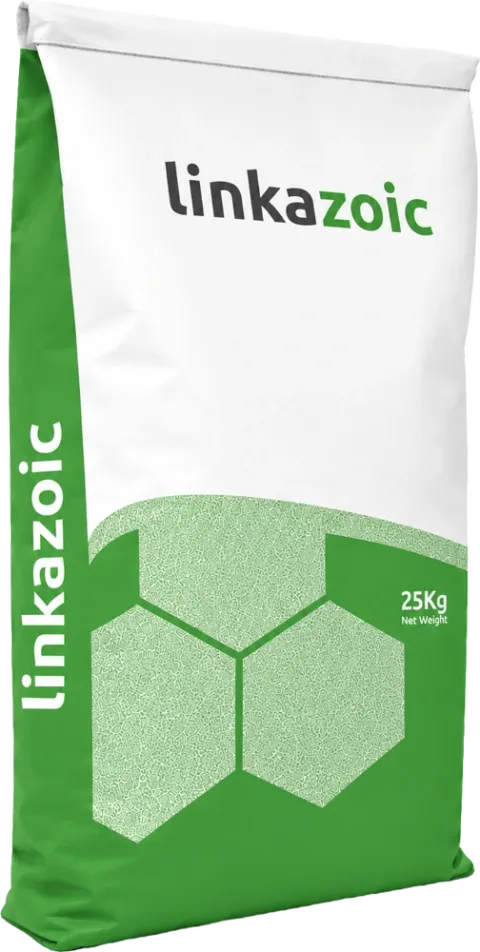
Benzoic acid is an organic acid used in pig feed for its undissociated form, which stays active at stomach pH. Linkazoic offers this feed additive in two grades: the pure acid, as a low-dust small pellet, and a coated granule combined with another organic acid, which releases it progressively along the digestive tract.

Forms
Pure pellet and coated granule
Species
Weaned piglets, fattening pigs, sows
Use
At the feed mill, in the mixer
Packaging
25 kg bag
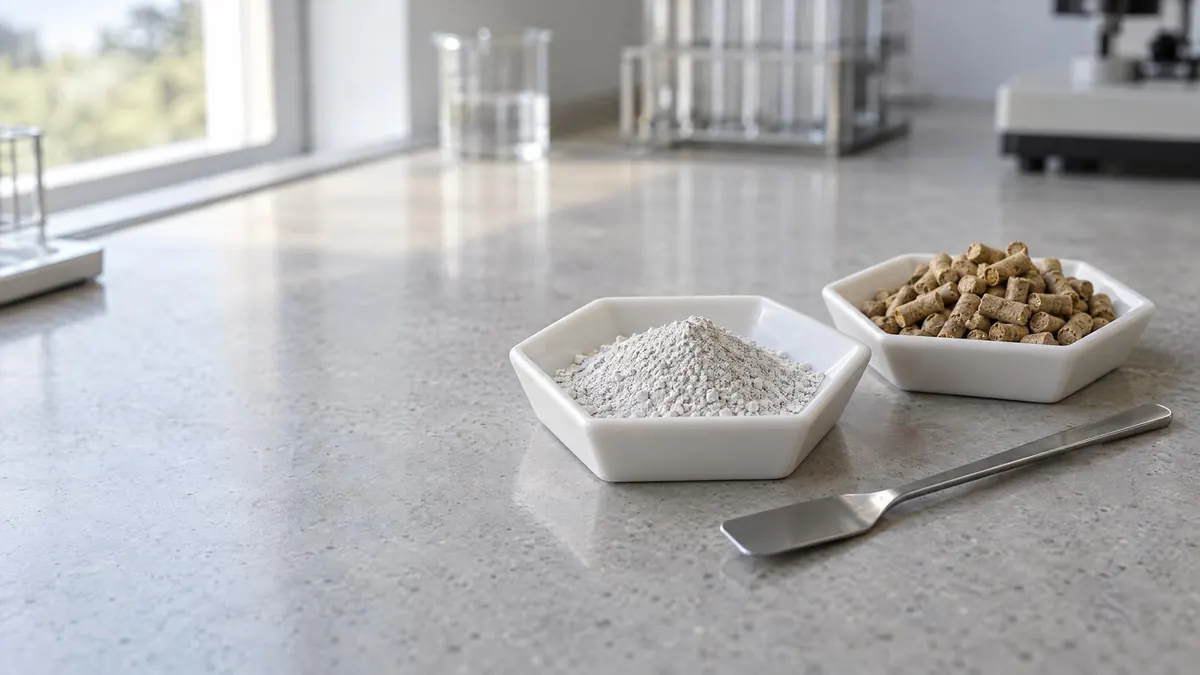
Two dishes on a lab bench: a white powder and pellets

The problem

The weaned piglet’s stomach does not yet acidify enough

At weaning, the piglet leaves milk for a solid feed, rich in protein and minerals, that its stomach struggles to acidify. Gastric pH stays high, protein digestion gets off to a poor start, and the intestine receives what the stomach has not digested.

This is the period of weaning digestive upsets, post-weaning diarrhoea included, and the one where every feed lever counts. Benzoic acid in piglet feed is one of them: it lowers the pH and, in its undissociated form, acts on bacteria in the feed and in the stomach.

The piglet weaning transition also depends on water, formulation and farm management.

The principle

Why benzoic acid, and why coat it

At stomach pH, benzoic acid remains largely in its undissociated form, the form that acts.

  1. It lowers the pH.In the feed and in the stomach, it contributes to the pH drop that protein digestion needs.
  2. It acts undissociated.Being neutral, it crosses the membrane of bacteria present in the feed, then dissociates inside: their metabolism slows down.
  3. It is excreted.Once absorbed, it is conjugated with glycine in the liver and excreted in urine as hippuric acid.
  4. The coating carries it further.Free acid is absorbed or ionised early. The coated form releases it progressively further along, and the organic acid combined with it keeps a pH around the granule at which it stays active.

What decides the grade

Stage
Creep and nursery feed, or grower, finisher and sow feed.
Target segment
The stomach only, or the intestine as well.
Pelleting
Avoid prolonged conditioning at very high temperature: the data sheet gives the limit.
Country
The status of benzoic acid differs by country and by species.

Linkazoic at a glance

1 min 4 s, subtitled in English

The grades

Choosing a grade

Two forms for two uses: pure acid, working in the feed and the stomach, and coated acid, released further along, at a lower rate.

GradeUseIndicative rate
linkazoicSmall white pellets · 25 kg bagFeed-grade benzoic acid, low in dust and corrosion, for every stage of the pig.Weaned piglets: 5 kg/t; growing pigs: 3–5 kg/t; finishing: 5–10 kg/t; sows: up to 10 kg/t, within the maxima of the country of use
linkazoic UltraPale yellow coated granule · 25 kg bagBenzoic acid released progressively beyond the stomach, for creep and nursery feed.Piglets, creep and weaning feed: 1.5–2.0 kg/t; nursery: 1.0–1.5 kg/t. Below 1.0 kg/t the effect becomes inconsistent.

Indicative rates taken from the current technical data sheet of each grade, within the maximum levels of the country of use. The right rate depends on stage, formula and target segment: we set it with you.

What has been measured

Each result comes with its conditions; the full details are available on request.

  • Trial on the productLinkazoic Ultra

    Study published in 2024 in weaned piglets: with coated benzoic acid, dry matter digestibility rose from 88.2% to 90.5%.

    dry matter digestibility, %
    Control88.2
    With coated benzoic acid90.5
    Conditions
    32 piglets in individual cages, 21 days; trial rate of 3 kg/t, above the use rate of the grade.
    On request
    Publication reference
    Ask for the details, result 1 →
  • Laboratory testLinkazoic Ultra

    In simulated intestinal fluid, 40% of the benzoic acid in Linkazoic Ultra is still in its active form after 6 hours, while uncoated acid is exhausted within 3 hours.

    % of benzoic acid still active after 6 h
    Uncoated benzoic acid0
    Linkazoic Ultra40
    Conditions
    In vitro test in artificial intestinal fluid, hourly measurements over 6 hours, on the current formula (2025).
    On request
    Method and results
    Ask for the details, result 2 →

Trial results available on request.Ask for the trial results →

Acid or benzoate

Benzoic acid vs sodium benzoate: what difference in the feed?

Sodium benzoate is the salt of benzoic acid. In feed, it behaves like other organic acid salts: easier to handle, but it needs an acid environment to give back the undissociated form, the one that acts.

Benzoic acid supplies that form directly, with no extra sodium in the formula. It is what Linkazoic offers, pure or coated, as a feed-grade granule.

To place benzoic acid among the other acids in feed, see organic acids in feed; to set an acid rate on a formula, see the acid-binding capacity of feed.

In practice

What Linkazoic is

The status of benzoic acid depends on the country and the species: each country sets its own rules.

Technical data sheet, safety data sheet and the status of Linkazoic in your country: on request.

Simplified technical data sheet

linkazoic

What it is
Benzoic acid
Range
Feed Solutions · Digestion and performance
Species
Weaned piglets, fattening pigs, sows
Packaging
25 kg bag
Shelf life and storage
Linkazoic: 12 months; avoid prolonged conditioning above 85 °CUltra: 12 months, away from direct sunlight
By grade
Form, key ingredients and rate: see the table Choosing a grade
GradeForm and appearanceShelf life and storageKey ingredientsIndicative rate
LinkazoicSmall white pellets12 months; avoid prolonged conditioning above 85 °CBenzoic acid.Weaned piglets: 5 kg/t; growing pigs: 3–5 kg/t; finishing: 5–10 kg/t; sows: up to 10 kg/t, within the maxima of the country of use
UltraPale yellow coated granule12 months, away from direct sunlightBenzoic acid, with an organic acid, as a coated granule.Piglets, creep and weaning feed: 1.5–2.0 kg/t; nursery: 1.0–1.5 kg/t. Below 1.0 kg/t the effect becomes inconsistent.

Simplified sheet, for information only: the full technical data sheet of the grade and the label prevail.

Get the full technical data sheet →

Made on sites certified to GMP+ FSA, FAMI-QS, FCA or an equivalent feed safety scheme.
Linker Nutrients SAS · Centre d’Affaires Lorient Mer, 1 rue Honoré d’Estienne d’Orves, 56100 Lorient, France · +33 2 30 91 59 15 · contact@linkernutrients.com
www.linkernutrients.com/en/products/linkazoic · Updated 4 November 2026

The data sheet, and someone to read it with you

The documents you need

Tell us your feed and your country

Stage, formula, conditioning temperature and country of use: with these, a technician will suggest a grade and a rate, within the regulatory framework of your country.

Ask about Linkazoic →

Frequently asked questions

Can benzoic acid be used in poultry feed?

It depends on the country: tell us where the feed will be used and we will reply on the status of Linkazoic.

What is the benzoic acid dosage for piglets?

The data sheet of each grade gives indicative rates by stage, within the country’s maximum levels: they are lower for the coated form than for the pure acid. The grade table shows them; we adjust them to your formula.

Why a coated benzoic acid?

Free acid is largely absorbed or ionised in the stomach. The coating releases it progressively further along, and the organic acid it contains keeps a pH around the granule at which the acid stays in its active form.