
Farm Solutions
Drinking-water supplements for poultry and pigs: the quickest route to put in place
Ten liquid platforms, dosed through the dosing pump already on the farm: water acidification, minerals, vitamins, and targeted supplies for the moments that matter in the flock. A correction through the feed takes a week and commits a whole batch; through the water, it is decided in the morning and involves a single house.
What this family solves
Why go through the drinking water
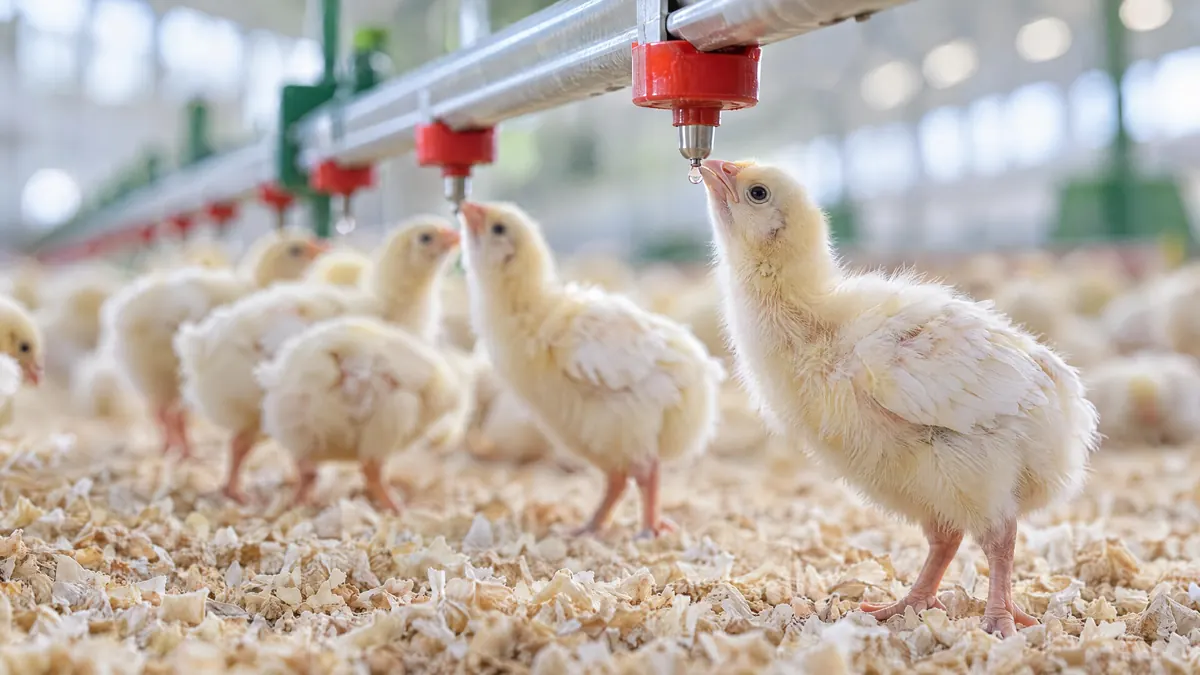
Every animal in the house drinks. It drinks before it eats, it keeps drinking when it eats less, and it drinks more than it eats, by weight, all the more so when it is hot. The water line is therefore the only system on the farm that reaches the whole flock, on the day you decide, with equipment already installed and already paid for.
It is also a route you can stop. A formula change commits the whole delivery; a supply through the water runs for the days you choose, in the house you choose. Hence the rule: everyday nutrition goes in the feed, corrections and particular moments go in the water.
These products are complementary feeds and premixes for drinking water: what the market calls poultry water additives, liquid supplements for poultry, or simply a water supplement for chickens. For a contract grower who does not choose the feed, drinking water additives are often the only nutritional lever in their own hands.
The platforms
Ten platforms for the water line
Each cell opens its product page: grades, use, pack sizes.
 linkacid Prime LLiquid acidifier: bringing down and holding the pH of drinking water.
 linkamax HDCalcium, vitamin D and trace elements for the eggshell in layers.
 linkaphosPhosphorus and calcium in a set ratio, with trace elements.
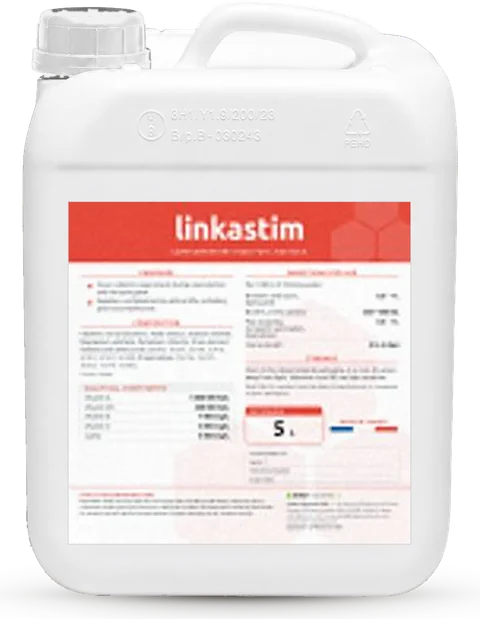 linkastimVitamins, amino acids, trace elements and electrolytes, at the right moment.
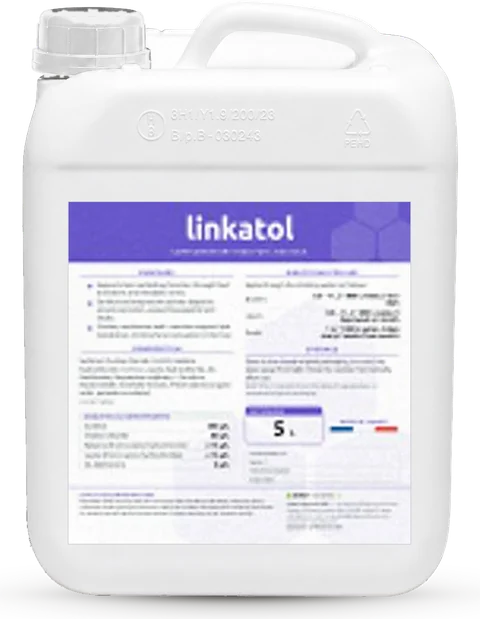 linkatolCholine and methyl donors: fat metabolism.
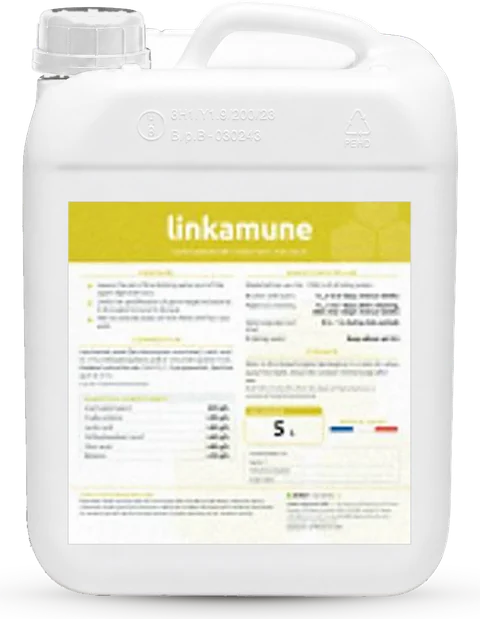 linkamuneInactivated yeast and acids: digestive security through the drinking water.
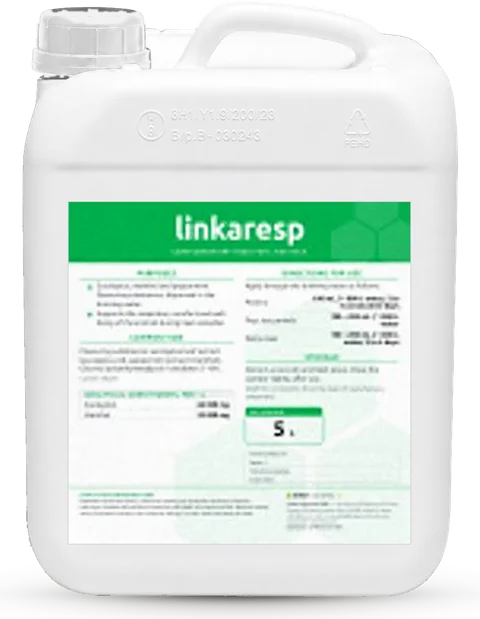 linkarespFlavouring substances: respiratory comfort when the heat rises.
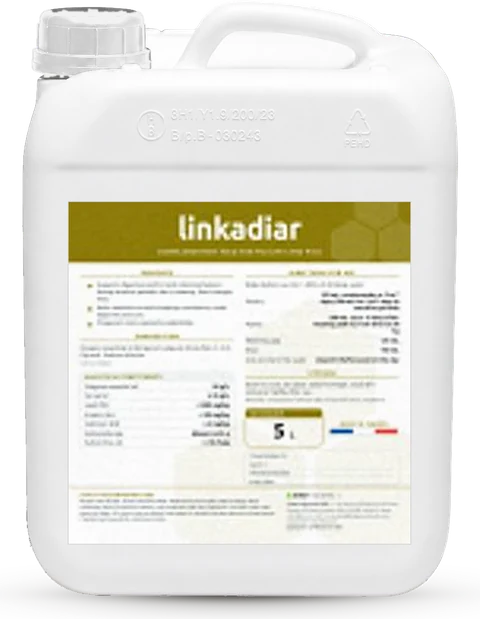 linkadiarOregano essential oil, dispersed in the drinking water.
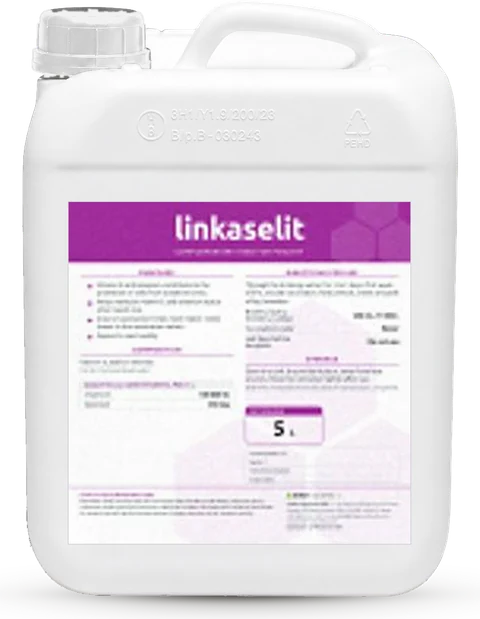 linkaselitVitamin E and selenium, over a few days, in demanding periods.
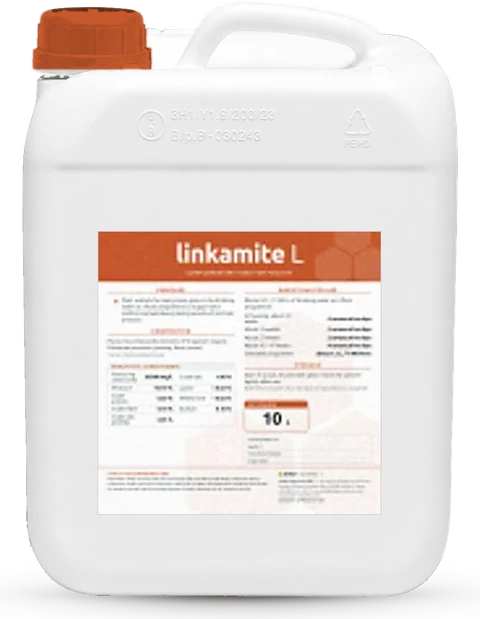 linkamite LPlant extracts as a flock programme, for bird comfort during periods of red mite pressure.
How to choose
What the water line can carry, and when
Start from what you are looking for, not from the product: each row answers a moment in the flock.
| What you are looking for | Platform | What it is | Species | Pack sizes |
|---|---|---|---|---|
| Water at the right pH, continuously, with animals present | Linkacid Prime L | Liquid acidifier: organic acids | Poultry, pigs | 1 L, 5 L, 20 L |
| Eggshells, from peak to end of lay | Linkamax HD | Calcium and vitamin D | Poultry | 1 L, 5 L, 20 L |
| The calcium-to-phosphorus ratio, in fast growth and at the start of lay | Linkaphos | Phosphorus, calcium and magnesium | Poultry | 1 L, 5 L, 20 L |
| Covering needs when intake drops: laying peak, transport, heat | Linkastim | Vitamins, electrolytes and amino acids | Poultry, pigs, ruminants | 1 L, 5 L, 20 L |
| Fat metabolism: feed transitions, start of lay | Linkatol | Choline and methyl donors | Poultry | 1 L, 5 L, 20 L |
| Digestive security through the water | Linkamune | Inactivated yeast and acids | Poultry, pigs | 1 L, 5 L, 20 L |
| Respiratory comfort when the heat rises | Linkaresp | Flavouring substances, led by eucalyptus | Poultry, pigs, ruminants | 1 L (other sizes on request) |
| Oregano essential oil, in the water | Linkadiar | Oregano essential oil | Poultry, pigs, ruminants | 1 L, 5 L |
| Vitamin E and selenium over a few days, in demanding periods | Linkaselit | Vitamin E and selenium | Poultry | 1 L |
| A flock programme for laying hens | Linkamite L | Plant extracts | Laying hens | 10 L |
Rates and durations: on each product’s data sheet, adjusted to your flock by a technician.
Minerals and vitamins through the water: covering peaks in demand
The ration covers average needs. Some moments go beyond them: fast growth in broilers, the start of lay and the laying peak, transport, a heatwave. The animal then eats less just when it needs more, and water remains the open route.
Linkaphos supplies phosphorus and calcium in a set ratio, because an excess of calcium on its own can tie up phosphorus and make it less available: the ratio matters, not just the amount. Linkastim supplies vitamins, amino acids and electrolytes over a few days, when intake drops: timing matters more than quantity. Linkamax HD gives the laying hen vitamin D in the form the liver normally produces, together with the calcium of the shell.
The levels of vitamins and trace elements allowed in drinking water are not the same everywhere: we check the intended use for your country before any recommendation.
Poultry · placement
Placement: the first days decide the flock
Day-old chicks often arrive dehydrated after hatching and transport. In the first days everything depends on access to water and feed: a chick that drinks early eats early. Litter and air temperature, drinker height, line pressure and water quality matter more than any product.
When early chick mortality rises, the first causes to check are chick quality, transport, brooding temperature and water access: it is a management question and, where needed, a veterinary one, before it is a product question.
Through the water, two supplies belong at this point: Linkastim, a liquid premix of vitamins, amino acids and electrolytes, given for a few days; and Linkacid Prime L, for acidified water, with a rate set on the alkalinity of the farm’s own water.
Before dosing anything, measure the pH at the end of the line: see water pH and alkalinity.
Poultry and pigs · heat
When the heat comes
Under heat, animals eat less and drink more. Birds pant to shed heat and lose water; pigs cut their feed intake. Heat stress is managed first through the house: ventilation, stocking density, cool water available at all times, feeding times.
The drinking water then becomes the route that stays open. Linkastim supplies vitamins, amino acids and electrolytes over the days that count. Linkaresp supplies plant flavouring substances, led by eucalyptus, in a form that stays dispersed in the water line: respiratory comfort when the heat rises. Start it the day before a forecast heat episode. That is the heat stress in poultry and pigs programme, before, during and after the heatwave.
In summer, heat weighs on pigs too: Linkaresp and Linkastim are used through the water, as in poultry. On the feed side, the summer formula is a conversation with your formulator: water and feed levers are built together, not against each other.
Laying hens
From onset of lay to end of lay
At peak of lay the hen mobilises calcium faster than she can eat it; late in lay the shell thins and downgrades rise. Shell quality depends on calcium, phosphorus and vitamin D, and on when they arrive.
Linkaphos supplies phosphorus and calcium in their ratio, from the onset of lay. Linkamax HD is the water route for shell quality, at peak and late in lay. Linkastim covers vitamin and amino acid requirements at peak. Linkatol supplies choline and methyl donors for fat metabolism, in the nutritional sense, at the start of lay and at feed changes.
Between flocks
Between flocks: preparing the water and the litter
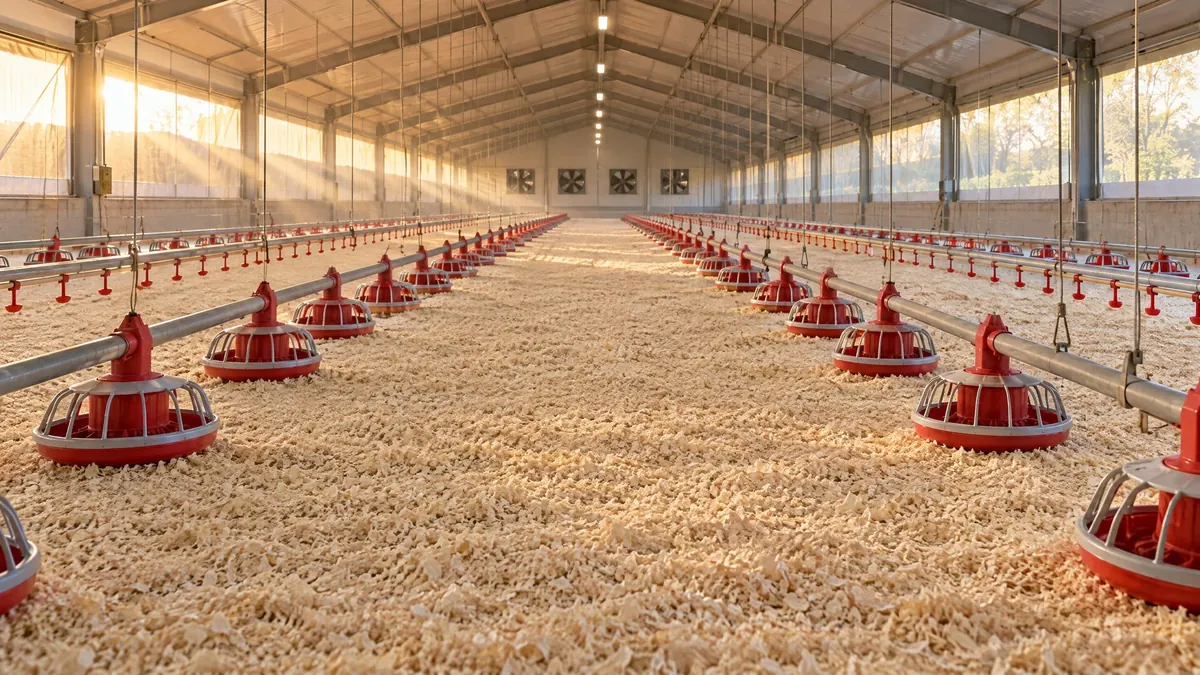
The house is empty, the lines are not: whatever settled in the pipes during the flock is still there when the next chicks arrive. Cleaning and disinfecting the lines is a job for dedicated products, which are not in our range: a drinking-water supplement is not a cleaning product.
This is the time to prepare the next flock: a water analysis giving at least pH and alkalinity, the two values that set the rate of an acidifier; setting and calibrating the dosing pump; fresh, dry litter, which Linkadry then helps to keep dry during the flock. It is also the time to build the programme: what will go through the water, when, and what must not go at the same time.
Pigs
Pigs: weaning, through the drinking water
At weaning the sow’s milk stops, solid feed starts, and litters are mixed and moved. Feed intake drops for a few days, the piglet’s stomach does not yet acidify well, and it is the window for post-weaning diarrhoea. Diagnosing and managing it is the vet’s job; what the farm controls is management: temperature, water access, the feed transition.
When a piglet eats little it keeps drinking: water is the route that stays open. Through the water, Linkacid Prime L supplies acidified water, Linkamune combines an inactivated yeast with acids, and Linkastim supplies vitamins, amino acids and electrolytes.
On the feed side, the weaning programme is built with the formulator: acidifiers, butyrates, palatability. See Digestion and performance.
Health and husbandry
Breathing, liver, digestion: what the drinking water can carry
A health problem in a flock nearly always has several causes, and the first answer is not a product: it is the veterinarian’s diagnosis, husbandry and the building. Linker products are additives and supplements for feed and drinking water, used within a farm’s programme. What the water can carry are nutrients and substances that go with the periods when the animal is under most pressure.
Breathing. Coughing and sneezing come first from the house environment (dust, ammonia, wet litter, ventilation) and from the veterinarian, who alone identifies a disease. The Linkaresp page sets out what belongs to the building, what belongs to the veterinarian, and what the water can bring.
Fat metabolism. To export its fat, the liver needs phosphatidylcholine: choline and methyl donors feed its synthesis. That is the nutritional logic of Linkatol, given through the water for a few days at feed transitions and at the start of lay; its page sets out what belongs to the ration, to husbandry and to the veterinarian.
Digestion. Through the water, Linkamune combines an inactivated yeast rich in cell walls (mannans and beta-glucans) with acids that bring down the pH of the water; Linkacid Prime L acidifies the water continuously. On the feed side, the gut health levers are those of the Digestion and performance category.
Do things in the right order
A drinking-water programme, not a drum of product
Most water programmes that disappoint do not have a product problem. Five points decide what actually reaches the animal.
- A clean line.Deposits on the inner wall of the pipes take up part of what you dose. Lines are cleaned between flocks, with a product and a contact time meant for that job: an acidifier does not clean a fouled line.
- Known water.pH, hardness, alkalinity, iron, chlorine: drinking water quality changes the recommendation more than the choice of product does.
- A rate set on the water.For an acidifier, the rate follows the alkalinity of the water, not the label: two farms at the same pH can need twice the rate.
- A checked pump.A mis-set dosing pump or a wrongly made stock solution delivers a fraction of the dose for the whole application. Check it against the water meter.
- A reading at the end of the line.Measure at the last nipple, with the line running, not at the pump: that is the water the animal drinks. And the animal has to keep drinking: a product that cuts water intake has missed its point.
What never goes together
- A live vaccine
- Never in the same water as a live vaccine: flush the line, vaccinate, then resume.
- A hypochlorite
- Linkacid Prime L is never mixed with a hypochlorite in the same stock tank.
- Two products at random
- Two products injected together can react or precipitate: compatibility is checked beforehand, in writing.
- A prescription
- Whatever goes through the water during a veterinary prescription is decided with the veterinarian.
With you
How we build a programme with you
A farm programme is not picked from a product list: it is laid over your calendar, house by house.
- We look at the water and the house first. A water analysis, and how the lines are managed between flocks, often change the recommendation more than the choice of product does.
- We map the range onto your calendar. What runs at placement, at peak of lay, in hot weather, for how many days, and what it must not run alongside.
- We adjust with you. You tell us what you see in the house; timing, duration and sequence are refined by coming back to them.
- We tell you when a product is not the answer. If the right lever is a management or water-handling change, that is what you will be told.
From mill to farm, the same standard for liquid application
A liquid product is only worth what the system delivers. At the feed mill, Linker Flow supplies the product and the spraying equipment; on the farm, it is the dosing pump and the water line. It is the same trade: an injection point, a real dose, a measurement.
Our drinking-water products mostly reach farms through a distributor or an integrator: tell us your country and we will put you in touch.
Get a programme for your farm
You run the farm
Describe the flock, the water and the period: species, stage, a water analysis if you have one, what you are seeing in the house. A technician proposes a programme, with rates, durations and what must not run at the same time.
Get a drinking-water programme →You advise or supply farms
Veterinarian, technician, integrator or distributor: tell us your country and we tell you where to find our products, or how to become a distributor.
Where to buy in your country →Or directly: +33 2 30 91 59 15 · contact@linkernutrients.com
Further reading
- Farm Solutions →
Drinking water, litter and the moments of the cycle.
- All products →
Feed Solutions and Farm Solutions, by species.
Frequently asked questions
Complementary feed or supplement: what is the difference?
“Supplement” is the everyday word, and the one used for human food. For animals, the regulatory term is “complementary feed”: a feed that completes the ration, here through the drinking water. Some of our water products are premixes; the data sheet states the status of each one.
Can several products go in the same water?
Sometimes, not always. Some products react with each other or with the water, depending on its hardness, iron or chlorine, and can precipitate or cancel each other out. We give the compatibility rules with the recommendation, in writing, before use.
What about vaccination?
Never in the same water as a live vaccine: flush the line, vaccinate, then resume. The rule applies to the whole range.
Does an acidifier clean the water line?
No. It brings down and holds the pH of the water; it does not remove an established deposit. Lines are cleaned between flocks, with a product and a contact time meant for that job; acidification comes afterwards, on a clean line.
How long does a supply through the water last?
A few days, around the moment you are targeting: that is the whole point of the water route. The rate and duration of each product are on its data sheet; a technician adjusts them to your flock.
Are these products suitable for pigs?
Yes for Linkacid Prime L, Linkastim, Linkamune and Linkaresp; Linkamax HD, Linkaphos and Linkatol are designed for poultry. Linkastim and Linkaresp are also used in ruminants.