
Linker Nutrients

Feed Solutions · Digestion and performance

Butyrate released by the animal’s own enzymes, along the intestine.

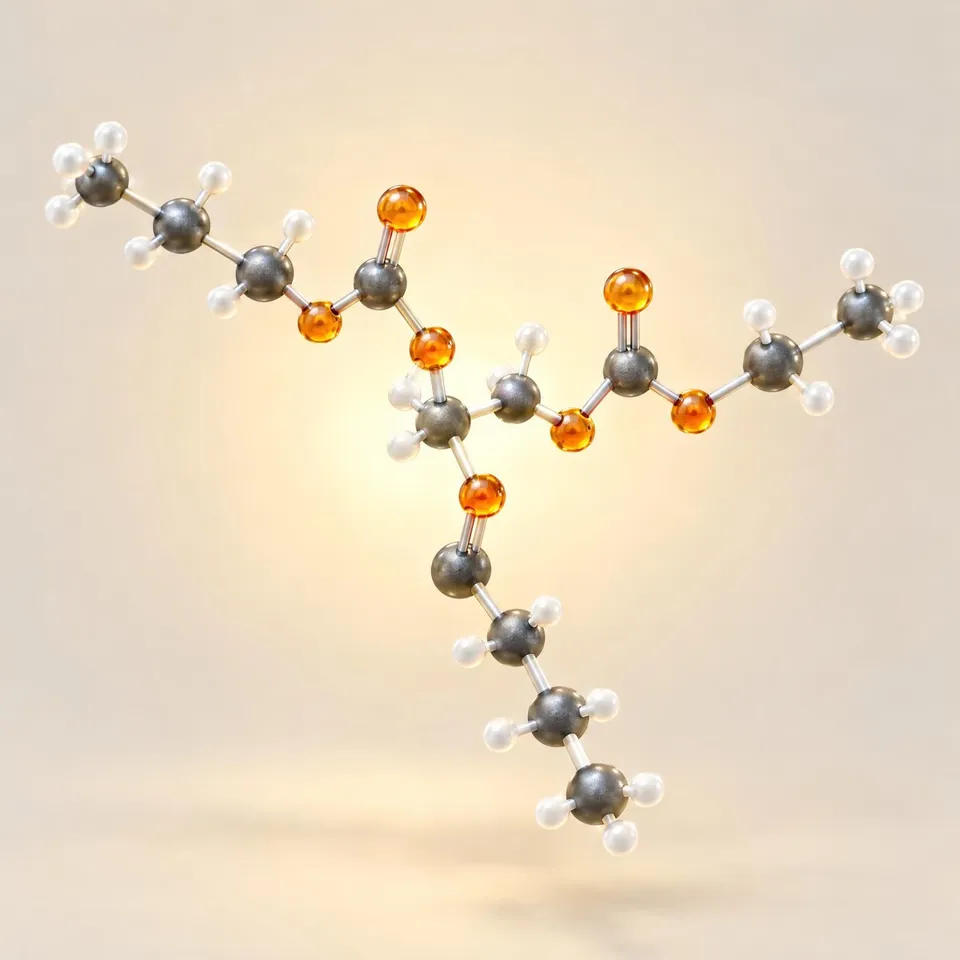
Illustration: Tributyrin
Linkatrib
  • Released along the intestine

    The animal’s lipases cut the bond and free butyrate where digestion takes place.

  • Held by an ester bond

    Butyrate is fixed on glycerol by chemistry, in place of a physical coating.

  • Simple at the mill

    Very low odour, gentle on equipment, stable through the press.

Linkatrib: tributyrin for feed, butyrate without a coating

Tributyrin is a triglyceride: three butyric acid molecules attached to a glycerol backbone. Stable and low in odour, it releases its butyrate through the animal’s own lipases, mostly from the small intestine on. Linkatrib supplies these butyrate glycerides as a free-flowing powder, a tributyrin feed additive for poultry, pigs, fish and shrimp.

Form
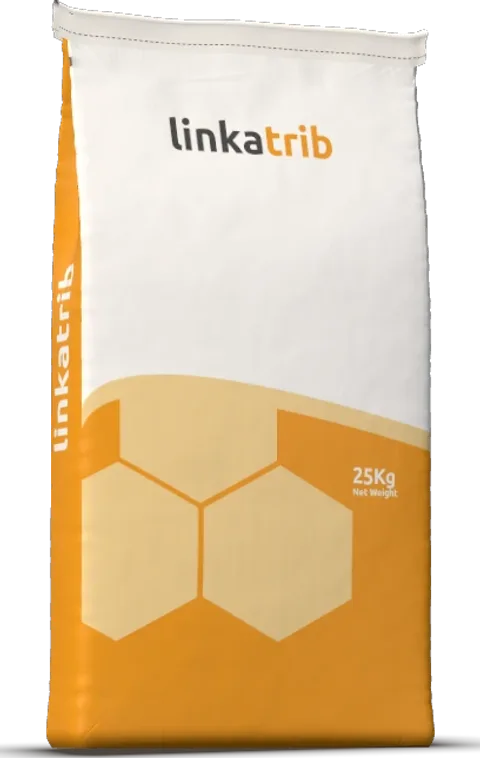
Free-flowing powder, 25 kg bag
Nature
Glycerides of butyric acid
Species
Poultry, pigs, aquaculture
Use
At the feed mill, in the mixer, before the press
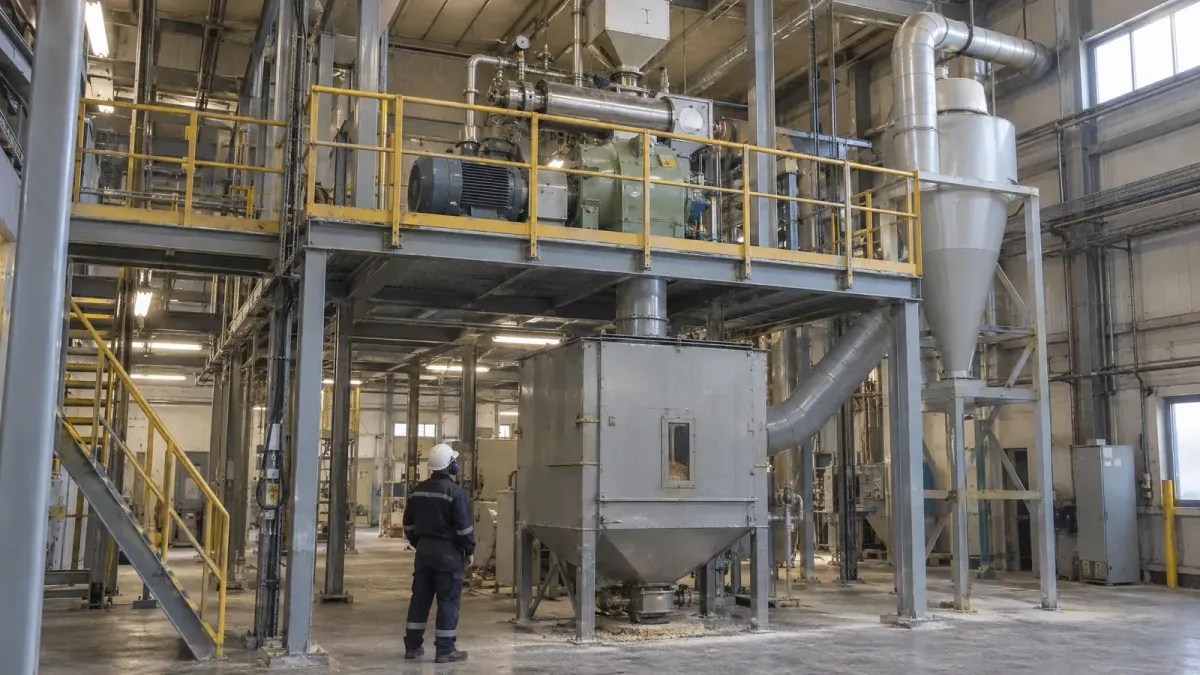
Pellet mill on its mezzanine in a feed mill, with the enclosed chute running down to the cooler

The problem

Getting butyrate into the intestine, with no coating to protect

A plain butyrate salt dissolves in the stomach. A coated salt relies on a physical barrier that has to survive mixing, conditioner steam and the press, and that dilutes the active.

Tributyrin takes another route: a chemical bond, the ester, holds the butyrate until the small intestine. There is no coating to damage at pelleting, none of the smell of free butyric acid, and no corrosion of equipment.

Tributyrin or sodium butyrate: see butyrate and tributyrin, how to choose. Butyrate salts have their own page, Linkasel.

The principle

Release through the animal’s own lipases

Tributyrin does not work through a barrier, but through a bond that the animal’s own lipases cleave, mostly from the small intestine on.

  1. It passes the stomach.The ester bond withstands gastric acidity: the butyrate stays attached to the glycerol.
  2. Lipase cleaves it.From the small intestine on, the animal’s lipases release the butyrate, where the epithelium uses it.
  3. Butyrate provides energy.The cells of the intestinal lining use it as an energy source; the literature links it to epithelial renewal.

What changes at the mill

Pelleting
No coating to protect: nothing is damaged at the press.
Odour
None of the smell of free butyric acid at the mixing station.
Equipment
No corrosion.
Inclusion
No coating matrix to dilute the active: the inclusion rate stays low.

Linkatrib at a glance

1 min 4 s, subtitled in English

Butyrate glycerides

Tributyrin, monobutyrin, butyrate glycerides: what are the differences?

Glycerol offers three positions. When butyric acid occupies all three, the molecule is tributyrin, also called glycerol tributyrate or glyceryl tributyrate; with two, dibutyrin; with one, monobutyrin. All are butyrate glycerides. Tributyrin is a true triglyceride; the other two are partial glycerides. None of them is a salt.

Is tributyrin the same as butyrate? It is a form of butyrate: the same butyric acid, carried by a glycerol instead of a sodium or calcium ion, and released only when lipase cleaves the bond.

The animal’s lipases cleave these bonds, starting with the outer positions of the glycerol: the butyrate is released mostly from the small intestine on. Linkatrib combines mono-, di- and tributyrin, as a free-flowing powder rather than a liquid.

The grade

One grade, as a powder

Linkatrib comes as a free-flowing powder, added in the mixer before the press.

Simplified technical data sheet

linkatrib

What it is
Tributyrin
Range
Feed Solutions · Digestion and performance
Species
Poultry, pigs, aquaculture
Use
More useful butyrate per gram, at a lower inclusion rate.
Form and appearance
Very fine white microbeads, like sugar
Packaging
25 kg bag
Key ingredients
Glycerides of butyric acid: mono-, di- and tributyrin.
Indicative rate
Piglets, creep feed: 1–2 kg/tPiglets 5 to 30 kg: 0.5–1.5 kg/tSows: 0.5–1.5 kg/tBroilers, starter: 0.5–1 kg/tBroilers, grower and finisher: 0.25–0.5 kg/tLayers and breeders: 0.5–0.8 kg/tTurkeys: 0.5–1.5 kg/tRabbits: 1–1.5 kg/tFish and shrimp: 2–4 kg/t

Simplified sheet, for information only: the full technical data sheet of the grade and the label prevail.

Get the full technical data sheet →

Made on sites certified to GMP+ FSA, FAMI-QS, FCA or an equivalent feed safety scheme.
Linker Nutrients SAS · Centre d’Affaires Lorient Mer, 1 rue Honoré d’Estienne d’Orves, 56100 Lorient, France · +33 2 30 91 59 15 · contact@linkernutrients.com
www.linkernutrients.com/en/products/linkatrib · Updated 4 November 2026

Indicative rates, taken from the current technical data sheet. We fine-tune the programme with you, by species and stage.

What has been measured

Each result comes with its conditions; the full details are available on request.

  • Publication on the ingredient

    In post-peak laying hens, a published university study reports a 3.1% thicker eggshell with tributyrin at 500 g/t.

    Conditions
    384 hens, 8 replicates of 24 per group, 16 weeks; significant difference (P = 0.01).
    On request
    Publication reference
    Ask for the details, result 1 →
  • Publication on the ingredient

    In broilers, a study published in 2025 on butyric acid glycerides reports +4.6% body weight at 300 g/t.

    Conditions
    1,000 broilers, 35 days; difference compared with a coated sodium butyrate at 500 g/t (P = 0.014).
    On request
    Publication reference
    Ask for the details, result 2 →
  • Publication on the ingredient

    Study published in 2018 on 720 broilers: with tributyrin, 35-day weight of 2.627 kg, against 2.511 kg for the control (P = 0.008), and feed conversion of 1.472 against 1.515 (P = 0.0022).

    weight at 35 days, kg
    Control2.511
    With tributyrin2.627
    Conditions
    Male broilers, 3 groups of 240, 35 days.
    On request
    Publication reference
    Ask for the details, result 3 →

Trial results available on request.Ask for the trial results →

Tributyrin and diarrhoea

Tributyrin and diarrhoea (diarrhea): what feed can do, and what is a matter for the vet

The question comes up around weaning and the starter phase, when digestive upsets and diarrhoea weigh on the batch. Tributyrin is not an answer to an ongoing episode: it is a feed ingredient that supplies butyrate to the small intestine throughout the period in which the animal eats it.

It has its place in a transition feed, together with formulation, water and the management of the piglet weaning transition. When diarrhoea occurs, diagnosis and the course of action are a matter for your veterinarian.

Linker products are additives and supplements for feed and drinking water, used within a farm’s programme.

In practice

What Linkatrib is

Glycerides of butyric acid for animal feed. Their status varies by country: technical data sheet, safety data sheet and status in your country on request.

The documents, and someone to read them with you

The documents you need

Let’s talk about your feed

Species, stage, feed form and pelleting temperature: with these, a technician will suggest a rate and, if you wish, a trial protocol.

Ask about Linkatrib →Propose a trial →

Frequently asked questions

What is tributyrin?

A triglyceride made of three butyric acid molecules attached to a glycerol. In feed, it is a stable, low-odour form of butyrate, released by the animal’s own lipases, mostly from the small intestine on.

What is tributyrin used for in animal feed?

To deliver butyrate to the small intestine without a coating: the chemical bond survives the stomach and pelleting, and the butyrate is only released by lipase. It is used in poultry, pig and aquaculture feed.

Where can I buy tributyrin powder for feed?

Linkatrib is available in 25 kg bags. For an offer, a sample or a trial, write to us with the species, the stage and the volumes. The safety data sheet is supplied on request.