
Linker Nutrients

Farm Solutions · Drinking water

Acidified water, dosed on the farm’s own water.

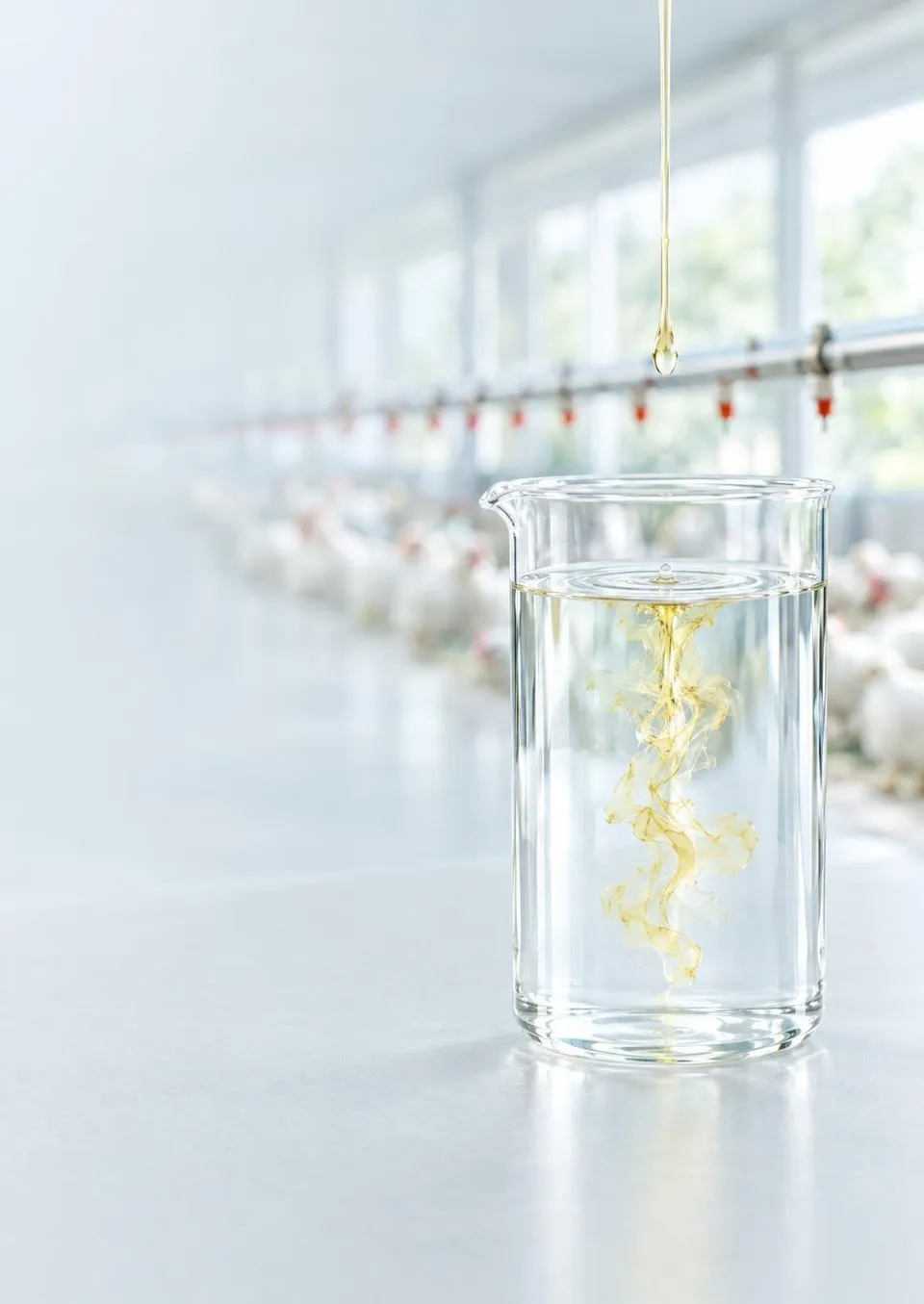
Illustration: Drinking-water acidifier
Linkacid Prime L
  • Lowers, then holds

    A strong acid moves the pH; organic acids keep it steady along the pipes.

  • Set on your water

    Each water gets its own rate, found by a simple titration on the farm.

  • Between flocks too

    At 2–3 L per 1,000 L in the empty house, it descales the line before the next flock.

Linkacid Prime L: drinking-water acidifier for poultry and pigs

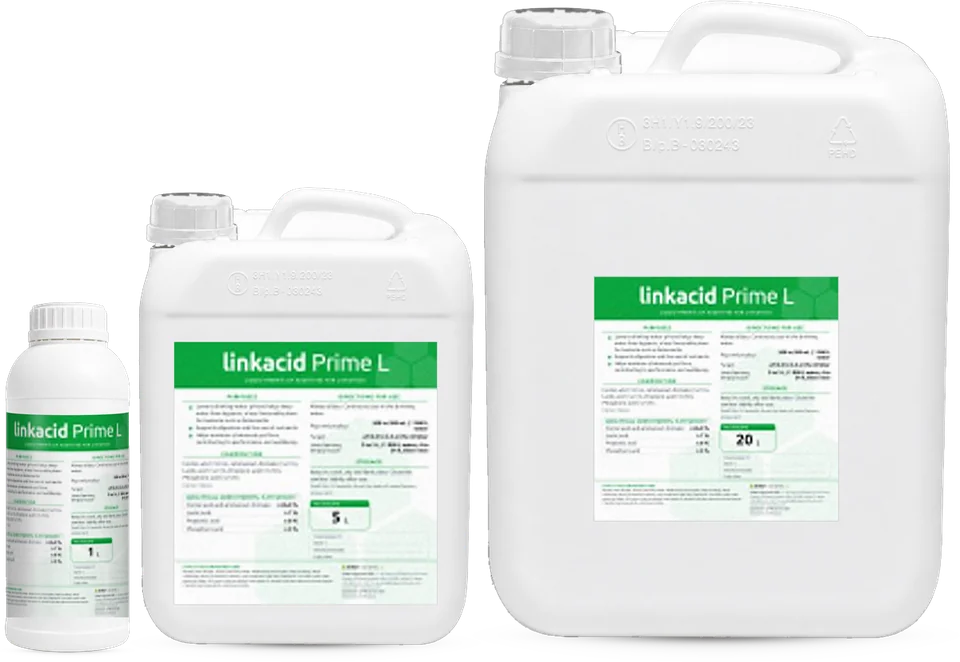
Acidified water, dosed on the farm’s own water. Linkacid Prime L is a liquid water acidifier that lowers and holds the pH of drinking water: a strong acid and organic acids, injected through the dosing pump, set on the alkalinity of your water and checked at the end of the line.

Form
Clear pale yellow liquid
Species
Poultry, pigs
Use
In drinking water, through a dosing pump, animals present
Packs
1 L bottle, 5 L and 20 L cans
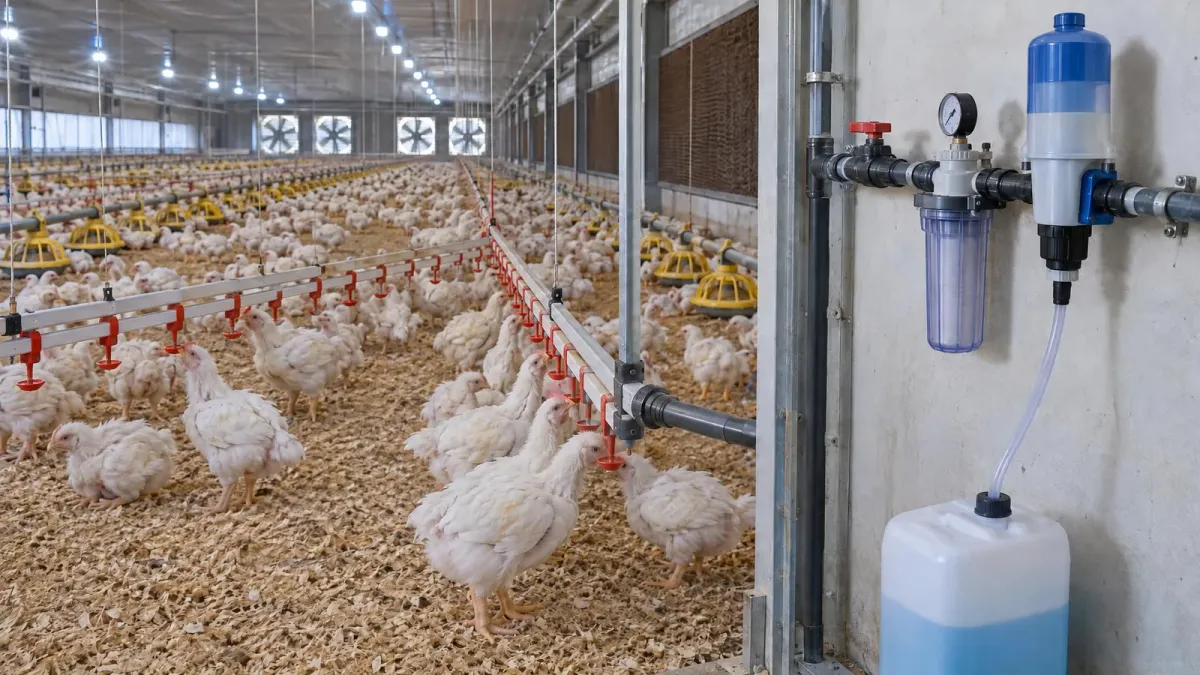
Proportional dosing pump and can at the head of a nipple drinker line, broilers in the house

The problem

Water is the first feed, and the least watched

A bird or a pig drinks more each day than it eats. Yet drinking water is rarely analysed: its pH, hardness and alkalinity change from one borehole to the next and from one season to the next, and nobody notices while things are going well.

Water acidification in poultry and pig farming means managing one of those parameters, the pH. It is easy to measure, easy to follow, and easy to get wrong when the pump is set on a percentage instead of on the water.

In the feed or in the water? To acidify feed at the mill, see Linkacid. Linkacid Prime L is the acidifier for the water line, on the farm.

The principle

A lower pH, held all the way down the line

Linkacid Prime L works at both ends of the acid scale: a strong acid brings the pH down, the organic acids hold it there.

  1. It lowers.A strong acid brings the water pH down with little product.
  2. It holds.Weaker organic acids, led by formic acid, soften the curve and keep the pH stable in the pipes.
  3. It can be checked.The pH is read with a strip or a pH meter at the last drinker: that reading decides, not the pump setting.

The rate follows the water, not the label

Alkalinity
The water’s capacity to resist acid, expressed as calcium carbonate equivalent. This is what sets the rate.
Hardness
The calcium and magnesium in the water: hard water uses up more acid before the pH moves.
Starting pH
Where you start from, measured at the source before any injection.
Water intake
The pump injects a share of what flows through: the day’s water intake sets the amount of product.

Water pH and alkalinity

pH, hardness, alkalinity: why the rate depends on your water

The pH of drinking water tells you where the water stands; its alkalinity tells you how much acid it will take to move it. Hard, alkaline water soaks up a lot of acid before its pH shifts. Soft water with little alkalinity gives way quickly, and the same pump setting can take it too low. Two farms with the same starting pH, the same product and the same setting: two different results.

Hence the method. Have the water analysed at the source: pH, hardness, alkalinity, iron. Titrate that water once with the product, to find out how much it takes to reach the target pH. Set the pump from that result, then check at the last drinker with the line running. Titrate again whenever the water changes: a new borehole, a switch from mains to well water, a change of season.

The target pH is agreed with your technician, according to species, age and your water. Too low, and the water becomes less palatable and harsh on equipment: an acidification programme that cuts water intake has already failed.

Water quality for poultry and pigs is more than pH: iron, organic matter and deposits matter too. We look at them with you on your water analysis; for pump settings, see dosing pump and drinking water.

Where it applies

One injection point, one checkpoint

  1. 1Source: borehole or mains
  2. 2Water analysis
  3. 3Stock-solution tankLinkacid Prime L diluted in the tank, never with hypochlorite
  4. 4Dosing pumpSet from the titration of your water
  5. 5House pipework
  6. 6Last nipple or last bowl

From the tank to the last drinker: the pH has to hold over this whole length, and it is measured at the end of the line.

The product

Linkacid Prime L in practice

One liquid grade for poultry and pig drinking water.

Simplified technical data sheet

linkacid Prime L

What it is
Water acidifier
Range
Farm Solutions · Drinking water
Species
Poultry, pigs
Use
Lowering and holding the pH of drinking water, continuously, with the animals present: acidified water helps limit the bacterial load of the water along the line, including Salmonella and E. coli.
Form and appearance
Clear liquid, colourless to pale yellow
Packaging
1 L bottle, 5 L and 20 L cans
Shelf life and storage
24 months from manufacture, in closed original packaging, dry, in a ventilated area at a moderate, stable temperature
Key ingredients
Organic acids, led by formic acid.
Indicative rate
Pigs and poultry, continuously: 300–500 mL per 1,000 L of water, aiming at pH 4.0–4.5 at the last drinkerLine cleaning, empty house: 2–3 L per 1,000 L, 4 to 24 hours, then rinse

Simplified sheet, for information only: the full technical data sheet of the grade and the label prevail.

Get the full technical data sheet →

Made on sites certified FCA, FAMI-QS or GMP+ FSA.
Linker Nutrients SAS · Centre d’Affaires Lorient Mer, 1 rue Honoré d’Estienne d’Orves, 56100 Lorient, France · +33 2 30 91 59 15 · contact@linkernutrients.com
www.linkernutrients.com/en/products/linkacid-prime-l · Updated 7 October 2026

Indicative rate, taken from the current technical data sheet. The right rate is the one that brings your water to the target pH: it is set from the titration of your water and checked at the end of the line.

Trial results available on request.Ask for the trial results →

How to use

Prepare, inject, check

Make up the stock solution in a clean tank, with the farm’s own water, to the volume the pump will draw. The amount of product for the tank depends on the day’s water intake and on the pump’s injection rate: a technician works it out with you the first time.

In pig units, think room by room. With one water line per room, you can acidify the water of the weaner room without touching the rest of the farm.

  • Never with hypochlorite (bleach) in the same stock tank.
  • Never in the same water as a live vaccine: flush the line, vaccinate, then resume.
  • With another product in the water: check compatibility before combining them; when in doubt, separate them in time.
  • Check: pH at the last drinker, line running, after every change of setting or of water.
  • Storage: 24 months from manufacture, in closed original packaging, dry, in a ventilated area at a moderate, stable temperature.

In practice

What Linkacid Prime L is

A drinking-water acidifier: its effect is physical and chemical, and it can be measured. It is the pH of the water. Technical data sheet, safety data sheet and status in your country: on request.

The data sheet, and someone to set the pump with you

The documents you need

Tell us about your water

pH, hardness and alkalinity at the source, species, age of the animals, pump model: with these, a technician suggests a starting setting and how to check it. Linkacid Prime L is one of our drinking water supplements.

Get set-up advice →

Frequently asked questions

What is the role of acidifiers in drinking water?

A drinking-water acidifier lowers the pH of the water and holds it stable along the line, a parameter the farmer sets, doses and checks with a meter. The target pH is agreed for your water, species and age, and the reading that counts is the one at the last drinker.

What is the difference between Linkacid and Linkacid Prime L?

Linkacid goes into the feed, at the mill. Linkacid Prime L is dosed into the drinking water, on the farm, through the dosing pump. The feed builds a programme for a season; the water lets you act within the hour, on a single house or a single room.

Why does the same rate give a different pH on two farms?

Because the water is not the same: its alkalinity and hardness decide how much acid is needed. Hence a one-off titration of your water, then a check at the end of the line.

Citric acid or a blend of acids?

Citric acid is one of the organic acids used in poultry drinking water. Linkacid Prime L combines a strong acid, which brings the pH down with little product, with weaker organic acids, led by formic acid, which hold the curve. That blend is what reaches the target pH and keeps it to the end of the line.

Can I acidify the water during vaccination?

No: never in the same water as a live vaccine. Stop acidification, flush the line, vaccinate as your veterinarian instructs, then resume.