Live lactobacilli, when the piglet’s flora starts over.
Two live strains
Two Lactobacillus strains from a fermented milk product, supplied alive through the feed.
They settle and ferment
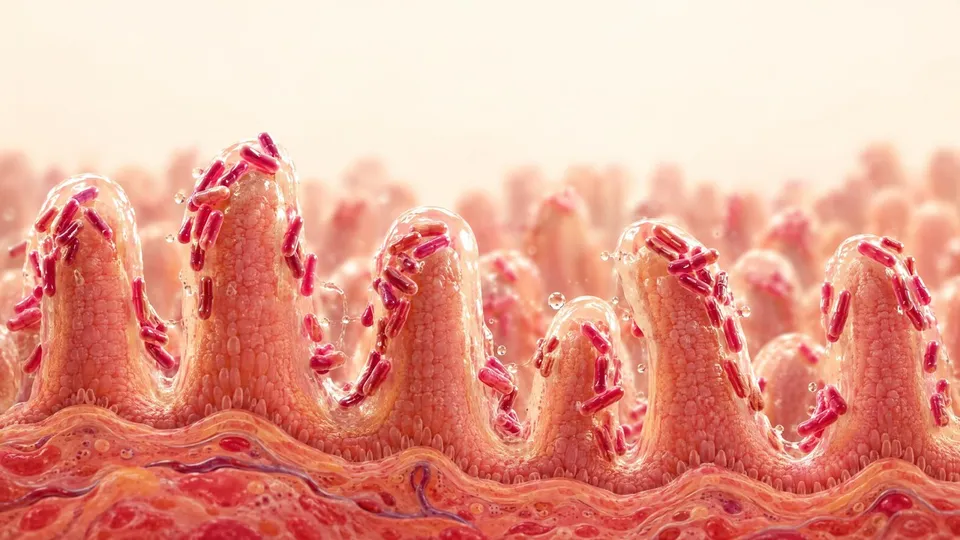
They attach to the mucus and produce lactic acid, which lowers the pH around them.
For the weaning feed
For the weaning feed, in the weeks when the piglet’s flora reorganises; compatibility with pelleting checked on your process.
Linkaflore: a live lactobacillus probiotic for piglet feed
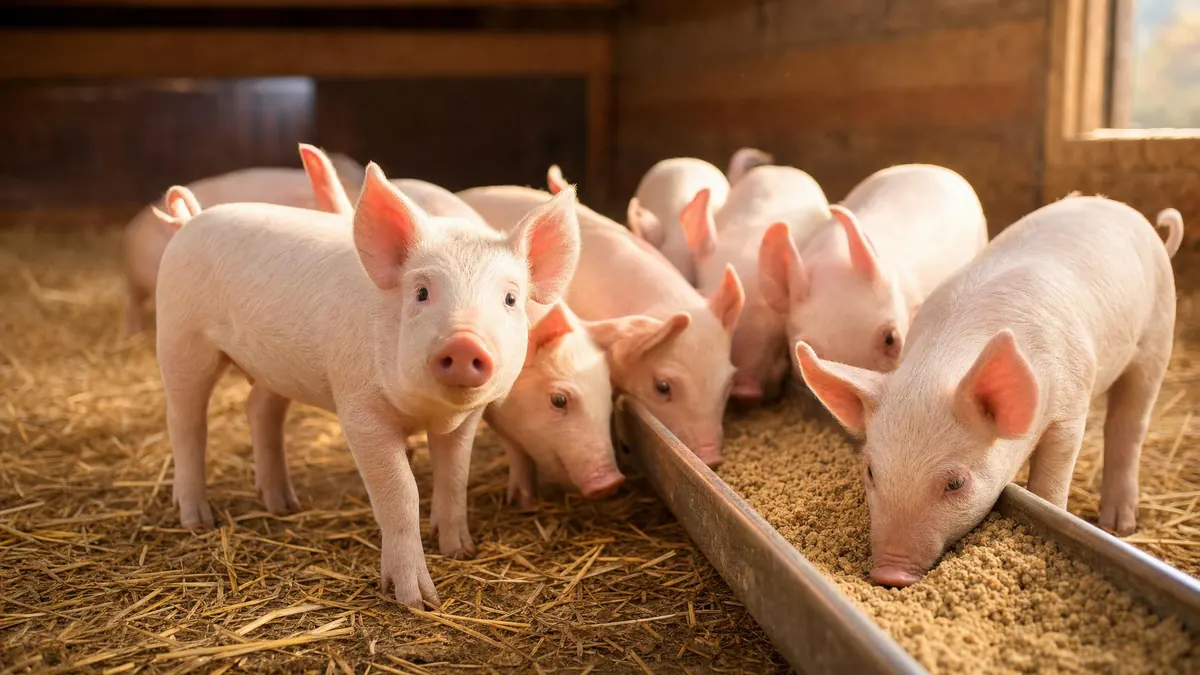
A probiotic supplies live microorganisms through the feed. Linkaflore combines two live lactobacillus strains, from a fermented milk product, for piglet feed, at the moment when the piglet’s digestive flora reorganises: around weaning.
In piglet feed; processing conditions to be checked with us
The problem
At weaning, the piglet’s flora starts over
At weaning, the piglet suddenly loses the sow’s milk, its lactobacilli and its lactic acid. Its digestive flora reorganises at the very moment its diet changes. This is the period of digestive upsets, post-weaning diarrhoea and batches that lose their balance.
Lactobacilli are among the bacteria one wants to see settle in the young pig’s gut: they produce lactic acid and occupy the intestinal wall. Probiotics for piglets supply them, alive, through the feed.
A probiotic’s mode of action depends on the survival of its cells: they must reach the intestine alive.
01They adhere.
02They ferment.
03They take up space.
They adhere.The lactobacilli aggregate and attach to the mucus and the intestinal wall.
They ferment.They produce lactic acid, which lowers the pH of their surroundings.
They take up space.In the mechanism described for lactobacilli, they occupy sites on the wall that other bacteria could colonise.
What decides the outcome
Survival
Pelleting heat and storage reduce the number of live cells.
Storage
Cool, away from light, in the unopened pack.
Timing
Around weaning, when the flora reorganises.
Programme
A probiotic complements formulation, water and management; it does not replace them.
Linkaflore at a glance
1 min 5 s, subtitled in English
Probiotics and diarrhoea
Probiotics and pig diarrhoea (diarrhea): what to expect
It is a frequent question: can a probiotic deal with diarrhoea in piglets? Two things need to be separated. An episode of diarrhoea calls for a diagnosis and a course of action that only your veterinarian can set.
A probiotic, for its part, is a feed ingredient. It supplies live lactobacilli throughout the period in which the piglet eats it, within a transition programme that also includes formulation, feed pH, water and management.
Linker products are additives and supplements for feed and drinking water, used within a farm’s programme.
Live or inactivated
Live probiotic or postbiotic?
A live probiotic can settle and ferment in the gut, but it has to survive manufacture and storage. A postbiotic, made of inactivated lactobacilli and their metabolites, has no such constraint.
For heavily heat-processed feeds, or for species other than piglets, the postbiotic route is Linkabiome.
The grade
One grade, for piglets
Linkaflore is added to piglet feed; its compatibility with your process is checked with us.
Simplified technical data sheet
linkaflore
What it is
Probiotic
Range
Feed Solutions · Digestion and performance
Species
Piglets
Use
Two live lactobacillus strains, for piglet feed.
Form and appearance
Fine brown powder
Packaging
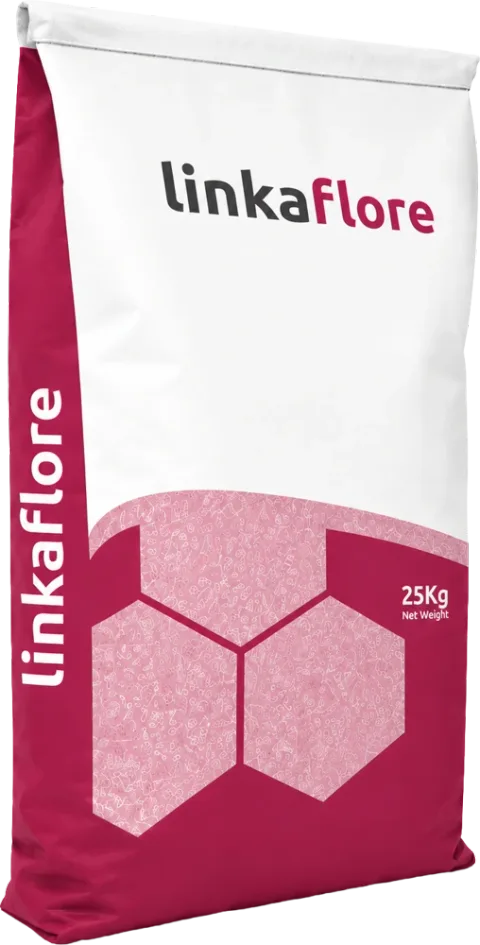
25 kg poly-lined paper bag
Shelf life and storage
At least 12 months, unopened, below 25 °C, away from light
Key ingredients
Two live Lactobacillus strains, from a fermented milk product.
Indicative rate
Piglets: 1 kg/t of feed
Indicative rate; we fine-tune it with you, according to the feed and its form.
Probiotic for piglet feed, based on live lactobacilli. A live probiotic requires its own authorisation in many countries: its availability therefore depends on each country’s authorisation. Status in your country and documents: on request.
Weaning age, feed form, pelleting temperature and the programme already in place: with these, a technician will tell you whether Linkaflore suits your process, and at what rate.
The one that reaches the intestine alive with your feed: strains suited to pigs, controlled storage and a compatible process. Linkaflore supplies two live lactobacillus strains for piglets; we check its compatibility with your process with you.
Does a probiotic survive pelleting?
It depends on the strains and on the temperature and duration of conditioning. That is the question to ask before any choice. For heavily heat-processed feeds, a postbiotic such as Linkabiome has no such constraint.
Is Linkaflore suitable for poultry?
No: Linkaflore is intended for piglets. For poultry and other species, see the postbiotic Linkabiome.