
Linker Nutrients

Feed Solutions · Digestion and performance

The active part of lactobacilli, from mill to feeder.

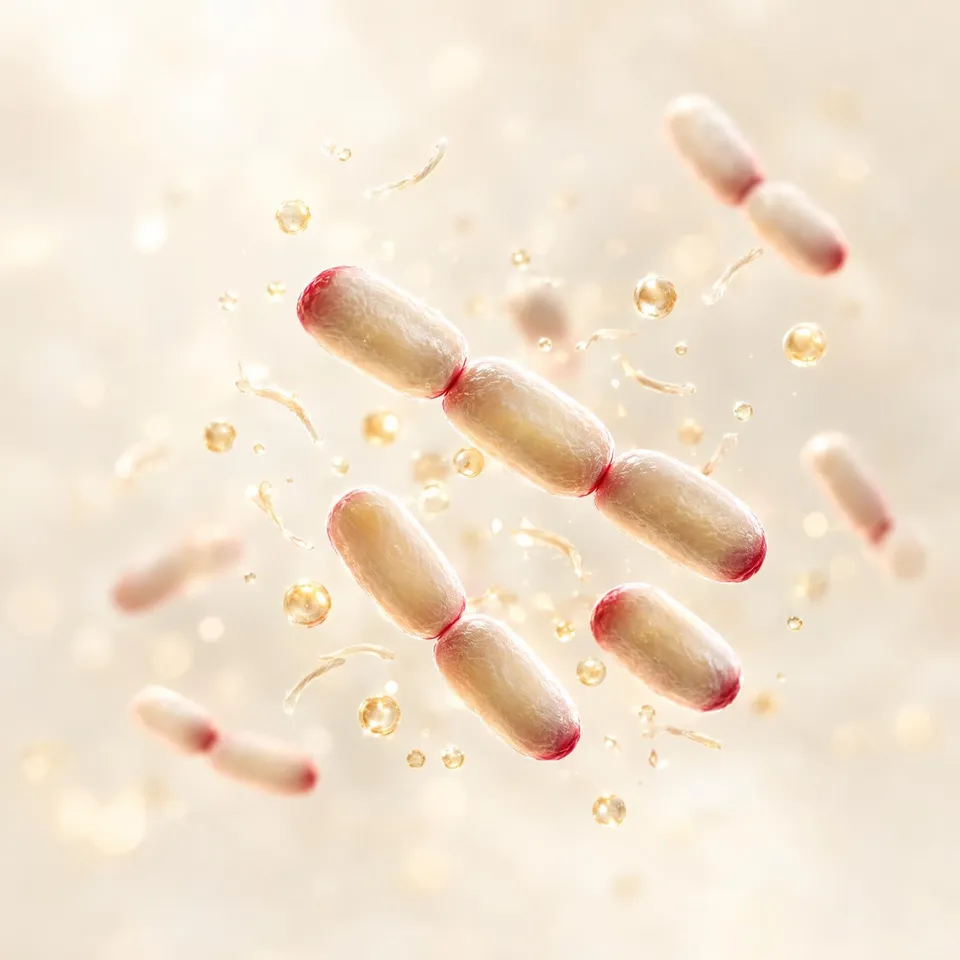
Illustration: Postbiotic
Linkabiome
  • Indifferent to pelleting

    Already inactivated: its value does not depend on cells surviving the press.

  • Supports gut balance

    Cell walls and metabolites interact with the gut mucosa and help microbiota balance.

  • Consistent to the feeder

    Same composition from mixer to feeder, batch after batch.

Linkabiome: a postbiotic for feed, from heat-inactivated lactobacilli

A postbiotic is a preparation of inactivated microorganisms, with their components and the metabolites of their fermentation. Linkabiome is not a probiotic: its lactobacilli are no longer alive. That is what makes this postbiotic feed additive indifferent to pelleting and storage.

Form
Creamy free-flowing powder
Nature
Two Lactobacillus strains grown together, heat-inactivated
Species
Poultry, pigs, ruminants, aquaculture
Use
At the feed mill, before pelleting
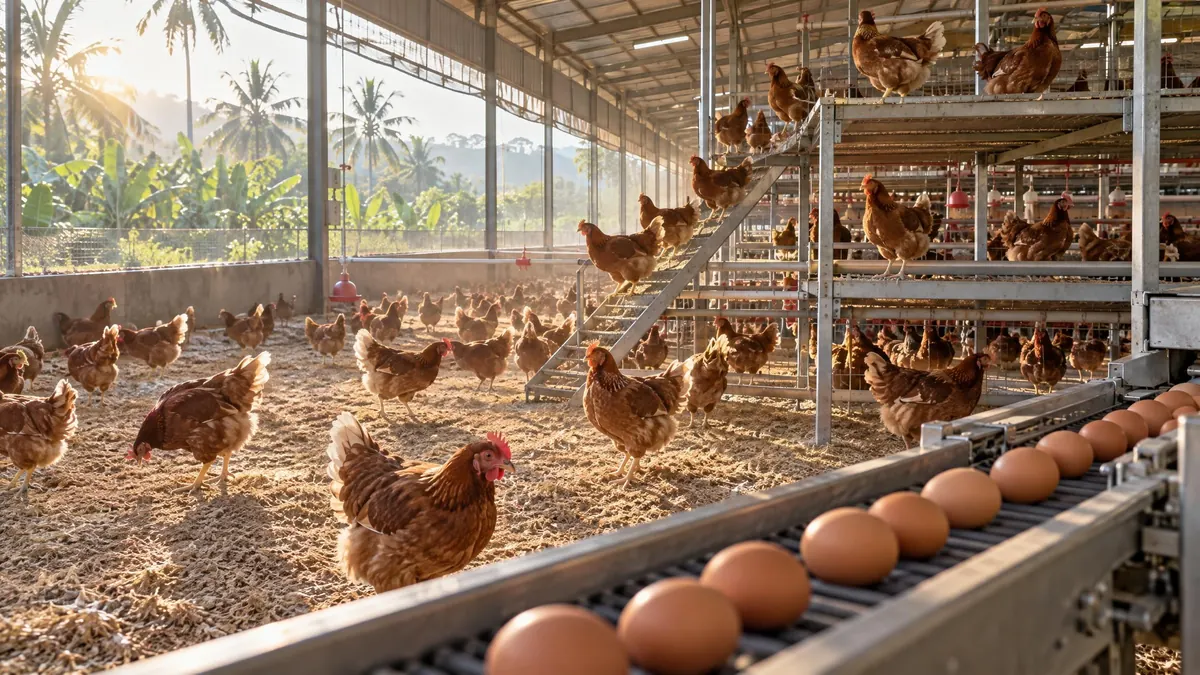
Laying hens in an open-sided house in Southeast Asia

The problem

Live cells do not like the feed mill

A probiotic has to reach the intestine alive. Between the mixer, conditioner steam, the press and weeks of warm storage, part of the cells do not make it, and the effect varies with them. A postbiotic gets around the problem: its cells are inactivated at manufacture, and what it supplies, cell walls and metabolites, does not depend on their survival.

In poultry as in pigs, this is what the market looks for under the name gut health: an intestine that digests well and a balanced flora. The starter phase, the piglet weaning transition and feed changes put both to the test, and postbiotic solutions for poultry gut health are judged on exactly those moments.

For live lactobacilli in piglets: Linkaflore.

Linkabiome at a glance

1 min 7 s, subtitled in English

Postbiotic or probiotic

Postbiotic or probiotic: what is the difference?

A probiotic supplies live microorganisms, which must survive to act. A prebiotic supplies substrates, usually fibres, that the animal’s own flora ferments. A postbiotic supplies inactivated microorganisms and what they produced during fermentation: it does not need to survive. Prebiotic, probiotic, postbiotic: three different jobs.

Postbiotic vs probiotic: which is better? The question is badly put, because they do not do the same thing. The postbiotic has stability on its side: it withstands pelleting and storage, and its composition does not vary with cell survival. A live probiotic can settle and ferment in the gut; in return, it needs stricter manufacturing and storage conditions.

In animal feed, both have their place, and Linker offers both routes: the postbiotic Linkabiome for all species, and the live probiotic Linkaflore for piglets.

Heat-inactivated lactobacilli

What are heat-inactivated lactobacilli?

Lactobacilli are lactic acid bacteria, found naturally in the intestine and in fermented foods. To make a postbiotic, they are grown, then inactivated by heat: often called heat-killed lactobacilli, they no longer multiply, but their cell walls and the metabolites produced during fermentation remain.

In Linkabiome, two Lactobacillus strains are grown together, then inactivated along with their fermentation metabolites. This is how a postbiotic based on lactobacillus is made for animal feed.

How do postbiotics work? These components interact with the intestinal mucosa and contribute to the balance of the microbiota: that is the mode of action described for postbiotics. And because nothing in them is alive any more, there is no live cell count to guarantee all the way to the feeder.

The grade

One grade, for all species

Linkabiome is added to the feed before pelleting, for poultry, pigs, ruminants and aquaculture.

Simplified technical data sheet

linkabiome

What it is
Postbiotic
Range
Feed Solutions · Digestion and performance
Species
Poultry, pigs, ruminants, aquaculture
Use
The active components of lactic bacteria, without the fragility of live cells, supporting a balanced gut flora and natural defences.
Form and appearance
Creamy free-flowing powder, grain odour
Packaging
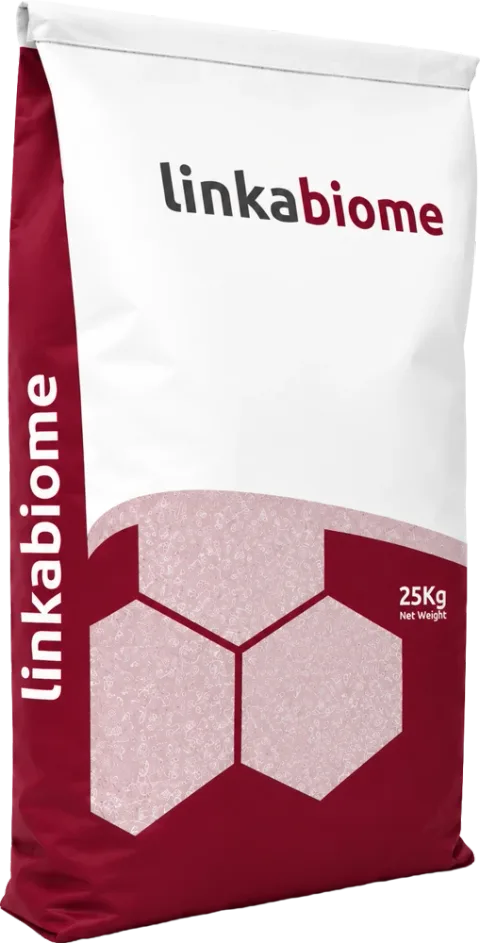
25 kg bag
Shelf life and storage
18 months
Key ingredients
A co-culture of two heat-inactivated Lactobacillus strains, with their fermentation metabolites.
Indicative rate
Pigs: sows 0.75 kg/t; prestarter 2.5 kg/t; starter 1.5 kg/t; grower 0.7–1.0 kg/t; finisher 0.4–0.5 kg/tPoultry: starter 2.5 kg/t; grower 1.0 kg/t; layers and breeders 0.5 kg/tAquaculture: 2.1–4.5 kg/t

Simplified sheet, for information only: the full technical data sheet of the grade and the label prevail.

Get the full technical data sheet →

Made on sites certified to GMP+ FSA, FAMI-QS, FCA or an equivalent feed safety scheme.
Linker Nutrients SAS · Centre d’Affaires Lorient Mer, 1 rue Honoré d’Estienne d’Orves, 56100 Lorient, France · +33 2 30 91 59 15 · contact@linkernutrients.com
www.linkernutrients.com/en/products/linkabiome · Updated 4 November 2026

Indicative rates, by species and stage; we fine-tune them with you.

What has been measured

Each result comes with its conditions; the full details are available on request.

  • Partner data

    In broilers, from day 7 to day 49, at 1 kg/t: weight gain 10.7% above the control (university trial).

    Conditions
    Two diets compared; significant difference (P < 0.01); no effect in the first week.
    On request
    Trial summary
    Ask for the details, result 1 →
  • Partner data

    On farm, across more than 2,000 piglets: post-weaning daily gain of 460 g, against 432 g for the control batches.

    post-weaning daily gain, g
    Control batches432
    With Linkabiome460
    Conditions
    Two control batches and two trial batches; 2 kg/t in the post-weaning feed.
    On request
    Trial summary
    Ask for the details, result 2 →
  • Partner data

    Across 10,300 laying hens followed from week 22 to week 65: +3% eggs produced compared with the previous flock.

    Conditions
    0.75 kg/t, then 1 kg/t from week 38.
    On request
    Trial summary
    Ask for the details, result 3 →

Trial results available on request.Ask for the trial results →

In practice

What Linkabiome is

Postbiotic for animal feed, based on inactivated lactobacilli. Its status varies by country: status in your country and documents on request.

The documents, and someone to read them with you

The documents you need

Let’s talk about your farm

Species, stage, feed form and the period you want to cover: with these, a technician will suggest a rate and, if you wish, a trial protocol.

Ask about Linkabiome →Propose a trial →

Frequently asked questions

What is a postbiotic?

A preparation of inactivated microorganisms and their components, with the metabolites produced during their fermentation. Unlike a probiotic, it contains no live cells: its effect does not depend on their survival. Examples in feed include heat-inactivated lactic acid bacteria such as those in Linkabiome.

Is Linkabiome a probiotic?

No. Its lactobacilli are heat-inactivated: it supplies no live bacteria. For a live probiotic in piglets, see Linkaflore.

Does a postbiotic withstand pelleting?

Its cells are already inactivated, so what it supplies does not depend on their survival through steam, the press or storage.