
Linker Nutrients

Feed Solutions · Feed safety and preservation

Fresh feed, from silo to feeder.

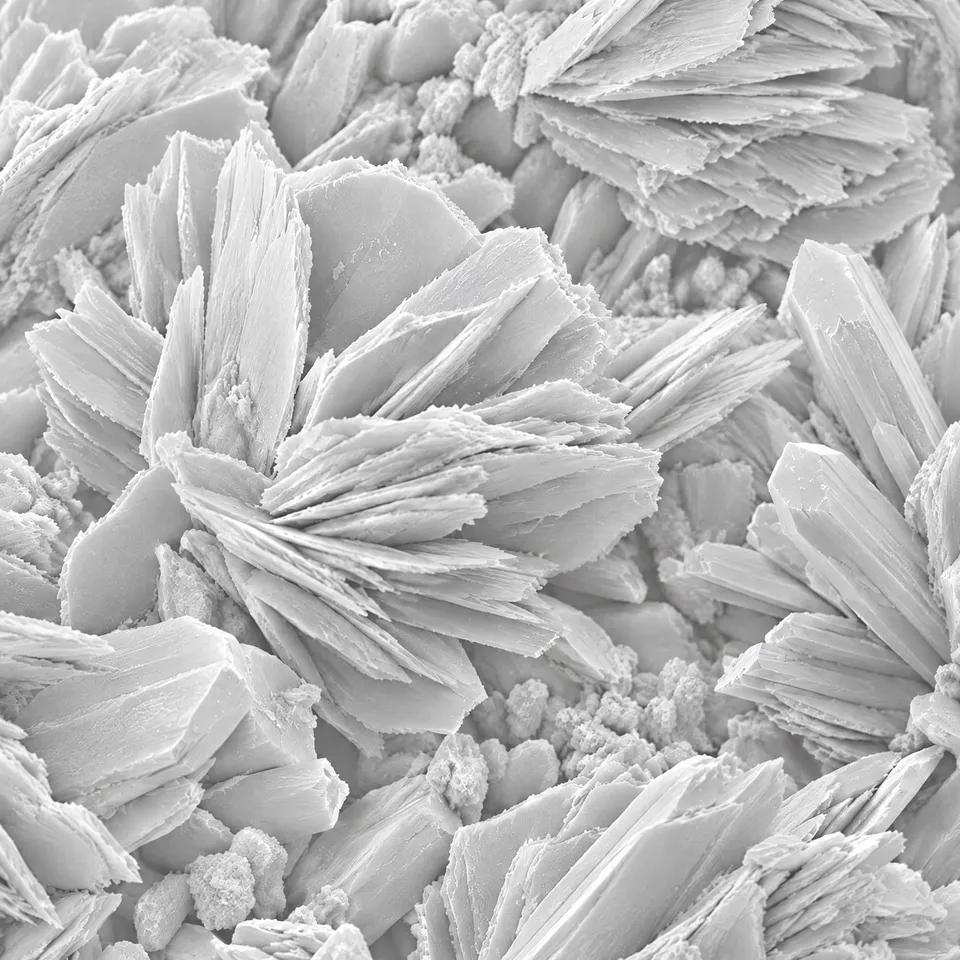
Illustration: Mould inhibitors
Linkamold
  • Holds moulds back

    Organic acids work inside the mould cell and stop its growth.

  • Keeps feed value

    Fat and energy stay in the feed, for the animal.

  • Dosed on moisture and time

    The rate follows the feed and the time to the feeder, not the species.

Linkamold: mould (mold) inhibitors for feed and raw materials

Protect feed and raw materials against moulds and yeasts, from storage to the feeder. Blends of organic acids and their salts, as powder or liquid, dosed on the moisture of the feed and the time to cover.

Forms
Powder and liquid
Species
Poultry, pigs, ruminants, aquaculture
Status
Premix of preservative additives
Use
At the feed mill, on compound feed or raw materials
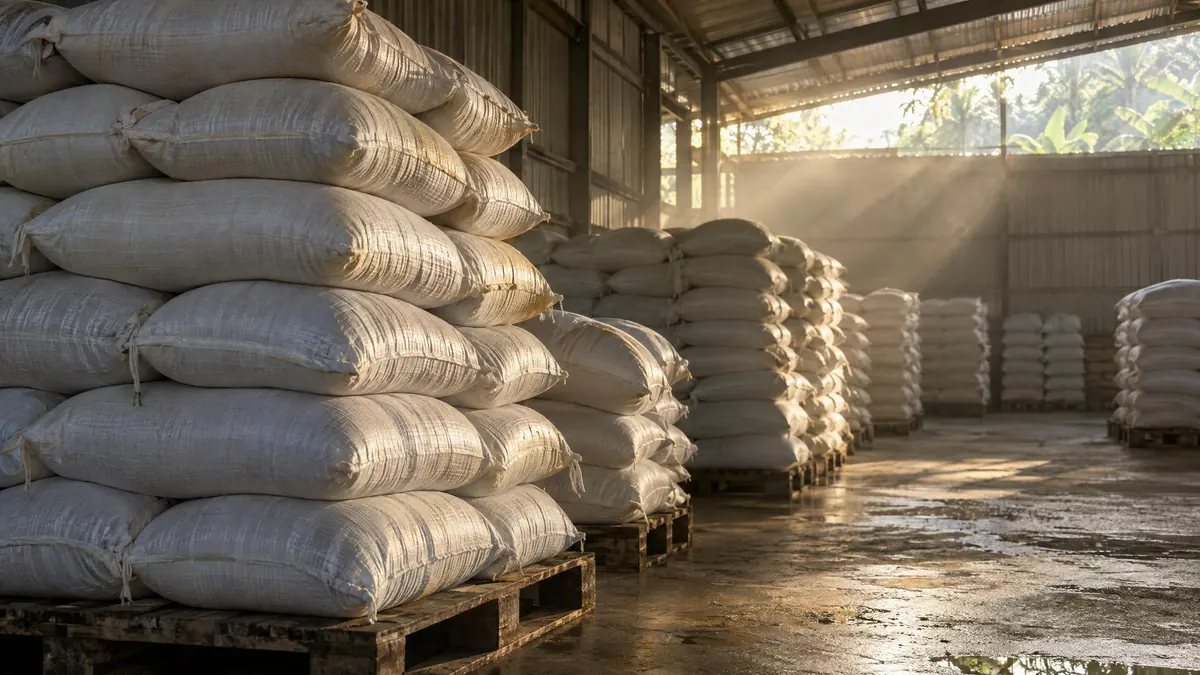
Feed bags on pallets in a warehouse, in humid weather

The problem

Feed can be lost before it reaches the feeder

Heat, moisture, time: in a silo, a bag or a hopper, moulds and yeasts find what they need. They consume the feed, make it heat up, and give it a smell and a look that the farmer rejects. A mould inhibitor holds their growth back while the feed waits.

A mycotoxin already formed in a raw material is not a job for a preservative: that is the role of a mycotoxin binder, Linkafix.

The principle

An acid that enters in one form and acts in another

Organic acids do not work by acidifying the feed. They work inside the mould cell, and the pH decides how much of them gets in.

  1. It crosses.In its undissociated form, the acid passes through the mould membrane.
  2. It dissociates.Inside the cell, close to neutral, it releases its proton and its anion.
  3. It blocks.The inside of the cell turns acidic and the anion builds up: its metabolism slows down until it stops.
  4. Salts hold the duration.Less volatile and less corrosive than free acids, they act more slowly, releasing their active form as the feed’s acidity allows.

The rate follows the feed, not the animal

Water activity
The water available to micro-organisms (aw), not the total water.
Moisture
The wetter the feed or raw material, the higher the pressure.
Substrate pH
The lower it is, the larger the share of acid that stays in its active form.
Time to cover
The time between manufacture and the last feeding.

Linkamold at a glance

1 min 2 s, subtitled in English

Where it applies

Two application points, one period to cover

  1. 1Raw material intakeOn the raw material, before long storage
  2. 2Silo storage
  3. 3Grinding
  4. 4MixingAt the mixer: as powder in the compound feed, or Ultra L sprayed with the added water
  5. 5Pelleting
  6. 6Cooling
  7. 7Storage and delivery
  8. 8Feeding on the farm

From the application point to the feeder: this is the period the rate has to cover.

The grades

Choosing a grade

The grades differ in their balance between free acids, for immediate action, and salts, for duration and handling.

GradeUseIndicative rate
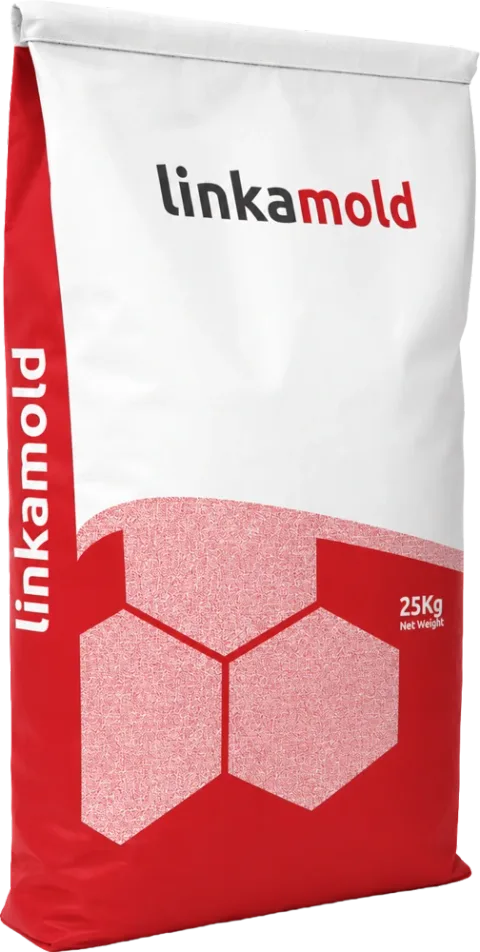
linkamold LASFine white particles of even size, like fine sugar · 25 kg bagThe reference grade for long storage and humid climates.0.5–1.5 kg/t of compound feed or raw material; 1–1.5 kg/t in hot, humid climates
linkamold ForteFine white particles of even size, like fine sugar · 25 kg bagThe salt route: no odour, no corrosion.0.5–1.5 kg/t; 1–1.5 kg/t in hot, humid climates
linkamold GuardFine white particles of even size, like fine sugar · 25 kg bagThe grade for high mould pressure.0.5–1.5 kg/t of compound feed or raw material1–1.5 kg/t in hot, humid climates
linkamold Ultra LClear liquid, colourless to pale yellow · barrel or IBCA liquid mould inhibitor designed for the water added at the mixer; trial results on request.+1 to 2% moistureApplied with the added water, through a spray bar: see Linker Flow.0.5–2.0 kg/t of compound feed, mixed with water then sprayed at the mixer

Also available on request: Linkamold Guard F (powder) and Guard Liquid (liquid).

Indicative rates, taken from the current technical data sheet of each grade. The right rate depends on moisture, water activity, pH and the time to cover: we work it out with you.

What has been measured

Each result comes with its conditions; the full details are available on request.

  • Laboratory testWhole Linkamold range

    In a laboratory test on a Linkamold formula, in inoculated feed stored for 90 days at 25 °C, moulds were brought down to non-detectable levels, while the control exceeded 10⁸ CFU/g.

    Conditions
    Laboratory test on mash feed, closed jars; two doses, 1.5 and 3 kg/t; counts at 60 and 90 days.
    On request
    Trial summary
    Ask for the details, result 1 →

Trial results available on request.Ask for the trial results →

Pelleting and moisture

Ultra L: protecting the water added at the mixer

Between the mixer and the bag, mostly at cooling, feed loses part of its water. Adding water back at the mixer only makes sense if that water stays protected from moulds until it reaches the feeder.

Ultra L is diluted in the added water and sprayed at the mixer: the acid protects the water brought in, and the formula helps spread the water through the particle. Target setting: +1 to 2% added moisture; the result depends on the installation and is measured in the bag.

Spraying needs a spray bar set to the line throughput: that is the job of Linker Flow.

Propionic acid or calcium propionate: which one for which feed?

Free propionic acid acts at once: it is the answer for wet raw materials at intake and for exposed storage. But it is volatile, strong-smelling and corrosive to equipment, and it has to be handled with care.

Calcium propionate is a salt: no odour, no corrosion, simple to include in a premix or a finished feed. Its action is more gradual, because it depends on the pH of the feed to release its active form.

Linkamold LAS combines free acids and salts to cover both; Linkamold Forte takes the salt route. The right choice depends on your line, your climate and the time to cover: we make it with you.

In practice

What Linkamold is

Premix of preservative additives, within the meaning of Regulation (EC) No 1831/2003. Technical data sheet, safety data sheet and status in your country: on request.

Simplified technical data sheet

linkamold

What it is
Mould inhibitor
Range
Feed Solutions · Feed safety and preservation
Species
Poultry, pigs, ruminants, aquaculture
Shelf life and storage
LAS: 24 months from manufacture, unopened original packaging, dry, at a stable moderate temperatureForte, Guard, Ultra L: 24 months
By grade
Form, key ingredients and rate: see the table Choosing a grade
GradeForm and appearancePackagingShelf life and storageKey ingredientsIndicative rate
LASFine white particles of even size, like fine sugar25 kg bag24 months from manufacture, unopened original packaging, dry, at a stable moderate temperatureOrganic acids and their salts, led by propionic acid.0.5–1.5 kg/t of compound feed or raw material; 1–1.5 kg/t in hot, humid climates
ForteFine white particles of even size, like fine sugar25 kg bag24 monthsCalcium propionate, with an organic acid.0.5–1.5 kg/t; 1–1.5 kg/t in hot, humid climates
GuardFine white particles of even size, like fine sugar25 kg bag24 monthsOrganic acids, led by propionic acid.0.5–1.5 kg/t of compound feed or raw material1–1.5 kg/t in hot, humid climates
Ultra LClear liquid, colourless to pale yellowBarrel or IBC24 monthsOrganic acids, led by propionic acid.0.5–2.0 kg/t of compound feed, mixed with water then sprayed at the mixer

Simplified sheet, for information only: the full technical data sheet of the grade and the label prevail.

Get the full technical data sheet →

Made on sites certified to GMP+ FSA, FAMI-QS, FCA or an equivalent feed safety scheme.
Linker Nutrients SAS · Centre d’Affaires Lorient Mer, 1 rue Honoré d’Estienne d’Orves, 56100 Lorient, France · +33 2 30 91 59 15 · contact@linkernutrients.com
www.linkernutrients.com/en/products/linkamold · Updated 4 November 2026

The data sheet, and someone to read it with you

The documents you need

Tell us about your feed

Raw material or finished feed, moisture, storage time, climate: with these four figures, a technician will suggest a grade and a rate.

Ask about Linkamold →

Frequently asked questions

What is the difference between a free acid and a salt?

A free acid acts at once, but it is volatile and corrosive. A salt such as calcium propionate has no odour and is simple to handle; it releases its active form more gradually, depending on the pH of the feed. The Linkamold grades combine the two in different balances.

Does a wetter feed need more Linkamold?

Yes: the rate follows the moisture and water activity of the feed, its pH and the storage time you need to cover, not the species. Give us these values and we work out the rate with you.

Does Linkamold act on mycotoxins?

No. A mould inhibitor holds back mould growth in the feed; it does not bind a mycotoxin already present. That is the role of a mycotoxin binder such as Linkafix.