
Feed Solutions
Digestion and performance: acids, butyrates and the other gut health levers in feed
Nine platforms for one question: what should go into the feed so that the animal digests what it is given and its gut flora stays balanced, especially when everything changes at once, at weaning or at the start? Acids, butyrates, monoglycerides, postbiotic, probiotic, tannins, emulsifier: each works in a different place, and the job is to choose, not to stack.
What this family solves
What the market calls gut health: what is actually in the feed?
Behind “gut health” there are three things that can be described without a promise: digestion, which turns feed into nutrients; the gut lining, which absorbs them and acts as a barrier; and the gut flora, the microbiota, which stays in balance. In chickens as in pigs, all three are decided first in the feed: its digestibility, its buffering capacity, and what it leaves undigested for the bacteria in the gut. Gut health in poultry and in pigs therefore starts at the mill, in the formula, and gut health management in poultry starts with the feed a chicken is given.
The additives in this category work on those conditions. Acids lower the pH of the feed and of the stomach. Butyrates and tributyrin supply butyric acid, the main energy source of the cells lining the gut. Monoglycerides are molecules whose action on the membrane of certain bacteria does not depend on pH. The postbiotic and the probiotic supply lactic acid bacteria, inactivated or live. Tannins bind to proteins. The emulsifier helps the animal digest the fat in the diet.
None of these levers does everything, and they do not simply add up: stacking an acid, a butyrate and a probiotic does not give you the sum of their effects. The job is to choose the one that answers your problem, in your formula, at your production stage.
The platforms
Nine platforms
Each cell opens its product page: grades, use, documents.
 linkacidBlends of organic and inorganic acids: the pH of the feed and the stomach.
 linkazoicBenzoic acid for pigs, pure or coated.
 linkaselCalcium and sodium butyrates, plain or coated.
 linkatribTributyrin: butyrate released in the small intestine.
 linkalphaFatty acid monoglycerides, monolaurin among them.
 linkabiomePostbiotic: inactivated lactobacilli and their metabolites.
 linkafloreProbiotic: two live lactobacillus strains, for piglets.
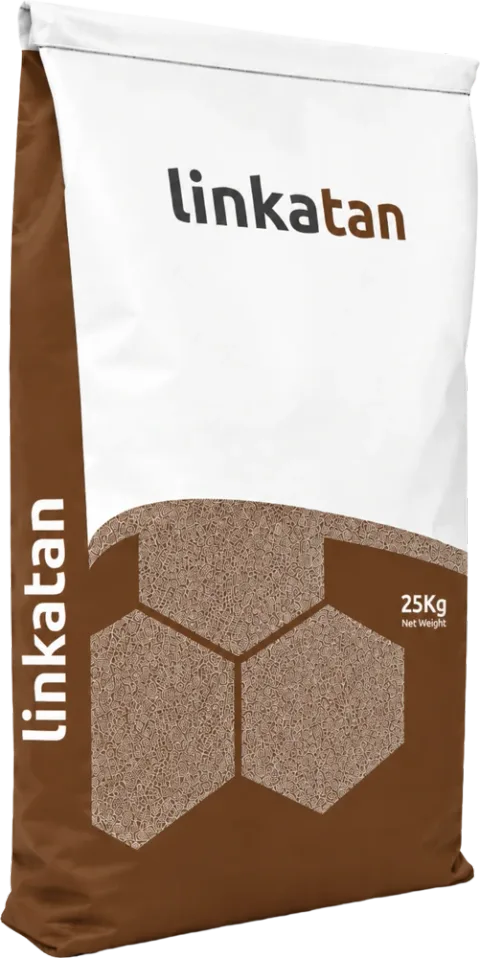 linkatanPlant extract of hydrolysable tannins.
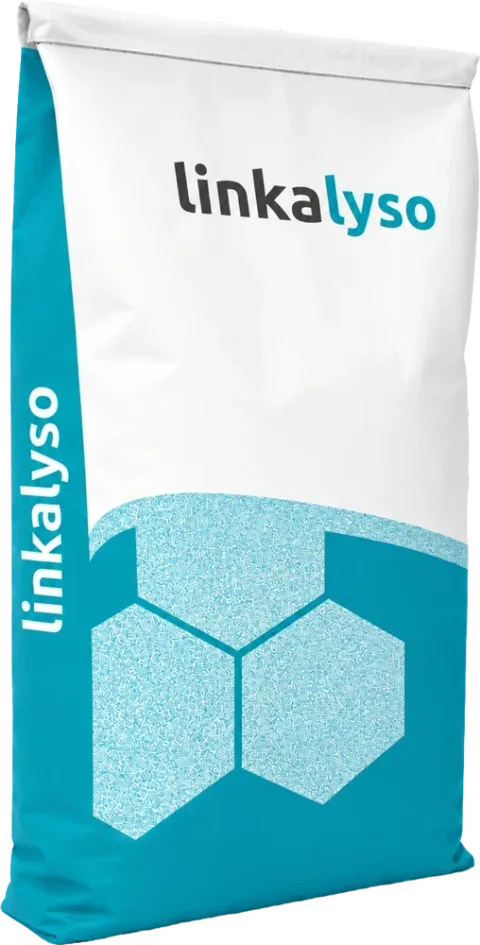 linkalysoLysophospholipids: the emulsifier that helps fat digestion.
Where each lever works
From feeder to gut: each lever has its place
An additive is only worth something if it works where the problem is. Its form, free acid, salt, coating or ester, decides where that is.
- In the feed.Acids lower the pH of the feed and its buffering capacity, the amount of acid needed to bring it down.
- In the stomach.In young animals the stomach does not yet produce enough acid: an acidifier helps it reach the pH at which pepsin digests protein. An unprotected butyrate salt already dissolves here.
- In the small intestine.Tributyrin is split there by pancreatic lipase, which releases the butyrate; lysophospholipids emulsify fats there; coated benzoic acid arrives there intact.
- Against the gut lining and the flora.Postbiotic, probiotic, monoglycerides and tannins work in contact with the mucosa and the microbiota.
What decides the choice
- The stage
- Weaned piglet, chick at the start, growing animal: the needs are not the same.
- Buffering capacity
- A feed rich in limestone or protein takes far more acid.
- Pelleting
- Heat and pressure: a live strain or a coating is more sensitive to them than an ester or an inactivated strain.
- The species
- Some platforms are for one species only, like benzoic acid for pigs.
How to choose
Nine platforms: which one for which question?
The starting point is not the product, it is the question you are asking about your formula.
| Your question | Platform | What it is | Species |
|---|---|---|---|
| My starter feed resists acidification | Linkacid | Blends of organic and inorganic acids and their salts, dosed on the buffering capacity of the feed | Poultry, pigs, aquaculture |
| I want an acid that also works beyond the pig’s stomach | Linkazoic | Benzoic acid, pure as pellets or coated for progressive release | Pigs |
| I want butyrate, in the form that suits my feed | Linkasel | Calcium and sodium butyrates, plain or coated | Poultry, pigs, aquaculture |
| I want butyrate released in the small intestine, without a coating | Linkatrib | Tributyrin: glycerides of butyric acid, split by lipase | Poultry, pigs, aquaculture |
| I am looking for an action that does not depend on pH | Linkalpha | Short- and medium-chain fatty acid monoglycerides, monolaurin among them | Poultry, pigs, aquaculture |
| I want lactic acid bacteria that are not afraid of pelleting | Linkabiome | Postbiotic: two lactobacillus strains inactivated by heat, with their metabolites | Poultry, pigs, ruminants, aquaculture |
| I want live lactobacilli for piglets | Linkaflore | Probiotic: two live lactobacillus strains | Pigs |
| I am looking for a plant extract for sensitive phases | Linkatan | Hydrolysable and condensed tannins, plant extracts | Poultry, pigs, ruminants |
| I want more out of the fat in the diet | Linkalyso | Lysophospholipids, an emulsifier in micropearls | Poultry, pigs, aquaculture |
More than one question at once? That is the usual case. We look at your formula and your stage, and tell you which lever to start with, and which one you can stop.
Piglet weaning
Post-weaning diarrhoea: what feed can do, and what is a matter for the vet
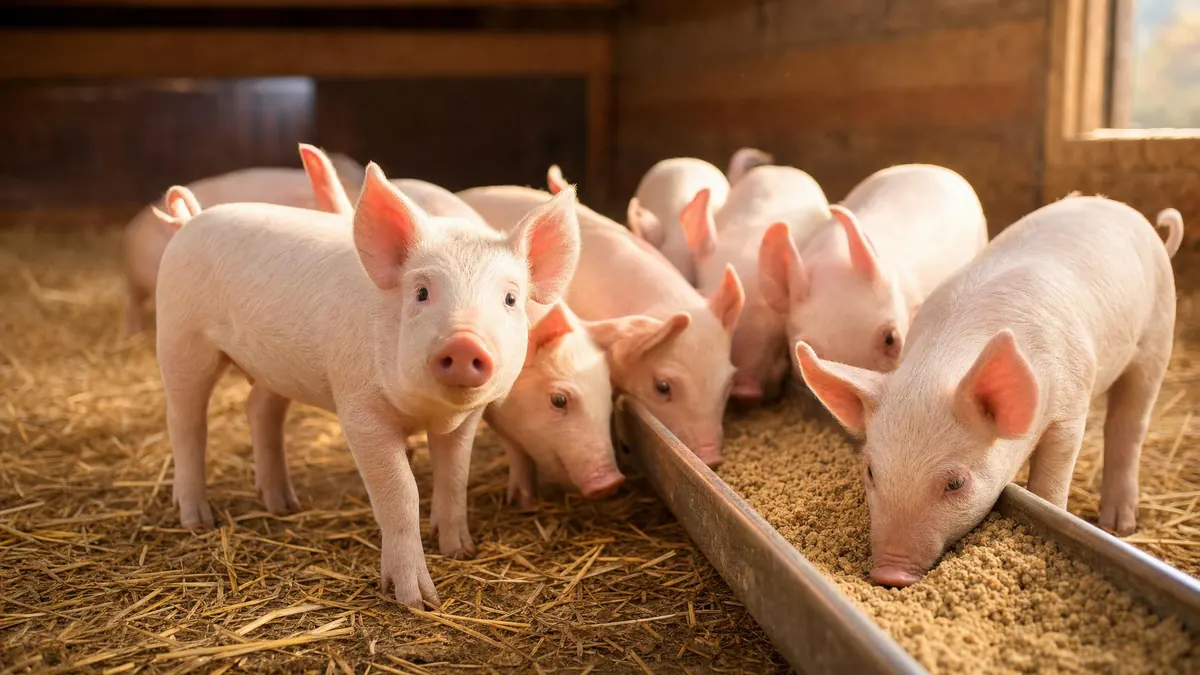
At weaning, everything changes at once: the sow’s milk is gone, solid feed becomes the only source of nutrients, piglets change pen and pen-mates. Feed intake collapses for a few days, while the piglet’s stomach does not yet produce enough acid to digest plant proteins on its own. Poorly digested protein reaches the intestine, where it feeds the flora you do not want. So yes, weaning can cause diarrhoea, and this is why.
That window is when post-weaning diarrhoea (post weaning diarrhea, or PWD) appears in pigs, often linked to the growth of an unwanted flora in the gut. Cold and draughts play their part too: a weaned piglet that is cold eats less and digests less well, which is why low temperature is a classic factor in post-weaning diarrhea in piglets.
Post-weaning diarrhoea is a disease: its diagnosis and care belong to the veterinarian. Linker products are additives and supplements for feed and drinking water, used within a farm’s programme. What feed can do is bring together the conditions for digestion to get off to a good start. That is the whole subject of piglet weaning, lever by lever:
- A feed that gets eaten: palatable, carrying the flavour of the creep feed forward, with flavours and sweeteners.
- A stomach that acidifies: a feed with controlled buffering capacity, acidified with Linkacid or, in pigs, Linkazoic.
- Less undigested protein: a digestible protein, at a level suited to the piglet’s age.
- Energy for the gut lining: butyrate from Linkasel or Linkatrib.
- Lactic acid bacteria and plant extracts: Linkabiome, Linkaflore, Linkatan, Linkalpha.
- And outside the feed: clean water within reach from the first hour in the pen, for instance acidified with Linkacid Prime L, the right temperature, pen hygiene. The drinking water completes the programme: weaning, through the drinking water.
Butyrate: a question of delivery
Free butyric acid smells strongly and is absorbed very early: the whole point is to get it to where the gut lining uses it. An unprotected salt, sodium or calcium butyrate, dissolves in the stomach; a fat coating delays its release towards the intestine but dilutes the active; tributyrin, an ester, crosses the stomach intact and releases its butyrate in the small intestine, through the action of lipase. Linkasel covers the salts, Linkatrib tributyrin.
The choice depends on the gut segment you are aiming at, your pelleting temperature and the cost per unit of butyrate actually delivered: that is the tributyrin vs sodium butyrate question, which we work through with you on your formula.
Acidifiers: why the rate depends on your formula
Two feeds at the same pH can need very different amounts of acid. What decides is the acid binding capacity of the formula: the amount of acid needed to bring one kilo of feed down to a reference pH.
Limestone, phosphates and protein sources push it up; cereals and fats keep it low. A creep feed rich in protein and minerals is therefore much harder to acidify than a cereal-based grower feed: the same acidifier rate does not do the same job in both. Overdosing a low-buffering feed costs money for nothing and can weigh on palatability; underdosing a high-buffering one is the most common way to conclude, wrongly, that an acidifier does not work.
Each acid also has its own territory: formic and fumaric acids bring the pH down fast, propionic and butyric acids stay active further along. That is the case for a blend rather than a single acid, and the whole subject of organic acids in feed, one by one.
Send us your formula: we look with you at what drives its buffering capacity up, and what that changes for the choice of Linkacid grade and its rate.
Choose the right lever
You formulate
Send the formula, the species, the stage and what you are seeing. You get a technical answer: a lever, a grade, a rate.
Choose the right lever for your formula →You want to test
A trial takes preparation: control, duration, measurements. Send us yours, or let’s build it together.
Propose a trial →Or directly: +33 2 30 91 59 15 · contact@linkernutrients.com
Further reading
- Feed Solutions →
The four categories of additives for the feed mill.
- Drinking water →
Supplements dosed in the water, when feed is not enough.
- All products →
Feed Solutions and Farm Solutions, by species.
Frequently asked questions
What is gut health in poultry and pigs?
The term covers the digestion of feed, the state of the gut lining that absorbs nutrients and acts as a barrier, and the balance of the gut flora. Feed plays the first part: its digestibility, its buffering capacity and what it leaves undigested for the flora. The additives on this page work on those conditions.
What about antibiotics?
No feed additive replaces an antibiotic. The levers on this page work on the feed and on the conditions of digestion; they have their place in programmes that reduce antibiotic use, alongside husbandry, biosecurity and the veterinarian.
Can feed sort out post-weaning diarrhoea?
No. It is a disease, and its diagnosis and care belong to the veterinarian. Feed works on the conditions of digestion: palatability, buffering capacity, protein digestibility, and the supply of butyrate and lactic acid bacteria.
Should several levers be combined?
Not as a matter of principle. Effects do not simply add up, and many feeds already carry two or three additives without anyone knowing which one is working. We start from your problem and your formula, and tell you which lever to start with, and which one you can stop.
Postbiotic or probiotic: what is the difference?
A probiotic supplies live bacteria, whose effect depends on their survival: that is Linkaflore. A postbiotic supplies inactivated bacteria and their metabolites, without depending on that survival: that is Linkabiome, which is therefore not a probiotic.
Do these additives withstand pelleting?
It depends on their form. Tributyrin is an ester: there is nothing for pelleting to damage. A postbiotic, made of inactivated cells, does not depend on their survival. For a live probiotic or a coated product, you check your conditioning temperature; for Linkaflore, compatibility with your process is checked with us. Tell us your process, and we tell you what holds.