
Linker Nutrients

Feed Solutions · Feed safety and preservation

Feed hygiene, from intake to feeder.

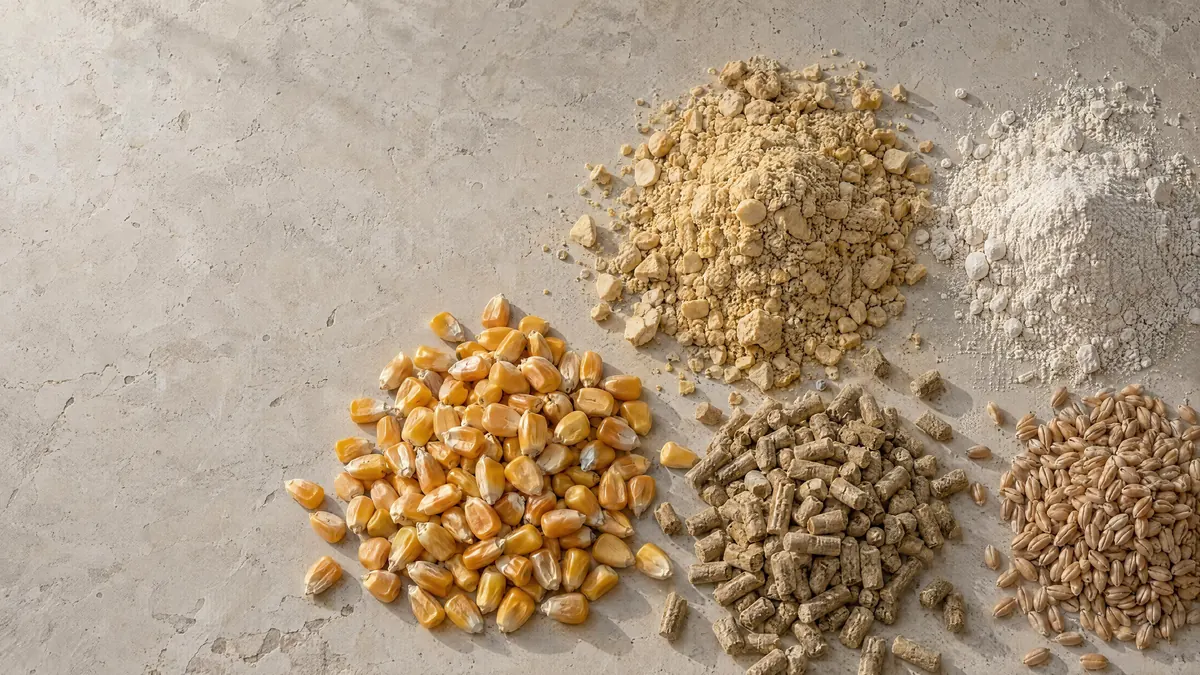
Feed raw materials seen from above: maize, meal, minerals and pellets
Linkasalm
  • Acts on application

    The hygiene agent acts on the bacterial load present when it is applied.

  • Stays in the feed

    The part of the hygiene agent bound to the feed’s proteins helps limit recontamination in storage and transport.

  • Two application points

    On raw materials at intake, and on finished compound feed.

Linkasalm: feed hygiene for feed and raw materials

Help control the bacterial load of raw materials and feed, then help limit recontamination through storage and transport. A liquid that combines a feed hygiene agent, part of which binds to the feed’s proteins and stays there, with a buffered acid system, applied at the feed mill.

Form
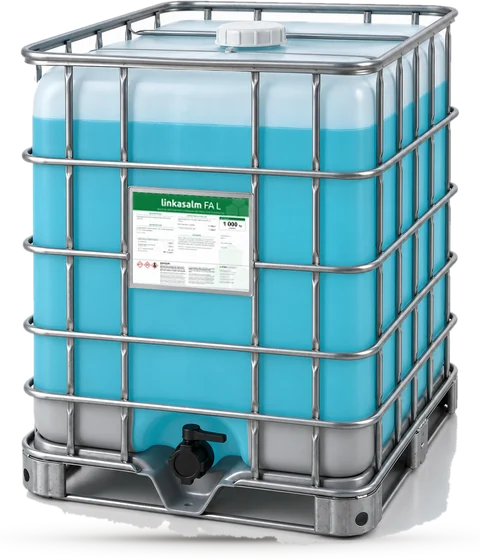
Liquid, in IBCs of 1,000 kg net
Species
Poultry, pigs
Use
At the feed mill, on raw materials at intake and on compound feed
Shelf life
Closed packaging, between 15 °C and 30 °C, away from sunlight
Availability
Available in South-East Asia
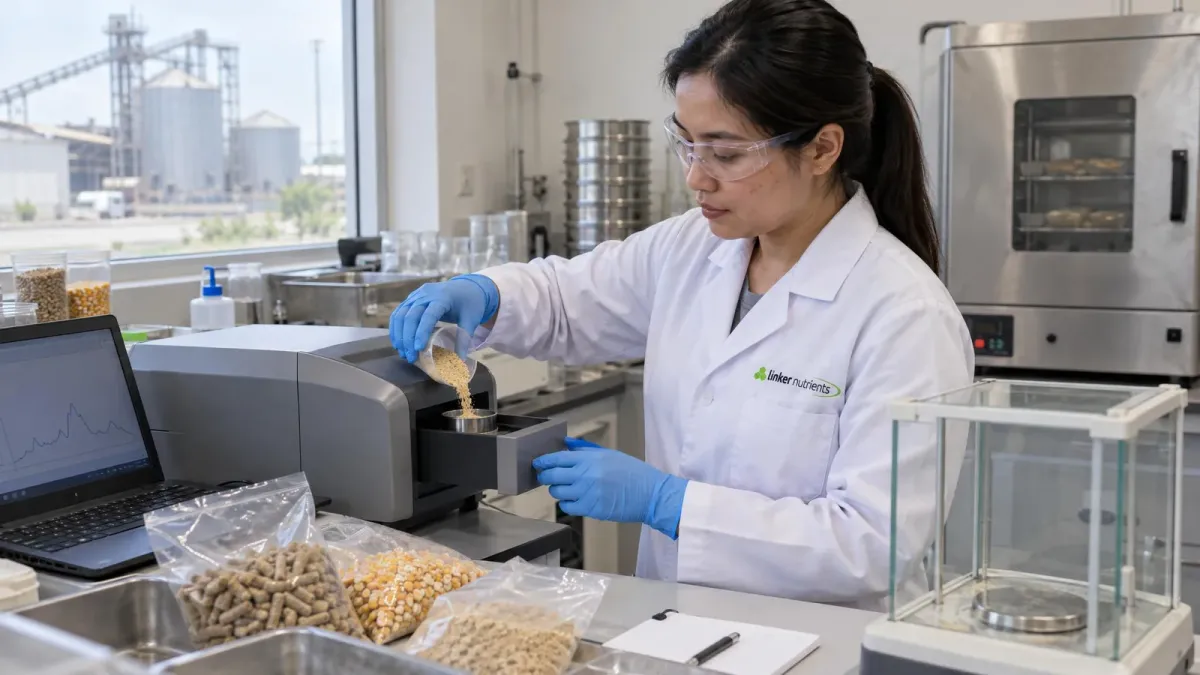
Laboratory technician preparing a feed sample for analysis, next to a precision balance and bags of pellets

The problem

Feed hygiene starts with the raw materials

Animal protein meals, oilseed meals, grains: a raw material can reach the mill already carrying bacteria. Laboratories follow that load through hygiene indicators, Enterobacteriaceae first among them, and through testing for Salmonella, which the mill’s customers write into their specifications.

Once made, feed is not out of reach either. Dust, condensation in the cooler, silos, trucks: every step after manufacture is a chance for recontamination, and feed with no residual protection has nothing to hold it back.

When the issue is mould in storage, the tool is a mould inhibitor: Linkamold.

The principle

Two actions, two timescales

Linkasalm combines a hygiene agent that acts when it is applied, part of which binds to the feed’s proteins and stays there.

  1. It acts on application.The hygiene agent acts on the bacterial load present in the raw material or the feed at the moment it is applied.
  2. It stays in the feed.Part of the hygiene agent binds to the feed’s proteins and remains spread through the material.
  3. It covers the time.This bound part helps limit recontamination through storage and transport; how long it protects depends on the rate.

The rate is set on the material, not on the animal

Raw material
Animal protein meal, oilseed meal, grain or compound feed: each has its own load and sensitivity.
Starting load
What the analyses say at intake.
Time to cover
The time from application to last use, transport included.
Moisture
A moist material gives recontamination more of a hold.

Linkasalm at a glance

1 min 6 s, subtitled in English

Where it applies

Two application points, one period to cover

  1. 1Raw material intakeOn the raw material, at intake
  2. 2Silo storage
  3. 3Grinding
  4. 4MixingOn compound feed, sprayed at the mixer
  5. 5Pelleting
  6. 6Cooling
  7. 7Storage and delivery
  8. 8Feeding on farm

From the application point to use: this is the period the rate has to cover.

The grade

One grade, as a liquid

Linkasalm comes as a liquid, sprayed on the raw material or on compound feed.

Simplified technical data sheet

linkasalm

What it is
Feed hygiene
Range
Feed Solutions · Feed safety and preservation
Species
Poultry, pigs
Use
Raw materials at intake and compound feed, with protection that lasts through storage.
Form and appearance
Clear bright blue liquid
Packaging
IBC of 1,000 kg net
Shelf life and storage
Closed packaging, between 15 °C and 30 °C, away from sunlight
Key ingredients
A feed hygiene agent, with a buffered acid system.
Indicative rate
Raw materials, at intake: 2–3 kg/tFinished compound feed: 1–2 kg/t

Not marketed in the European Union

Simplified sheet, for information only: the full technical data sheet of the grade and the label prevail.

Get the full technical data sheet →

Made on sites certified to GMP+ FSA, FAMI-QS, FCA or an equivalent feed safety scheme.
Linker Nutrients SAS · Centre d’Affaires Lorient Mer, 1 rue Honoré d’Estienne d’Orves, 56100 Lorient, France · +33 2 30 91 59 15 · contact@linkernutrients.com
www.linkernutrients.com/en/products/linkasalm · Updated 4 November 2026

Indicative rates, taken from the current technical data sheet. The right rate depends on the raw material, its starting load and the time to cover: we fine-tune it with you.

Trial results available on request.Ask for the trial results →

Recontamination

Why clean feed can become contaminated again

The heat of pelleting lowers the bacterial load of the feed, but it leaves nothing behind. As soon as the feed leaves the press, it meets the air of the mill again, the dust, and the water that condenses in the cooler, in silos and in trucks.

That is where the part of Linkasalm that stays in the feed matters: the part of the hygiene agent bound to the feed’s proteins helps limit recontamination over the whole time between manufacture and use. On a raw material, the same logic covers storage before manufacture.

Where water gets back into feed, and why: see mouldy feed in storage.

Bacteria and moulds

Bacterial hygiene and moulds: two tools that work together

The acid system in Linkasalm is not dosed for mould control: Linkasalm is first a bacterial hygiene product, and its rate is set on the bacterial load and recontamination.

When moist feed has to last through long storage in a hot climate, a mould inhibitor is dosed for that job: Linkamold. The two are used together when a mill has both issues; we set up the whole programme with you.

In practice

What Linkasalm is

A liquid hygiene product for feed and raw materials, for the feed mill. Available in South-East Asia. Availability and claims depend on the regulations of each country. Technical data sheet and safety data sheet: on request.

The documents, and someone to read them with you

The documents you need

Tell us about your raw material

Raw material or compound feed, intake analysis results, storage and transport time, dosing equipment: with these, a technician proposes a rate and an application method.

Request the data sheet →Ask a question about Linkasalm →

Frequently asked questions

Where is Linkasalm applied in the mill?

On raw materials at intake, before storage, and on compound feed. The application point and the rate are set on the material, its starting load and the time to cover.

Linkasalm or Linkamold: which one?

Linkasalm is a bacterial hygiene product: it acts on the load present at application and helps limit recontamination. Linkamold is a mould inhibitor, dosed on moisture and storage time. They work together when a mill has both issues.

How should Linkasalm be handled?

Through closed dosing equipment, following the safety data sheet: operator protection, storage and what to do in an incident are described there. It is supplied with every offer, and on request.

Is Linkasalm available in my country?

Linkasalm is available in South-East Asia. Availability and claims depend on the regulations of each country. Tell us where your mill is and we will answer.