

Linker Nutrients

Feed Solutions · Feed safety and preservation

Fats stay fresh. Feed keeps its value.

Illustration: Antioxidants
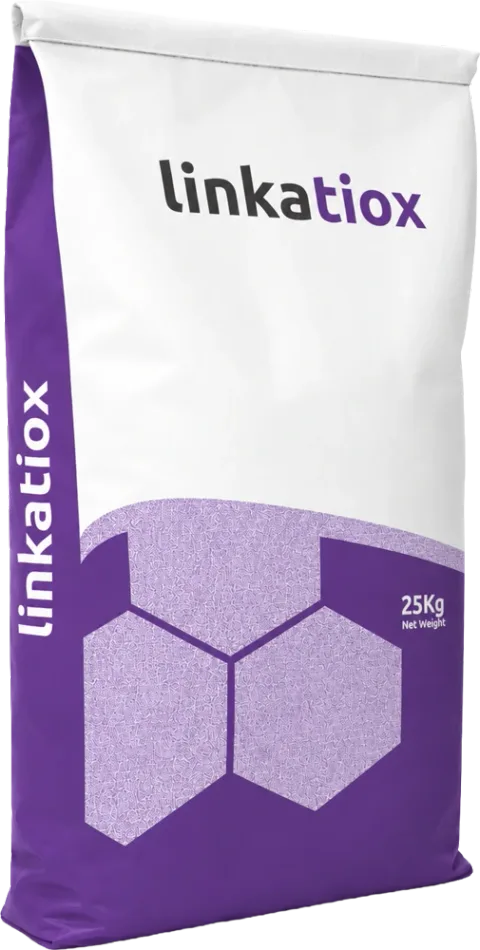
Linkatiox
  • Protects fats and oils

    Stops the oxidation chain in fats, oils and fish meal.

  • Preserves vitamins

    Slows the oxidation of vitamins and pigments in premixes and feed.

  • Keeps feed value

    Fresh fats keep their energy value up to the feeder.

Linkatiox: antioxidants for feed fats, oils, vitamins and premixes

A feed antioxidant is an additive that slows the oxidation of fats, oils, vitamins and pigments in feed and premixes, from poultry and pig feed to fish feed, so they keep their value until the feed is eaten. Linkatiox combines synthetic antioxidants, with a chelator in Shield ET, in two lines: Shield, with ethoxyquin, and Vital, ethoxyquin-free. The destination market chooses the line, not the animal.

Role
Antioxidant for feed
Form
Powder, in 25 kg bags
Species
Poultry, pigs, aquaculture; other species on request
Use
In the premix or at the mixer; on fats, case by case
Shelf life
2 years
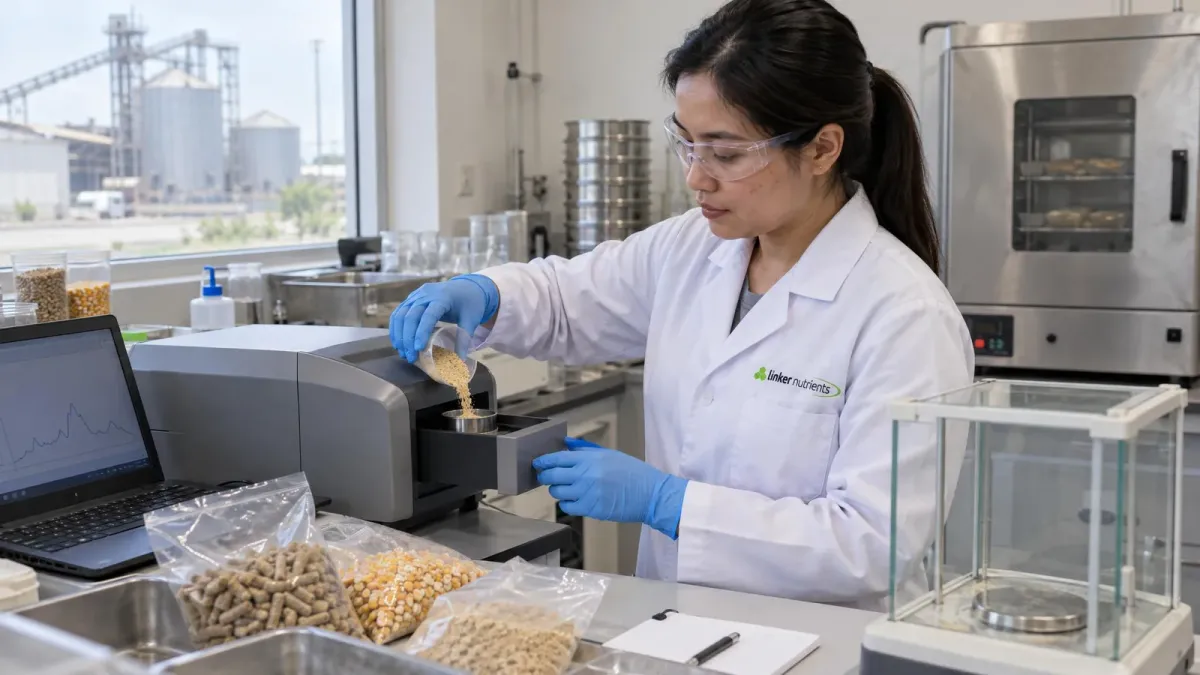
Laboratory technician preparing a feed sample for analysis, next to a precision balance and bags of pellets

The problem

Fat goes off before you can smell it

Fat oxidation is a chain reaction. Oxygen attacks unsaturated fatty acids, each radical formed creates the next one, and the reaction runs away. Its first products, peroxides, have no smell and no taste: by the time the rancid smell appears, the fat has already lost a good part of its value.

A feed mill brings together everything that speeds it up: the heat of conditioning and extrusion, the air of every transfer, the copper and iron of the premix, and raw materials rich in polyunsaturated fatty acids such as fish oil and soybean oil. What is lost: energy, vitamins A and E, pigments, and the palatability of the feed.

An antioxidant extends the period during which the fat stays intact. It does not repair fat that is already oxidised: all of its value lies in the time before. Moulds and mycotoxins: see the feed safety and preservation page.

The principle

Three ways to stop the chain

Each Linkatiox grade combines molecules with complementary roles, chosen for the substrate to protect and for the destination market.

  1. It scavenges.Radical scavengers donate hydrogen to radicals and stop the propagation.
  2. It disarms.Chelators bind the copper and iron that start the chain.
  3. It takes over.A regenerator restores spent antioxidants, which extends the protection.
  4. It buys time.Together they extend the induction period, the time during which the fat stays stable. Nothing is repaired afterwards.

The rate is calculated on the fat, not on the tonne

Fat content
The added fat and the fat the raw materials bring.
Unsaturation
Fish oil, soybean oil, rendered fats: the more unsaturated the fat, the faster it oxidises.
Process
Temperature and length of conditioning, extrusion and drying.
Time and metals
The intended storage time, and the copper and iron in the premix.

Linkatiox at a glance

1 min 4 s, subtitled in English

Where it applies

Two application points: the premix or the mixer

  1. 1Fat and oil intake
  2. 2Tank storage
  3. 3PremixIn the vitamin and trace-mineral premix
  4. 4MixingAt the mixer, in the compound feed
  5. 5Conditioning and pelleting
  6. 6Storage and delivery
  7. 7Feeding on the farm

Added in the premix or at the mixer, Linkatiox stays with the feed all the way to the farm. Direct application on fats remains possible, case by case.

The grades

Choose your grade

Two lines. Shield combines ethoxyquin with other antioxidants; Vital does without it. The destination market and your customers’ specifications decide.

GradeUseIndicative rate
linkatiox Shield ETFine light-grey powder · 25 kg bagNot marketed in the European UnionComplete protection for premixes, where copper and iron sit next to the vitamins: antioxidants and a chelator.125 g/t of complete feed, supplied through the premixTo protect a premix on its own: 125 g per tonne of premix
linkatiox Shield EQFine light-grey powder · 25 kg bagNot marketed in the European UnionThe highest-load grade, proposed for unsaturated oils and rendered fats; the rate is calculated with you.125 g/t of complete feed, supplied through the premixTo protect a premix on its own: 125 g per tonne of premix
linkatiox Vital BBFine light-grey powder · 25 kg bagEthoxyquin-free synthetic phenolic antioxidants: the simplest grade for markets that exclude ethoxyquin.125 g/t reference, to be recalculated on the fat content of the feed; to protect a premix: 125 g per tonne of premix
linkatiox Vital BQFine light-grey powder · 25 kg bagNot marketed in the European UnionEthoxyquin-free, for pelleted and extruded feeds.125 g/t of complete feed, supplied through the premixTo protect a premix on its own: 125 g per tonne of premix

Indicative rates, taken from the grade’s current data sheet, to be recalculated on the fat content of your feed. We do the calculation with you.

What has been measured

Each result comes with its conditions; the full details are available on request.

  • Laboratory test

    In a Rancimat test on lard, our ethoxyquin-free formula extended the induction period by about a third (+34%) more than ethoxyquin alone, at the same dose.

    Conditions
    100 °C under air flow; 200 ppm of antioxidants; formula tested in liquid form.
    On request
    Trial report
    Ask for the details, result 1 →

Trial results available on request.Ask for the trial results →

Synthetic or natural antioxidants: how to choose?

Synthetic antioxidants give strong protection at a low rate, good robustness and a controlled cost. Their solubilities differ, which is why they are combined, often with a chelator to bind metals. Some hold up better to heat; ethoxyquin was long the reference for its thermal stability.

Natural antioxidants, such as tocopherol-rich extracts or rosemary extracts, answer “no synthetic antioxidant” specifications. They usually need a higher rate for the same protection, and cope less well with high temperatures.

The choice comes down to four constraints: what your process does to the additive, what your label must say, what the destination market allows, and the cost per tonne protected. Linkatiox offers synthetic combinations; if your case calls for another route, we will tell you.

Fish meal: how to stabilise it, and how to check it?

Fish meal and fish oil are the most unsaturated materials in the feed chain. Fish meal shipped in bulk by sea is stabilised with an antioxidant at origin, and a residual antioxidant content is required at the time of shipment: knowing which antioxidant came with your fish meal is part of knowing the raw material.

To check it, the methods used for measuring rancidity in feed fats do not say the same thing. Peroxide value measures the primary oxidation products; it rises and then falls, so a low value can mean fresh fish meal or fish meal already far into oxidation. The anisidine value, which measures secondary products and does not fall back, removes the doubt; the Rancimat test tells you how much protection is left.

When fish meal or fish oil has to be stabilised in its own right, the rate is calculated on its fat content and on the storage time. Shield EQ is the highest-load grade, proposed for unsaturated oils; the rate is calculated with you.

Premixes: why do vitamins lose their value there?

In a premix, vitamins A and E sit next to copper and iron, which catalyse their oxidation, sometimes over months of storage. A premix can meet its specification when it is made and fall short of it on the farm, with nothing visible in between.

This is where a chelator earns its place next to the antioxidants: Shield ET brings the two together. For an ethoxyquin-free premix, Vital BB is dosed per tonne of premix, according to its data sheet.

In practice

What Linkatiox is

Antioxidants for animal feed. The destination market chooses the line: some molecules, ethoxyquin among them, are not authorised everywhere, and each one is checked against the country’s positive list before we propose a grade. Data sheet, safety data sheet and status in your country: on request.

Simplified technical data sheet

linkatiox

What it is
Antioxidant
Range
Feed Solutions · Feed safety and preservation
Species
Poultry, pigs, aquaculture; other species on request
Form and appearance
Fine light-grey powder
Packaging
25 kg bag
Shelf life and storage
2 years
By grade
Form, key ingredients and rate: see the table Choose your grade

Shield ET, Shield EQ, Vital BQ: Not marketed in the European Union

GradeKey ingredientsIndicative rate
Shield ETSynthetic antioxidants including ethoxyquin, and a chelator.125 g/t of complete feed, supplied through the premixTo protect a premix on its own: 125 g per tonne of premix
Shield EQSynthetic antioxidants including ethoxyquin.125 g/t of complete feed, supplied through the premixTo protect a premix on its own: 125 g per tonne of premix
Vital BBSynthetic phenolic antioxidants, ethoxyquin-free.125 g/t reference, to be recalculated on the fat content of the feed; to protect a premix: 125 g per tonne of premix
Vital BQSynthetic phenolic antioxidants, ethoxyquin-free.125 g/t of complete feed, supplied through the premixTo protect a premix on its own: 125 g per tonne of premix

Simplified sheet, for information only: the full technical data sheet of the grade and the label prevail.

Get the full technical data sheet →

Made on sites certified to GMP+ FSA, FAMI-QS, FCA or an equivalent feed safety scheme.
Linker Nutrients SAS · Centre d’Affaires Lorient Mer, 1 rue Honoré d’Estienne d’Orves, 56100 Lorient, France · +33 2 30 91 59 15 · contact@linkernutrients.com
www.linkernutrients.com/en/products/linkatiox · Updated 4 November 2026

The data sheet, and the rate calculated with you

The documents you need

Tell us about your fat

Type and level of fat, peroxide value, process temperature, destination market: with these, a technician proposes a grade and a rate.

Ask about Linkatiox →

Frequently asked questions

Is ethoxyquin authorised in feed?

Not everywhere. In the European Union its authorisation as a feed additive was refused in 2022, by Implementing Regulation (EU) 2022/1375; other countries still authorise it. For an ethoxyquin-free specification, Vital BB or Vital BQ, depending on the country’s positive list.

Can an antioxidant rescue rancid fat?

No. Oxidation is not reversible: the fatty acids attacked, the vitamin E used up and the aldehydes formed do not come back. Added late, an antioxidant slows what is left of the reaction; all of its value is in the time before the damage, which is why it goes in early, in the premix or at the mixer, on raw materials that are still sound.

What antioxidant rate in feed?

It is calculated on the fat content of the feed, not on the tonne, then adjusted to the unsaturation of the fat, the process temperature and the storage time. The grade table gives the reference for Shield ET, Vital BB and Vital BQ; for Shield EQ, we do the calculation with you.